Key Terms: Modernism, proto-renaissance, Realism, idealism, abstract, representational, non-representational, fresco
Form, formal analysis, Elements and Principles of art
Form, formal analysis, Elements and Principles of art
 |
Simone Martini and Lippo Memmi, Annunciation and Two Saints, 1333
Tempera on wood, 6'4" x 10' Galleria degli Uffizi, Florence (625), image source wikipedia
|
|
The angel Gabriel swoops into the frame, his wings still extended, his robes hanging in the air about him as they catch up with his arrival, and confronts the startled Mary with his bold utterance, "Hail, full of grace, the lord is with thee." Mary seems to shrink and twist from the startling arrival of the angel, but retains her perfect grace
So different from Byzantine representations, which build one,
 |
| Pietro Cavalini, Annunciation, Basilica di Santa Maria in Trasteveri, 1291, Rome. Source |
 |
| Jacopo Torriti, Annunciation, Santa Maria Maggiore, 1295, Rome. Source |
upon fixed methods and styles for representing particular scenes such that they become icons much more than artworks. Indeed, the difference between an icon and an artwork will help us define the difference between Medieval and Renaissance ideas of art, and, in fact, between pre-modern and early modern ideas.

Though Martini retains the tradition (perhaps in order to remain in business) of an abundance of glittering gold, he softens the effect of the halo and manages to achieve a quality of naturalism even despite the preponderance of gold by carving the words of the angel's message, the first words of the annunciation, into the air between angel and virgin, creating a reason for the the effect of unearthly glow.
 Coming from the angel's gently parted lips, we read the words from left to right as a link between this unwelcome messenger and the virgin, who arches away from them as if from an arrow with all the energy her virginal propriety and the firm back of her throne will allow. The message unites the the two halves of the 'canvas' and the two figures powerfully across a great divide of gold and strangely spiny lilies; the words become the center of the painting as the message provides the core of the story of the Annunciation.
The Father of Art History, Giorgio Vasari, who wrote the first book that resembles a modern art history, The Lives of the Most Famous Painters, Sculptors, and Architects, in 1550, thought little of Byzantine art, or the 'Greek Manner.' By Greek, he meant not the art of classical greece, which he admired greatly, but of recent Greek Empire, that is, the Byzantine Empire and Byzantine style, where such strict adherence to tradition prevailed that it seemed art could not move in any new direction. He saw evidence that this manner might disappear in the Italian painter of Icons Cimabue, about whom he wrote:
CIMABUE (circa 1240-circa 1302) Vasari's Lives of the Artists
CIMABUE (circa 1240-circa 1302) Vasari's Lives of the Artists
THE GREAT FLOOD of misfortunes, by which poor Italy had been afflicted and overwhelmed, had not only reduced to ruins all buildings of note throughout the land, but what was of far more importance, had caused an utter lack of the very artists themselves. At this time, when the supply seemed entirely exhausted, in the year 1240, by the will of God, there was born in the city of Florence, Giovanni, surnamed Cimabue, of the noble family of that name, who was to shed the first light on the art of painting. He, as he grew, being judged by his father and others to possess a fine acute intellect, was sent to Santa Maria Novella to be instructed in letters by a relative of his who taught grammar to the novices of that convent.
But instead of attending to his lessons, Cimabue spent all the day in painting on his books and papers,men, horses, houses, and such things. To this natural inclination fortune was favorable, for certain painters of Greece, who had been summoned by the rulers of Florence to restore the almost forgotten art of painting in the city, began at this time to work in the chapel of the Gondi in Santa Maria Novella; and Cimabue would often escape from school and stand all day watching them, until his father and the painters themselves judging that he was apt for painting, he was placed under their instruction. Nature, however, aided by constant practice, enabled him greatly to surpass both in design and coloring the masters who had taught him. For they, never caring to advance in their art, did everything not in the good manner of ancient Greece, but after the rude manner of those times
.
In this first introduction to Vasari's style and content, what do you notice?
Can you detect any hints of our modern ideas of Art that you did not see in art history 1

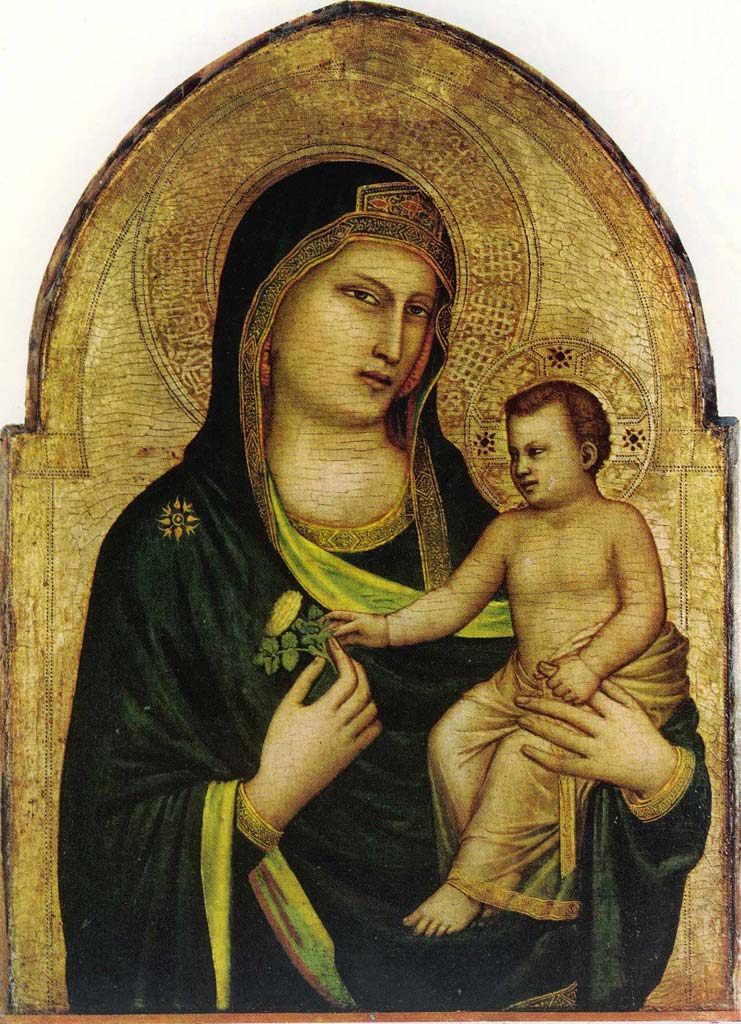
Cimabue, Virgin and Child Enthroned (11-29),
Giotto, Virgin and Child Enthroned(11-30),
In the shepherd-turned-painter Giotto di Bondone, Vasari found the first artist to shake off the 'rude Greek Manner' (the Byzantine style.) He writes:
GIOTTO (1267-1337) Vasari's Lives of the Artists
 Giotto, Lamentation, 1304, Scrovegni Chapel (Arena Chapel) (good pictures here)
 |
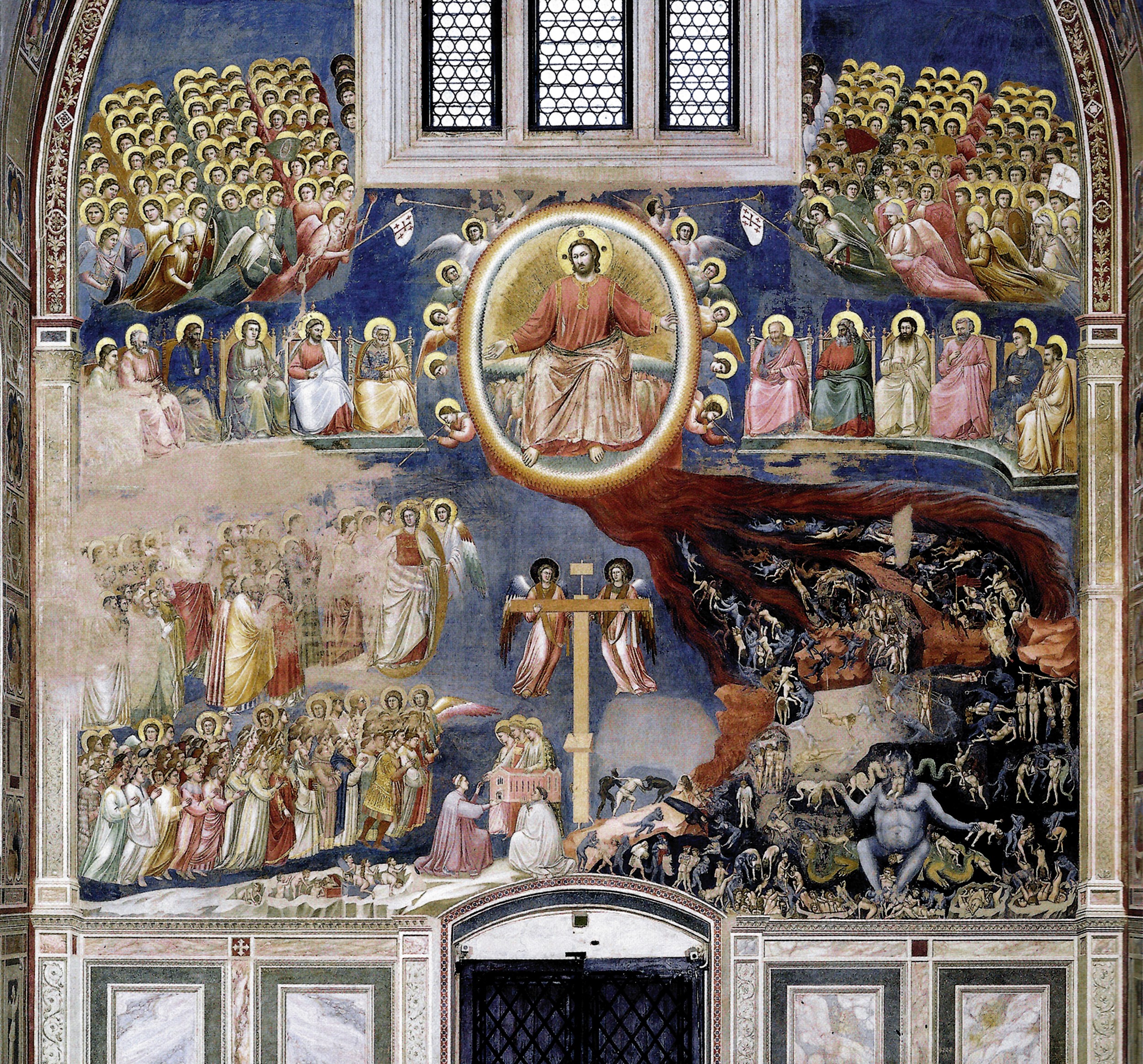
Key Work: Giotto di Bondone, Arena/Scrovegni Chapel, Padua, 1305-6, exterior
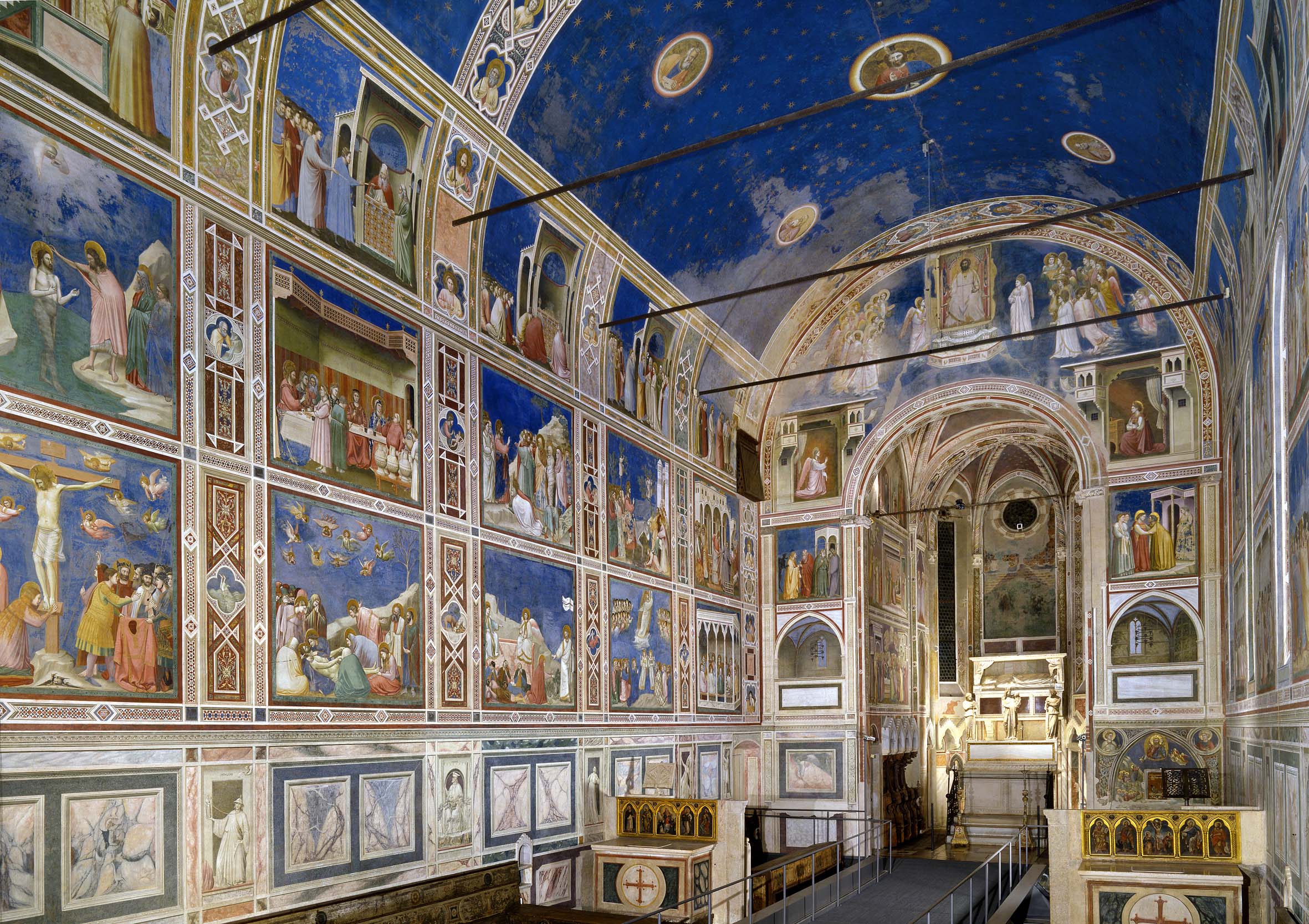  Key Work: Giotto di Bondone, Marriage at Cana, Raising of Lazarus, Lamentation, Resurrection, and 'Noli Mi Tangere' Arena/Scrovegni Chapel, Padua, 1305-6 fresco Terms: Fresco, Grisaille, renaissance |
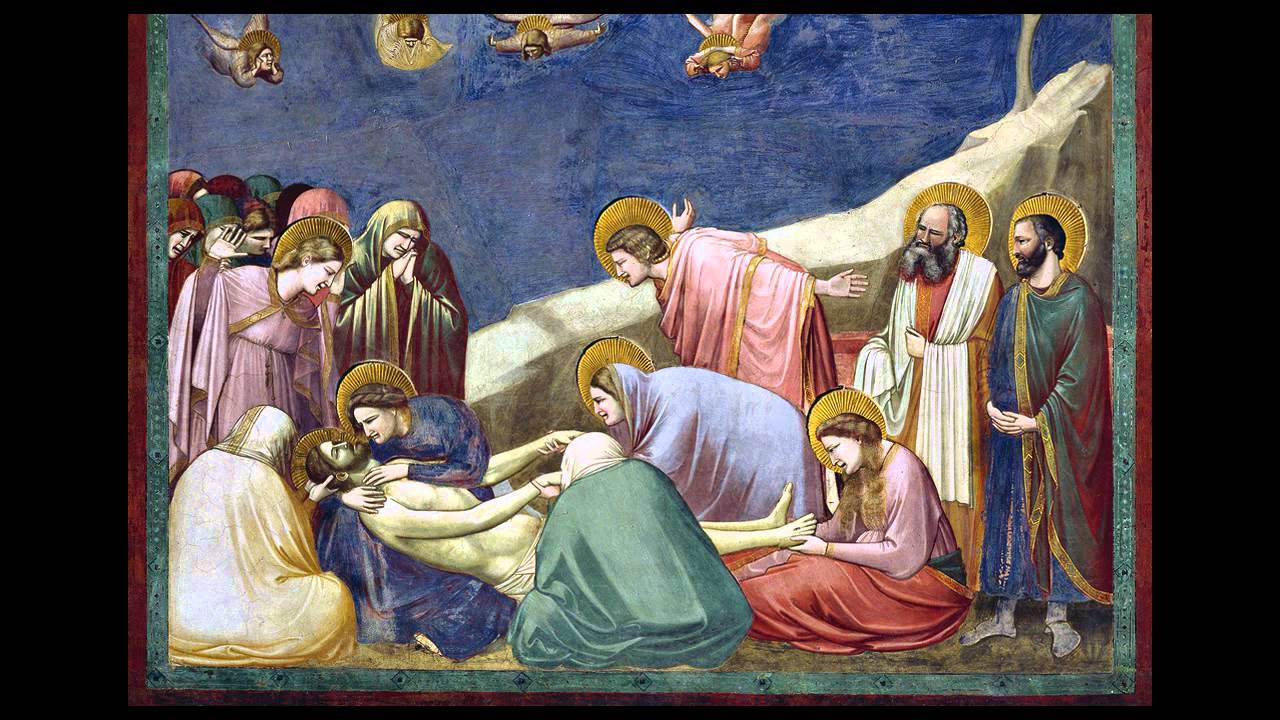 |
Giotto, Lamentation, 1304, Fresco, Scrovegni Chapel
|


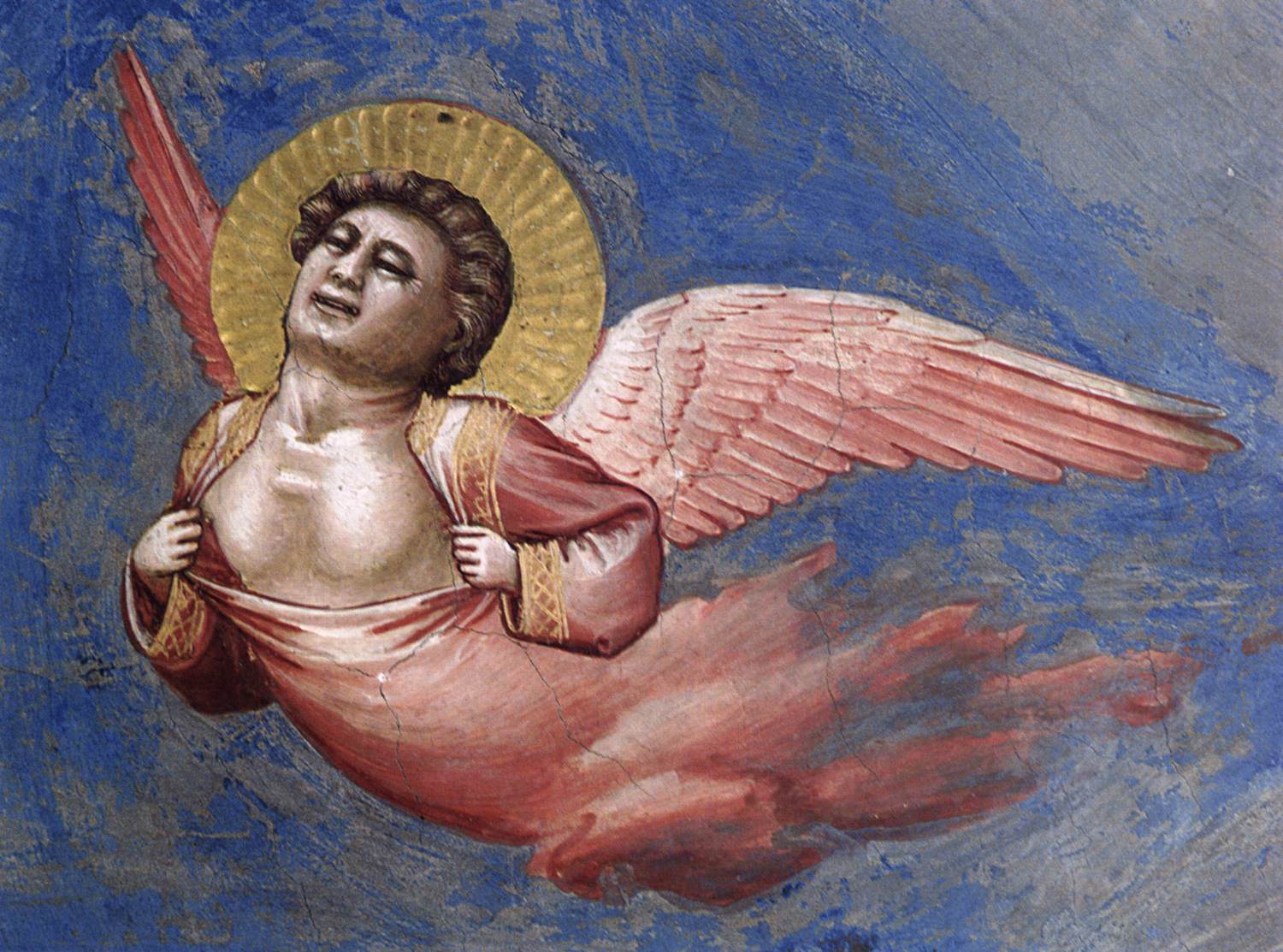 |
| Angel from the Crucifixion, 1305, web gallery details |
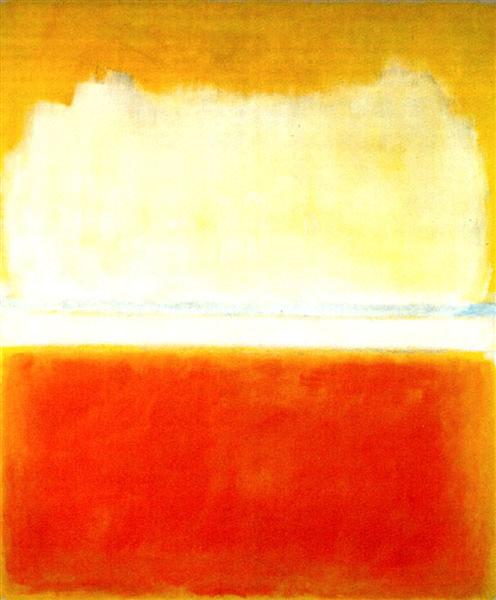 |
| Mark Rothko Untitled #8, 1956 |

 |
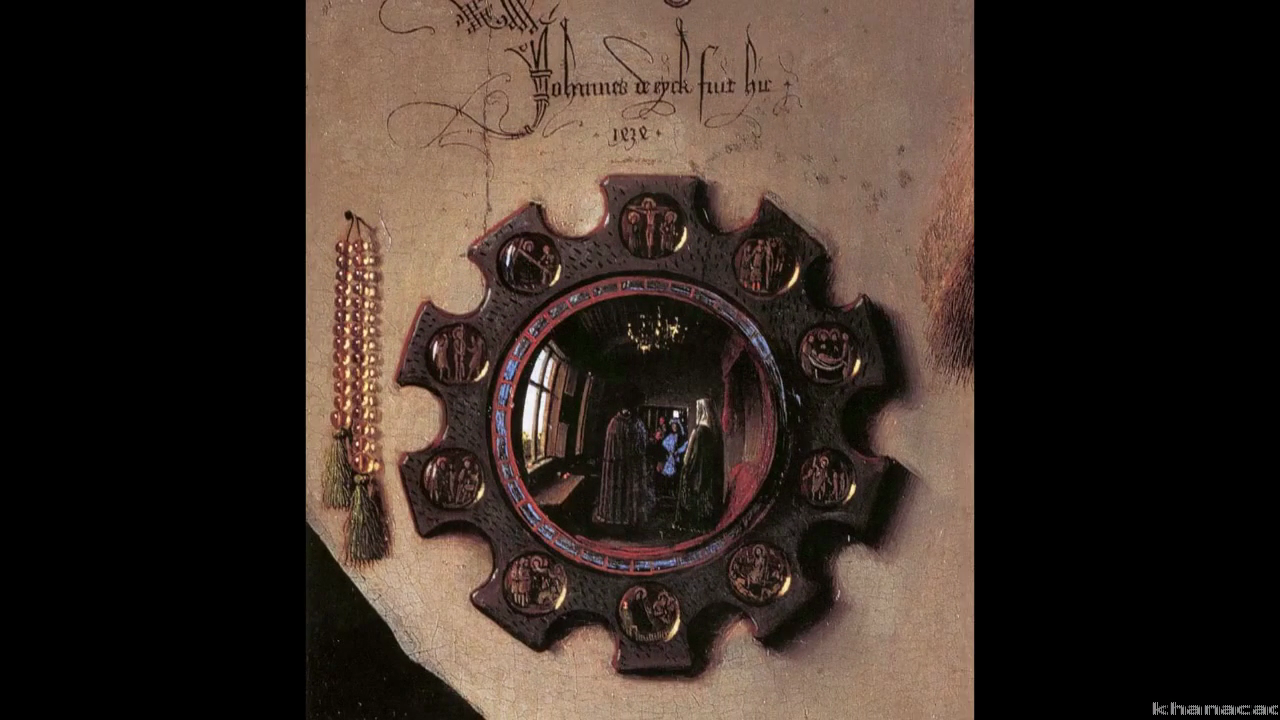
| Jan van Eyck, Annunciation, ca. 1433, oil on panel, (12-4) |





Massaccio, Holy Trinity, 1425, fresco , Brancacci Chapel(12-23)
 |
| What does this perspective do? The fresco, with its terrible logic, is like a proof in philosophy or mathematics, God the Father, with His unrelenting eyes, being the axiom from which everything else irrevocably flows" American Art Historian Mary McCarthy. |
Bill Viola, Emergence
Modernism, protorenaissance, Realism, idealism, abstract, representational, non-representational, fresco


No comments:
Post a Comment