Let's see if we can pick up the pace and cover the Sistine Chapel, Titian's Venus of Urbino, and Botticelli's Birth of Venus, plus begin to dive in on all 6 the key works for today -- it's too much for today, but it may be that we are all in the mood to cover more quickly than we were Thursday the 17th!!
It's too much, and if we dive too deeply into some key works I will cut the others from your 'to do' list.
Transition comparison and contrast-- Renaissance to Baroque:
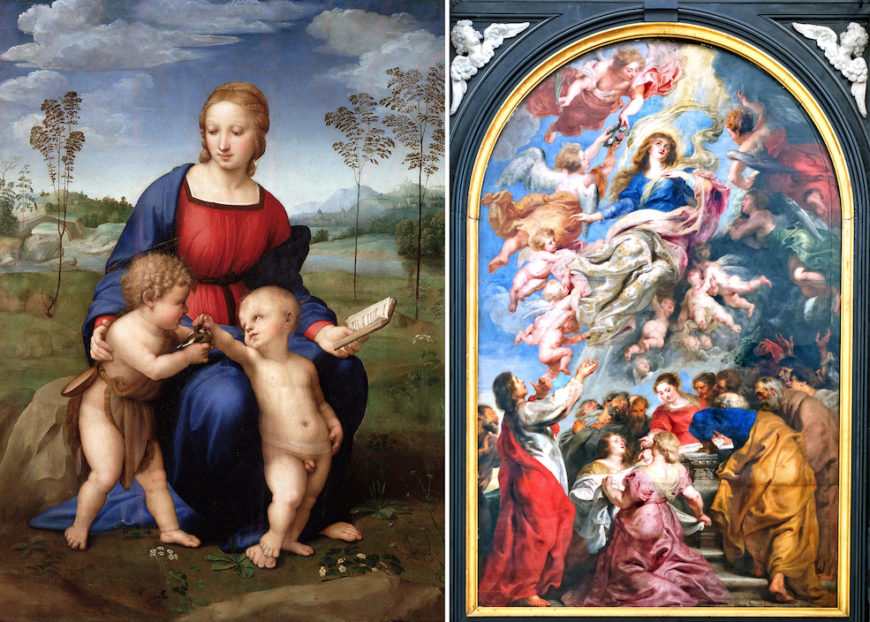 |
| Left: Raphael, Madonna of the Goldfinch, 1505–6, oil on panel, 42 x 30 " Uffizi, Florence; right: Peter Paul Rubens, Assumption of the Virgin Mary, 1626, oil on panel, 16 feet x 12'cm, High Altar of the Cathedral of Our Lady, Antwerp, Flanders, Belgium |
Baroque: first truly global style. As a result of colonization, the spread of Catholicism, and trade, materials, objects, and artists moved across distant geographies yet were more interconnected than ever before.... yes, but
Baroque A style characterized by realism, dramatic light/dark contrast, and complex compositions. It affects the emotions and activates the viewer’s space.
Traits: drama, movement, energy, complexity, return to the horror vacui / “ornamental fervor.” recognizable in Byzantine art
Baroque: 17th and much of the 18th centuries in a broad range of geographies across the globe
(barrôco in Portuguese, barrueca in Spanish) describing a specific type of irregular pearl: in other words, a natural but artificial-looking, precious but misshapen object.
17th century fascination with science and discovery led to many varied 'advances' -- maybe rapid transformations is a more helpful term-- in painting in particular. Emphasis on close observation. and new tools to enhance that capacity-- lenses and cameras, for example-- changed the kinds of realism that painters sought.
 |
| "Musei Wormiani Historia", the frontispiece from the Museum Wormianum depicting Ole Worm's cabinet of curiosities |

Other terms:
Genre, genre painting, portrait, still-life, history painting, chiaroscuro, tenebrism, theatricality, cabinet of curiosities (wunderkammer)
Week 4
6 Additional Key Works for Monday, 9/21–just begin to sketch notes on these; I understand that they may not be complete in your notebook All key works are discussed in the reading for Monday which is here. 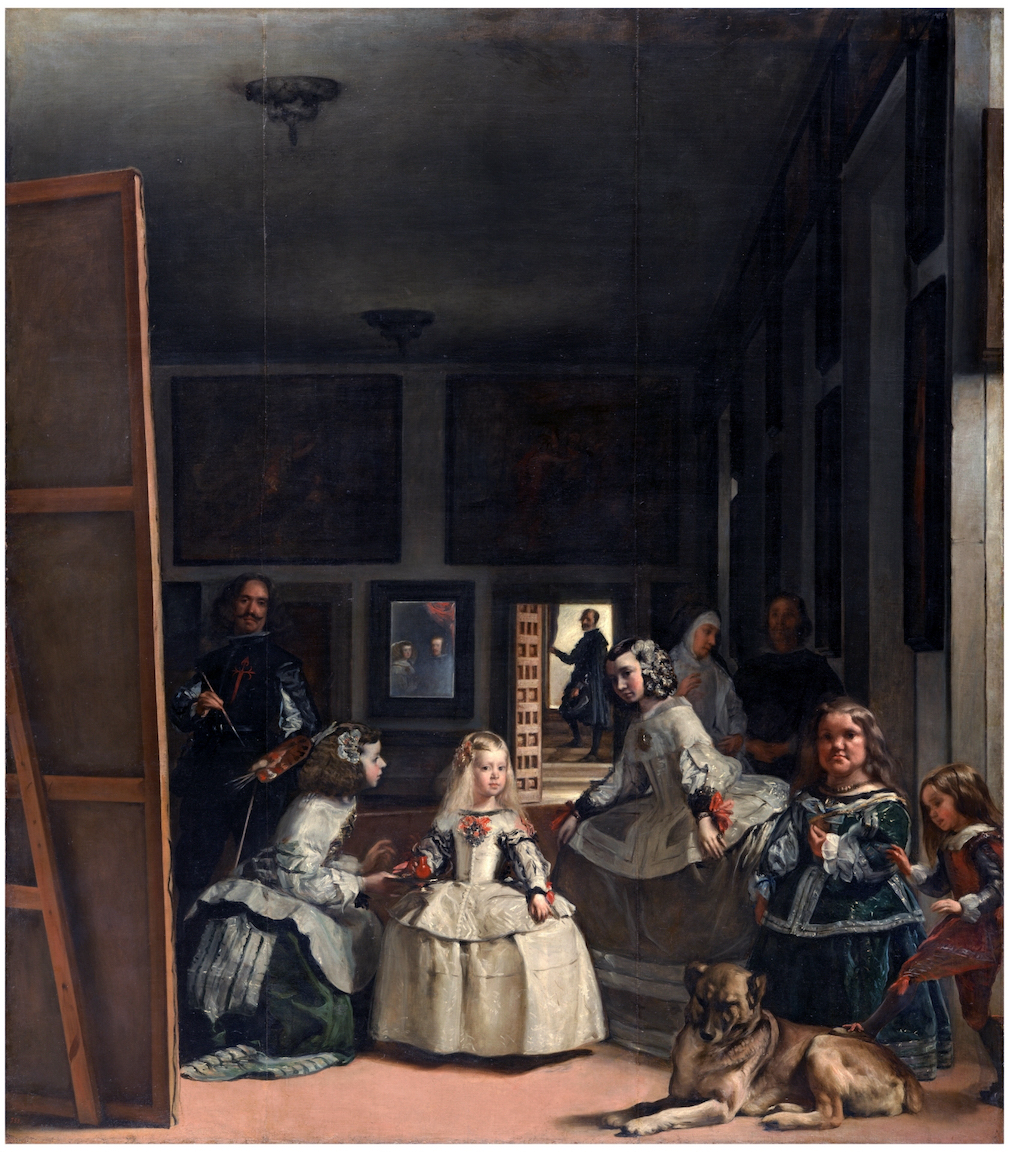
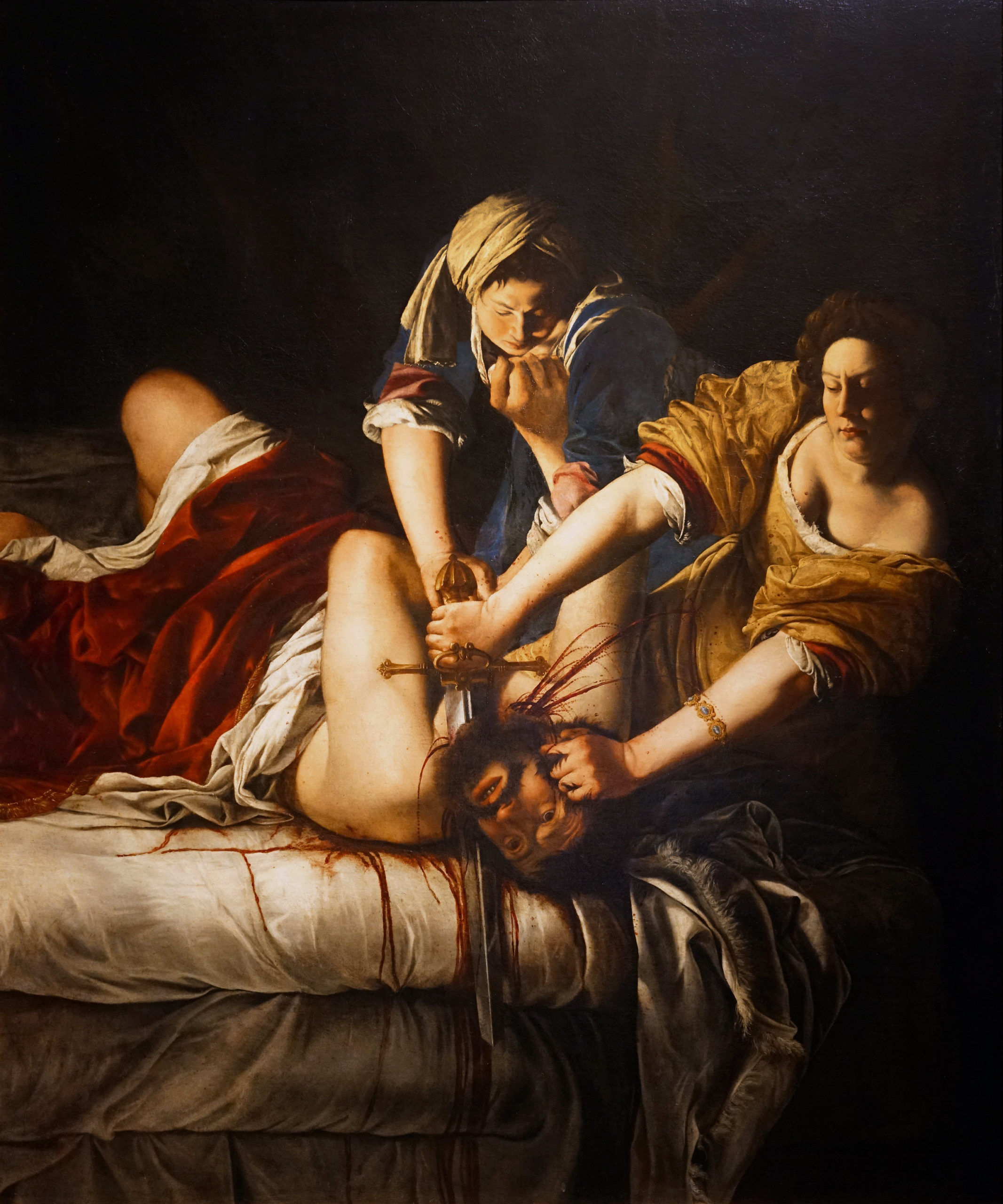 |
| Artemisia Gentileschi, Judith Slaying Holofernes, 1620–21, oil on canvas, 162.5 x 199 cm |
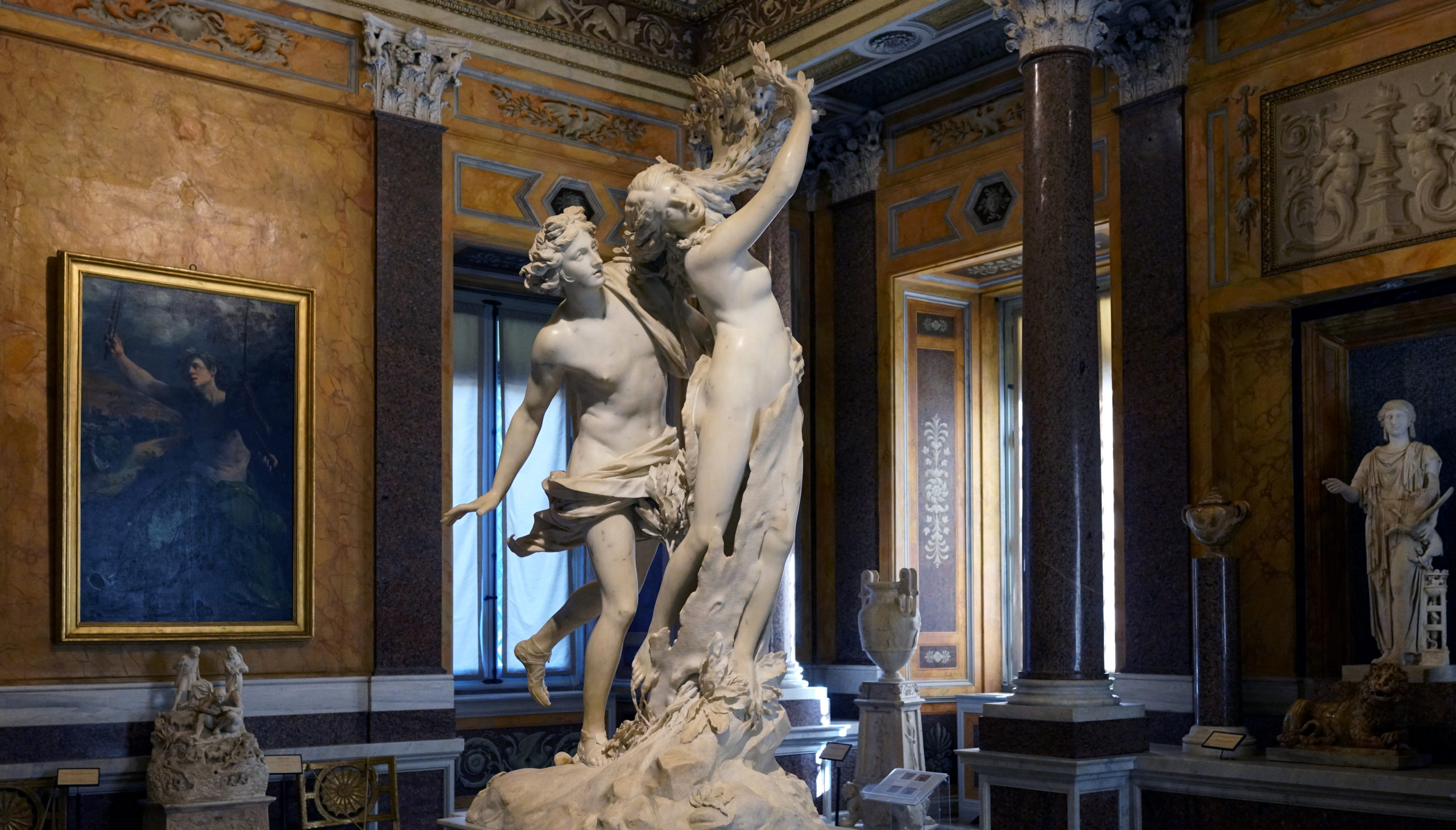
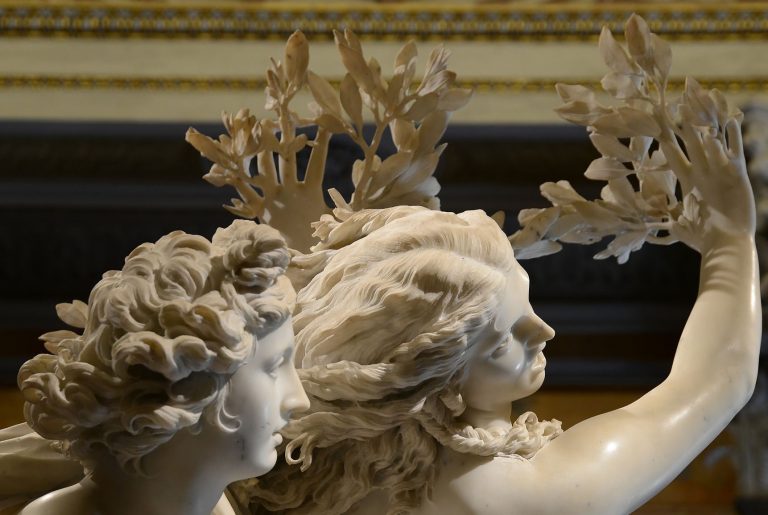
Gian Lorenzo Bernini, Apollo and Daphne, 1622–25
(just a preview! we will discuss this on Monday the 28th together with Caravaggio!)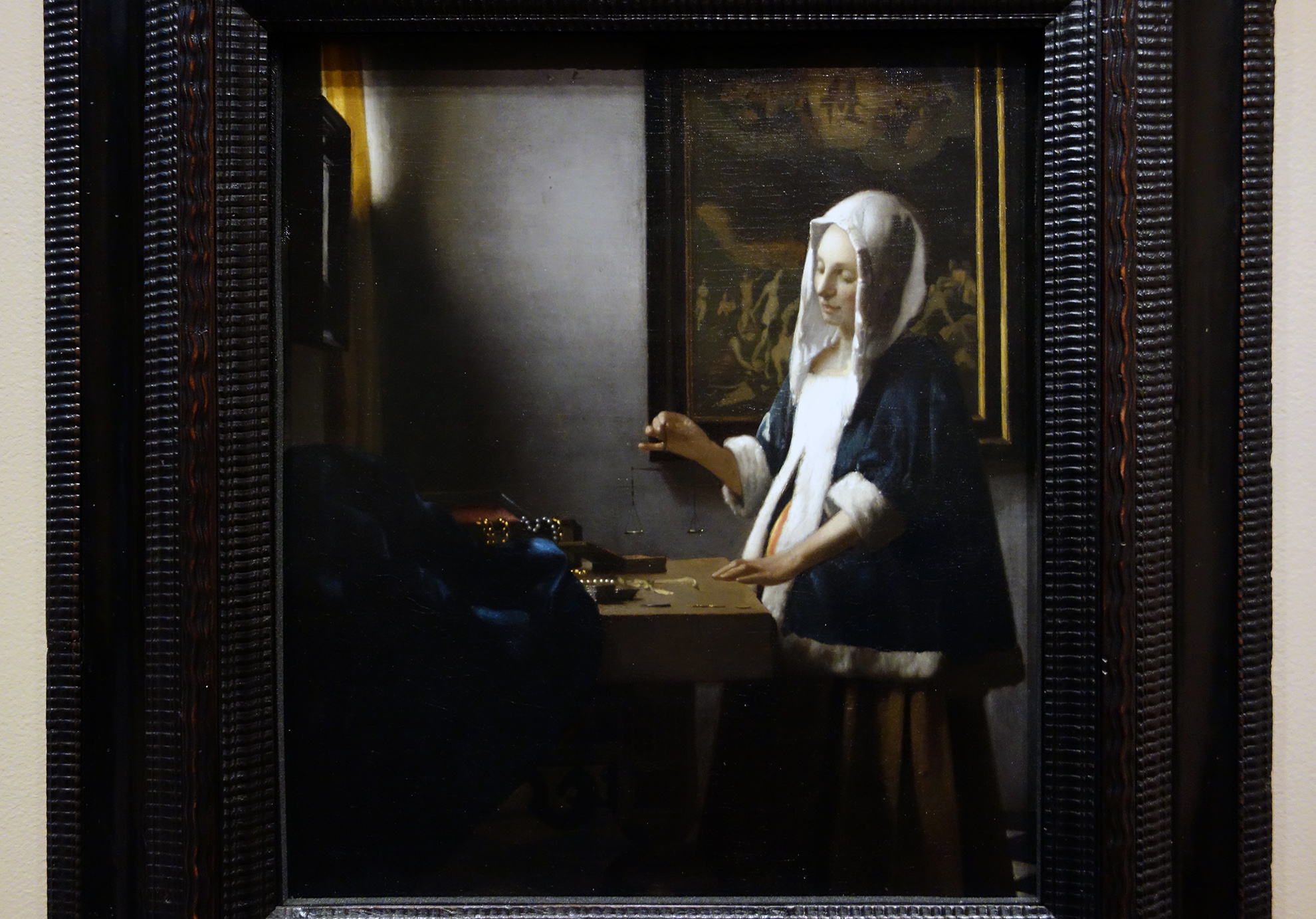
Johannes Vermeer, Woman Holding a Balance, 1664, oil on canvas, 42.5 cm × 38 cm
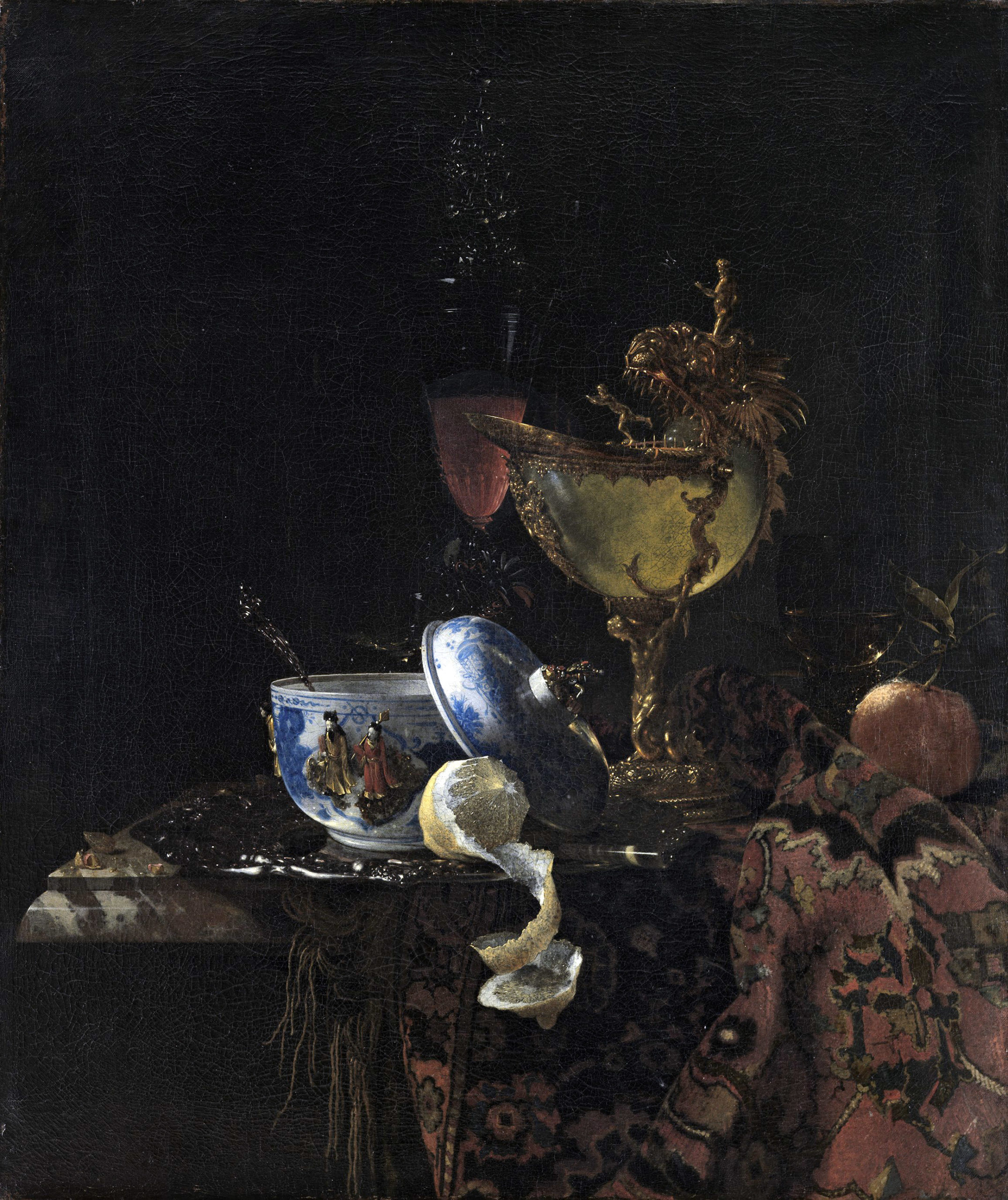
Willem Kalf, Still Life with a Chinese Bowl, Nautilus Cup and Other Objects, 1662, oil on canvas. 79.4 x 67.3 cm
 Rembrandt, Self-portrait of the artist in his Studio, c. 1629, oil on canvas, (9.8 in × 12.5 in)
 Judith Leyster, Self-Portrait, c. 1633, oil on canvas, 74.6 x 65.1 cm
 |
| Source-- more great images |


 |
Gian Lorenzo Bernini, Ecstasy of Saint Teresa, 1647–52 (Cornaro Chapel, Santa Maria della Vittoria, Rome)
Saint Teresa was born a Spanish Aristocrat She experienced spiritual visions, which she described in detail in her autobiography The Life of St. Teresa of Jesus. She became a religious reformer and founded the Discalced Carmelites order.
Venetian Cardinal Federico Cornaro (1579–1653) commissioned the sculpture in the burial chapel of church home of an order of Discalced Carmelites.
The Ecstasy of Saint Teresa depicts the vision where her heart was pierced with an arrow by an angel with an arrow. She wrote that she saw an angel close by her on her left side, in bodily form. “He was not large, but small of stature, and most beautiful–his face burning, as if he were one of the highest angels, who seem to be all of fire; they must be those whom we call cherubim."
“I saw in his hand a long spear of gold, and at the iron’s point there seemed to be a little fire. He appeared to me to be thrusting it at times into my heart, and to pierce my very entrails; when he drew it out, he seemed to draw them out also, and to leave me all on fire with a great love of God. The pain was so great that it made me moan; and yet so surpassing was the sweetness of this excessive pain, that I could not wish to be rid of it. The soul is satisfied now with nothing less than God.”
The sculpture exists today as a beloved and despised emblem of the Baroque era.
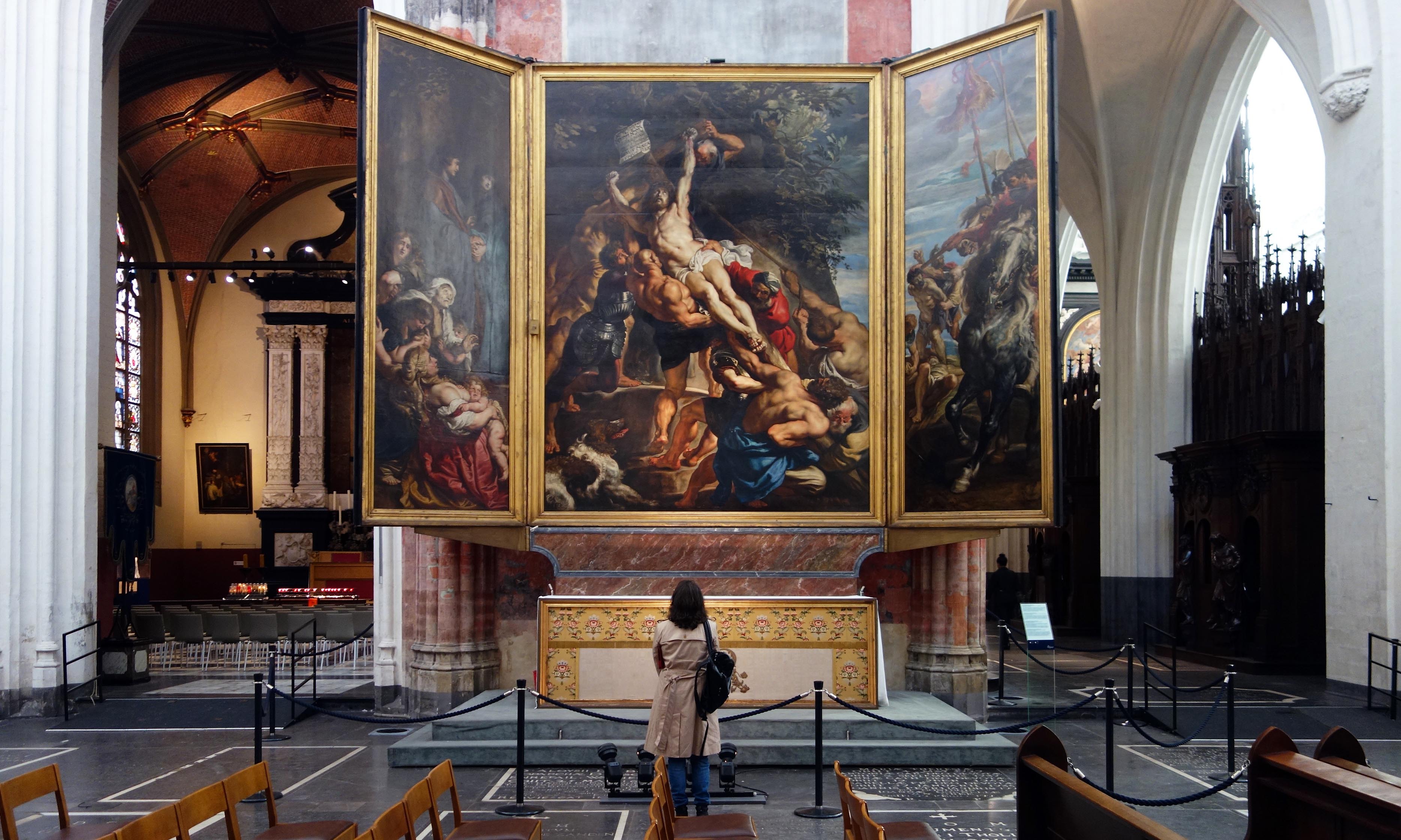 |
| Peter Paul Rubens, Elevation of the Cross, from Saint Walburga, 1610, oil on wood, center panel: 15′ 1-7/8″ x 11′ 1-1/2″ (now in Antwerp Cathedral) |
 |
| Incan Potato Varieties |
 |
| Basilica of Saint John of God in Granada was built in the mid-1700s (1737-1759) during the height of the Spanish Baroque period |
 |
| Caravaggio, Calling of St. Matthew, 1599–1600 |
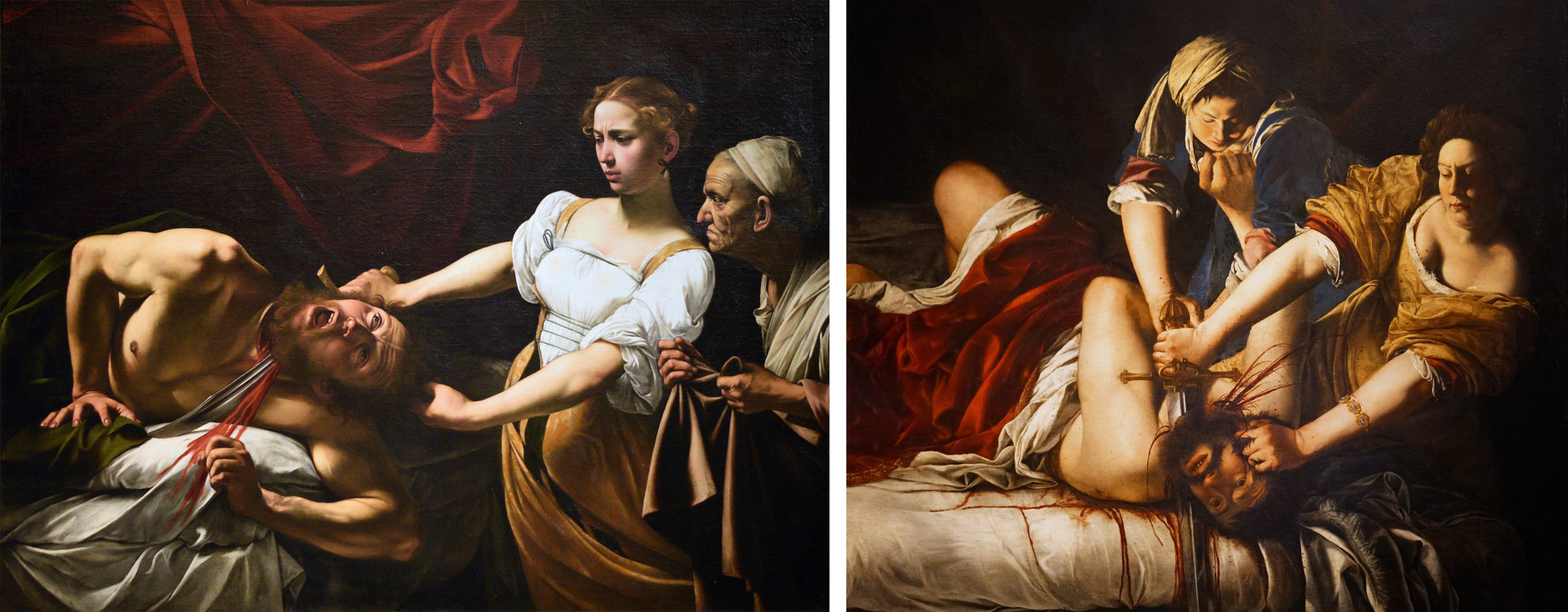 |
| Left: Caravaggio, Judith Beheading Holofernes, 1598–99, oil on canvas, Artemisia Gentileschi, Judith Slaying Holofernes, 1620–21, oil on canvas, |

No comments:
Post a Comment