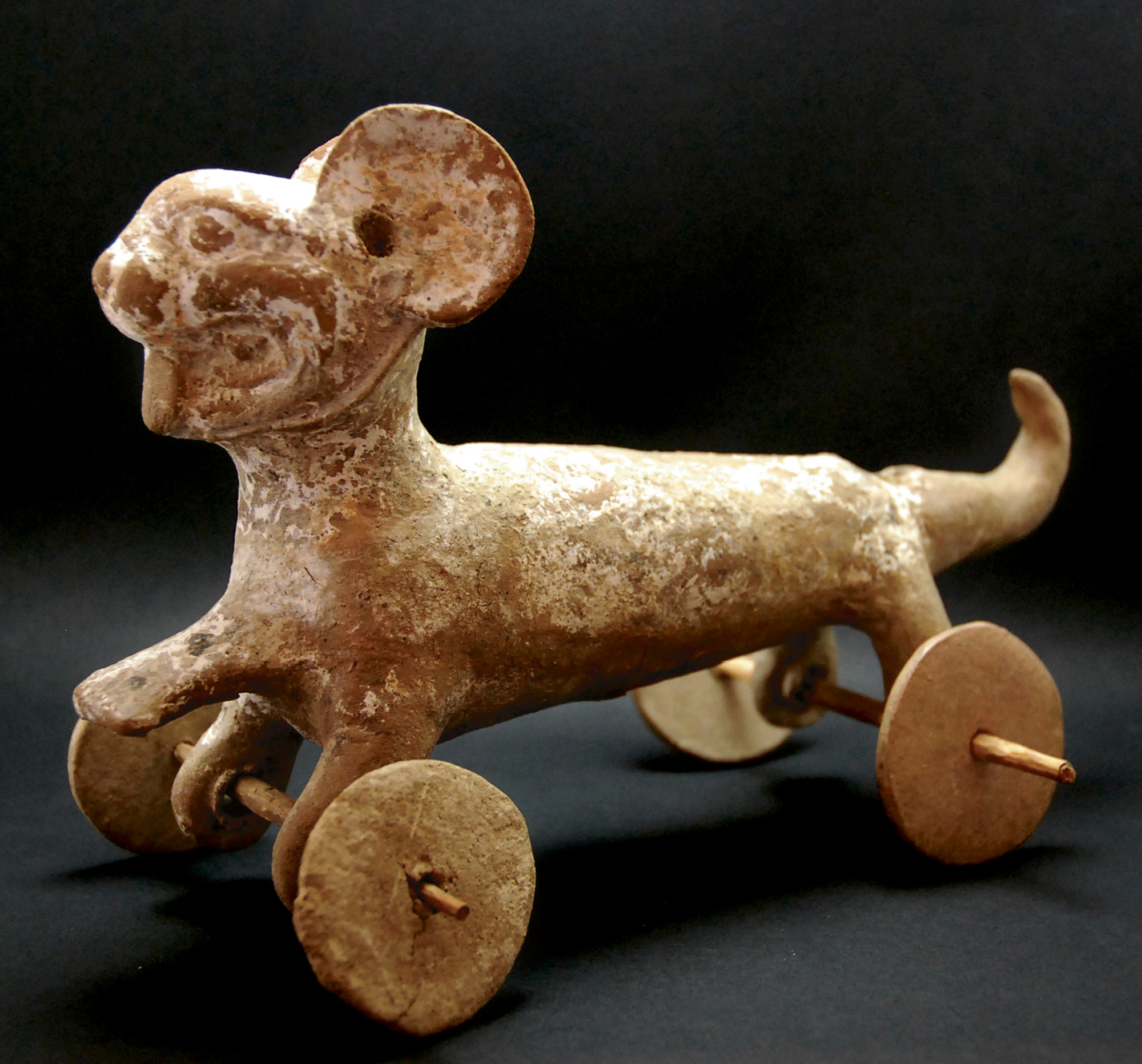
Artist Unknown, Wheeled feline, 600–900 CE, Late Classic or Classic Veracruz, image source
Artist: Unknown
Title, or working title: Wheeled feline
Date: 600–900 CE
Period/Location : Late Classic or Classic Veracruz (Mesoamerican, Veracruz culture, Present Day Mexico)
Materials: Ceramic with buff-colored slip
Size: 6 x 3 x 7 in
- Form (Formalism)
- Content/Iconography
- Context (History)
- Interpretation/Reading
- Theories of Art HIstory- 2nd Semester
- Marxism & Social History
- Feminisam
- Psychoanalysis
- Semiotics
- Postcolonialism (we will do background))

| Artist Period | Unknown sculptor of the Proto-Elamite (present-day Iraq) |
|---|---|
| Year | c. 3000–2800 BCE (5-4000ya) |
| Type | Limestone |
| Dimensions | 8.3 cm (3.25 in) |
| Location | Private collection |

"Like the portable statuette from 32,000 years ago described above, this 5,000-year-old Guennol Lioness (which is technically too late to be considered Paleolithic but has roots in the same shamanistic traditions as paleolithic figures that we will consider next week) is pierced with two holes. Probably this polished limestone carving was made to be worn, perhaps on the chest. But whose? (Note that if male lions back then did not have manes, "she" may more plausibly be a "he.")
Rather than engaging and potentially obedient, this sphinx is commanding, one of the most powerful, monumental sculptures ever made, especially considering that the heavily muscled figure with the penetrating stare is only 3 1/4 inches high. The closest descendants of the artist are probably found among the Kurds of today's Iran. In 2003, the figure was sold at Sotheby's to an Englishman in a checked gray suit for $57.2 million. " Anthropologist Sarah Hrdy, forbes magazine, March 2009


Lion Human, Stadel Cave, Germany, 40,000 years old, Paleolithic. Mammoth Ivory, ~12"

No comments:
Post a Comment