Key Questions: What do you read in the figurines of females made over the course of tens of thousands of years across Eurasia during the Paleolithic period? What purposes could they have served? What would you call them?
1000 WORDS

Botticelli, Birth of Venus, 1486
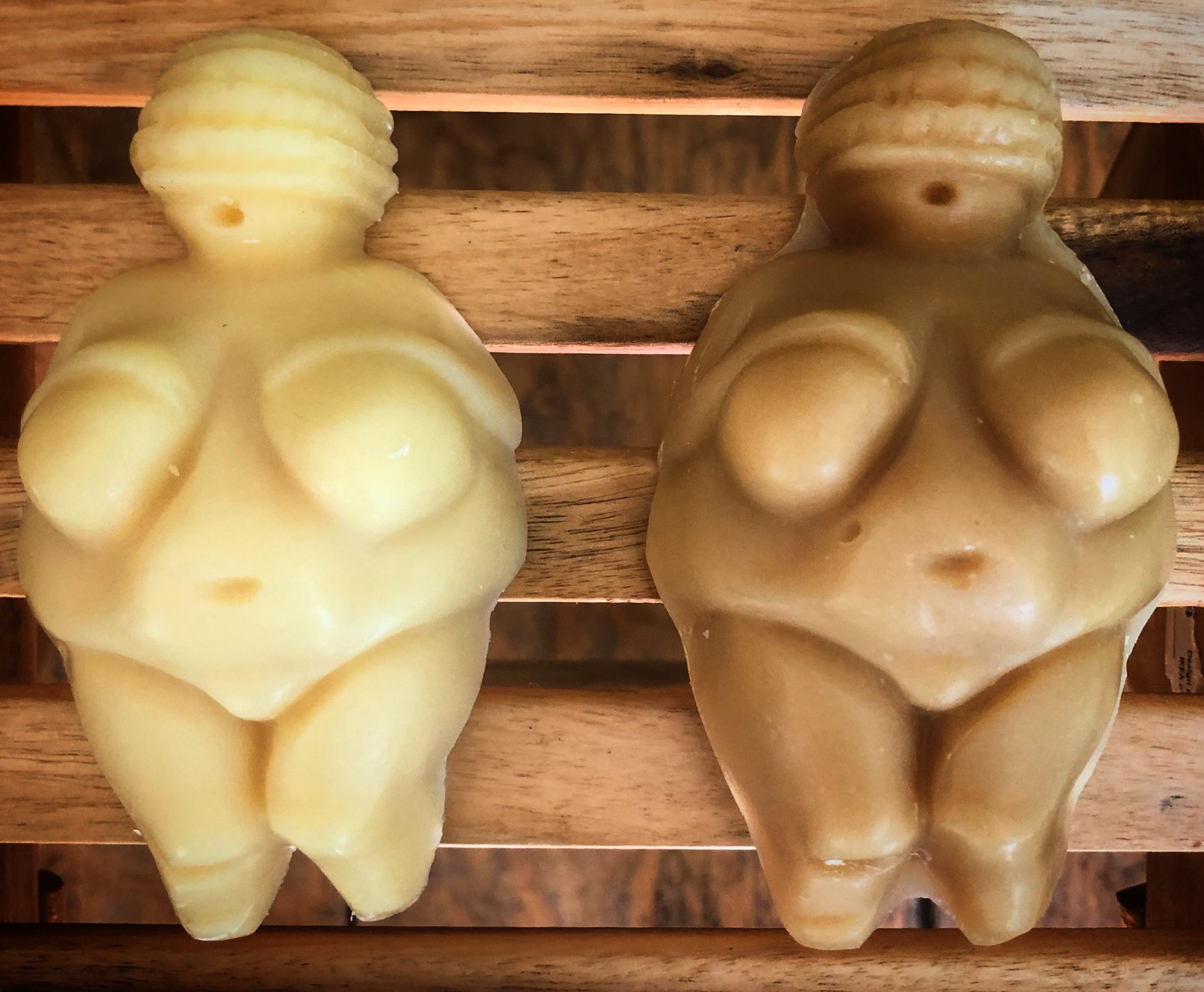
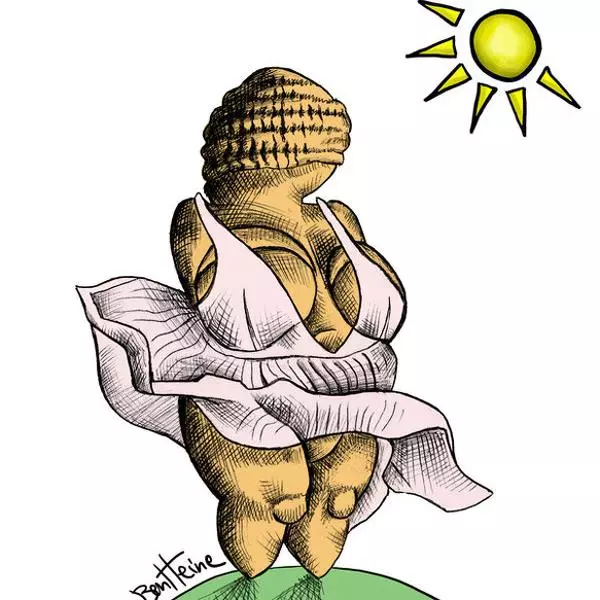


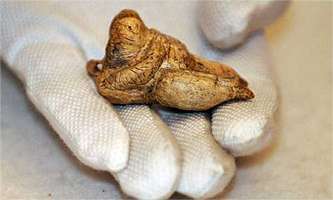
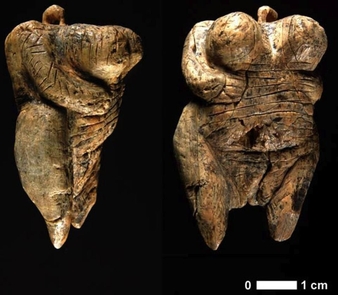
Photo: David Maurer Associated Press


Venus Pudique and Venus Impudique
The Medici Venus, one image of "Venus Pudique" or Modest Venus. 1st Century bce. Source.Venus Pudique image source.
Even more strikingly, the Venus Impudique resembles artwork from the time of her rediscovery, artwork that itself made serious and joking reference to classical and Renaissance images of feminine perfection. Most notably,
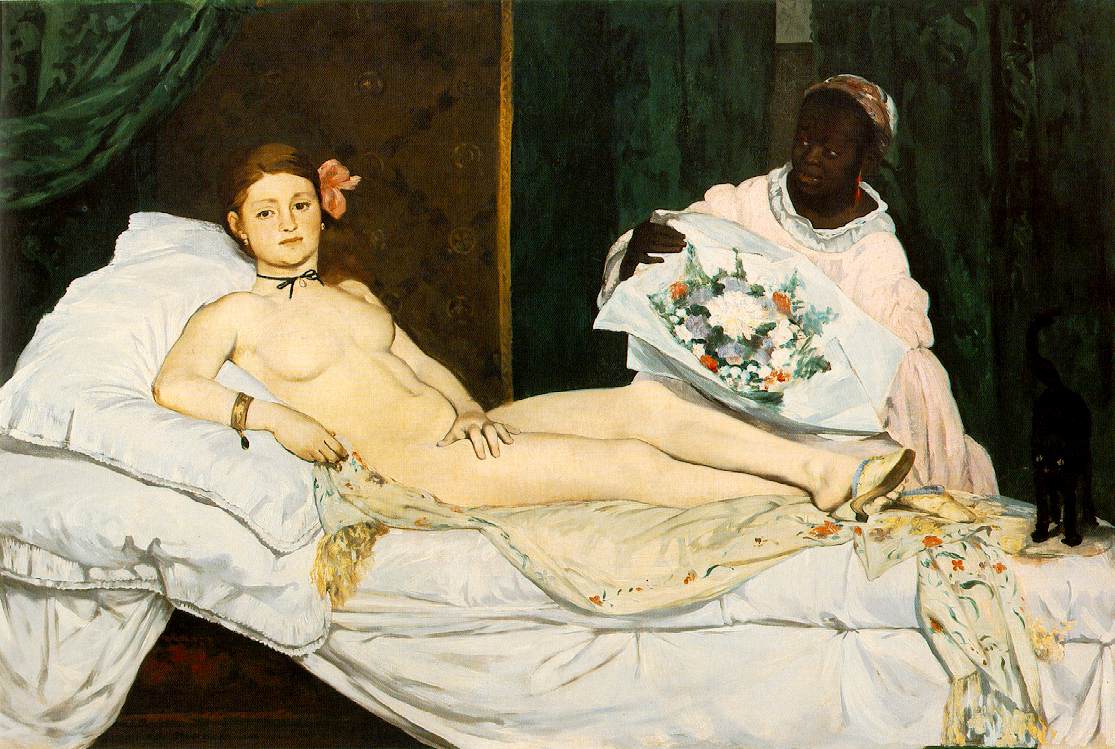
Manet's wildly controversial 1863 nude, Olympia,
based on Titian's 1538 Venus of Urbino, both of which we'll discuss extensively next semester. I am left wondering whether artists like Brancusi and Modigliani were inspired by the Venus Impudique's simple, elegant lines in their Modernist nudes.
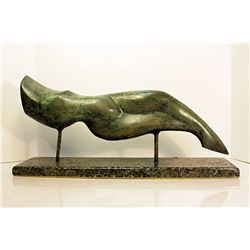
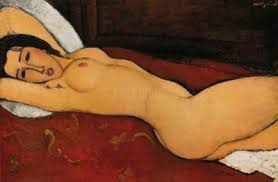
Brancusi, Nude, ~1917; Modigliani, Reclining Nude, 1918
She bears only modest resemblance to her lozenge-shaped fellow Paleolithic female figurines-- far less than she does the modernist images.


 Thick light blue (cyan) line: limits of the main glaciations
 Red tones: mural art
 Green tones: portable art
Lion-figure of Hohlenstein-
Stadel, 32,000 years old, ivory, 11inches
How do you read an image? What do you read in the wide flung images of female figurines in the Paleolithic period? What purpose do you think they served? What would you call them?
Lion Human from Hohlenstein Stadel, (1-2), 35-40,000 YA

Woman from Brassempouy (1-3),25,000 YA

Woman and Man from Cernavoda (1-11)5500 bce
Theories in play about the purpose of paleolithic figurines
1.Fertility goddess/amulet (1864-today)
1000 WORDS
The World’s Oldest Woman
| Tomiko Itooka, the worlds oldest woman, for the last few days. 116 Years old. |
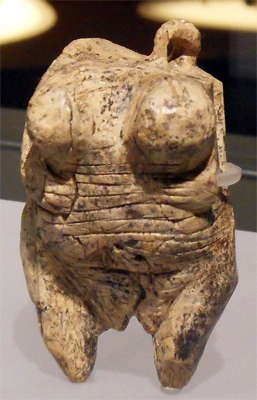
The Woman of Hohle Fels is the oldest woman in the world. By
a long shot. Her wrinkles cut deep; scars from ancient injuries mark her in six
places; her face has shriveled almost entirely, far beyond the shriveling of
those old apple dolls I remember
from my own rural childhood.


the Woman from Hohle Fels is 333 or so times older than the record holders above.

Woman of Hohle-Fels, detail. Source
Nonetheless, her bosom defies gravity and time aggressively: her lunchlady breasts perkier....
Nonetheless, her bosom defies gravity and time aggressively: her lunchlady breasts perkier....

than the buds of a twelve year old.
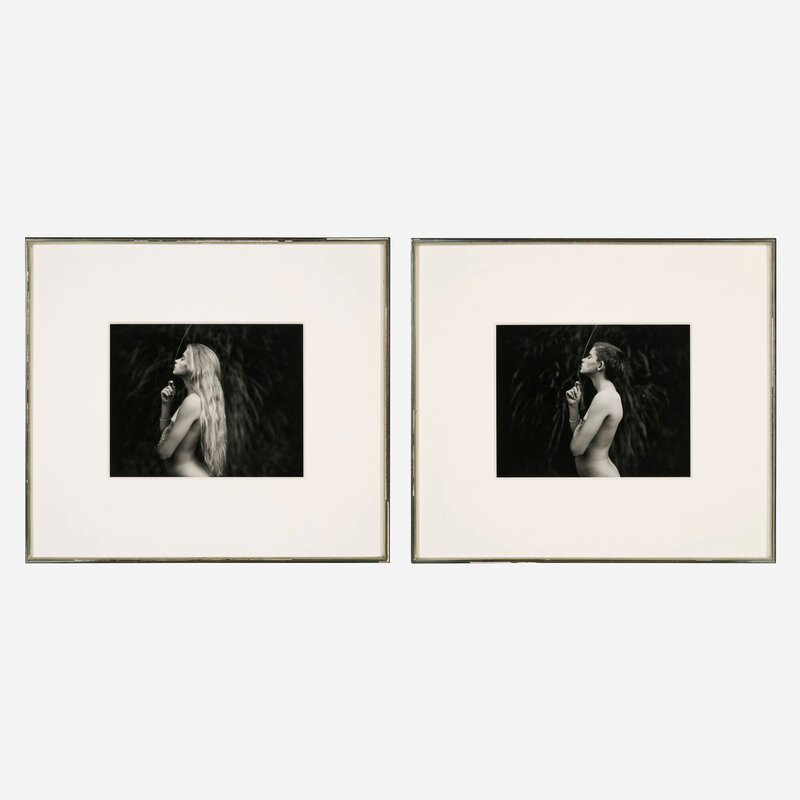
The Hohle Fels figure's broad shoulders hold their square like a youthful linebacker’s, and her hands have the childish sweetness of a teddy bear cuddling itself to sleep.


Woman of Hohle-Fels Source Patriots source, Teddy bear source.
Woman of Hohle-Fels Source Patriots source, Teddy bear source.
You may find it strange that I dip this 35-40,000 year old
ancestor into this wide-flung stream of modern metaphors—moreover none of them art
metaphors. I do it very intentionally. Though these comparisons can’t
possibly contain the volumes she has to reveal, I seek to continue the process
of rescuing her from 150 years of a singular metaphor which began as a joke and
has ended as bullying. (If you can bully a 40,000 year old lady.)
Botticelli, Birth of Venus, 1486
Precisely because we know so little about them and the
people who made them, the very earliest representational artworks have the
potential to introduce us to the concept that creative and critical looking at,
thinking about, and analyzing objects can help us understand ourselves, our
gesture to make art today, and the remarkable lives of our most ancient modern
ancestors. Seeing relationships between the objects we look at and the world
around us can help us read possibilities about what the images may have meant
in their own time, and help us understand ourselves as humans. Paleolithic figurines have captured the modern imagination over the last 100+ years since so many have been discovered, and their popularity has lead to careless representation, some of it fun and some of it harmful to factual understanding.
Patchouli goat's milk bath soap, "Paleolithic Pin-up," and the figure recreated in chocolate.
I tell the story of the naming of Paleolithic figurines to demonstrate how “Bully” interpretations generate blindness about an object’s possible meanings and purposes. In this course, I aim for less violent acts of understanding. If you'd like a detailed analysis of the problem of the "Venus" naming convention for paleolithic human figures, including the problems of following cultural and political biases at the time of the naming which may have resulted in ignoring a likely broader and more inclusive view of gender, the likelihood of male and female makers, greater understanding of reproduction, and a less prudish view of sexuality and nudity by the paleolithic people, you might look to Anthropologists' April Nowell and Valerie Chang's "Science, the Media, and Interpretations of Upper Paleolithic Figurines." (you may need to be signed in through the library to access.)
But first, some background. Modern archeologists found the woman of
Hohle-Fels in 2008 in a cave in Germany along with many Paleolithic artifacts,
including a bone flute, the world’s oldest musical instrument.
The entrance to Hohle-Fels Cave in Southern Germany. Image from wikipedia.
Her ancient maker carved the Woman of Hohle Fels out of
mammoth ivory, and she stands a mere 2.5 inches tall. She has no head, rather
she has a small loop that may have allowed her owner to wear her. Her
breasts, buttocks, and vulva are greatly exaggerated, while her head, feet,
hands, arms and legs are absent or understated. She shares many of these traits
with the more than 100 lozenge shaped female figures made from about 40,000
years ago until about 11,000 years ago. She also shares stylistic features with many of the non-human representations found very nearby her burial site.
Photo: David Maurer Associated Press
Woman from Hohle Fels,(not in book) Image Source.
The discovery
of the Woman of Hohle Fels displaced the most famous female figurine from the
Paleolithic era in age, the Woman of Willendorf, which had held the record of
oldest work of representational art for a century. The two figures share many traits, for example, the Woman of
Willendorf, found in Austria in 1908, bends her small head to her chest so that
we cannot see her face, or perhaps she has no face; she lays her small arms
across her voluminous breast and her legs taper away to points rather than
ending in feet. She too seems made to
lie in the giant hand of a human.

One can’t imagine that all her secrets will
ever emerge, but the remarkable combination of tender subtlety and almost
violent exaggeration in her mix of parts provokes interest and wonder.
The Marquis de Vibraye rediscovered the first of
these figures known to modernity in 1864.
Paul, Marquis de Vibraye, 1809-1878 (Photo taken in Chateau de Cheverny France by blogger. )
He announced the discovery along with a
joke that resulted in a name that has shaped our understanding of these
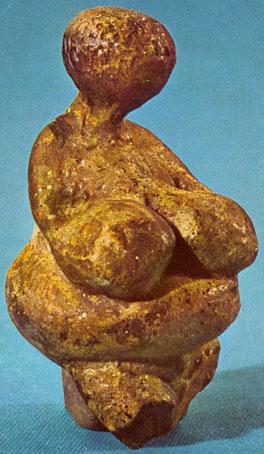
figures. He called the figure “Venus Impudique,” riffing on a type of sculpture
of Aphrodite known as “Venus Pudique,” or “Modest Venus,” a representation of the
Greek Goddess of Love and Beauty, Aphrodite, covering her breast and genital
areas with some degree of modesty. The name ended up sticking, as an ongoing
joke on the contrast between the appearance of these paleolitic figurines and
the ideal of beauty in the late 19th and early 20th
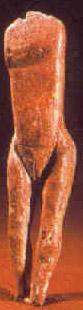
centuries. The figure that Marquis
de Vibraye found actually bore far greater superficial relationship to Aphrodite than most
of the others, slender, slightly curvatious, and, presumably, smooth.

The Medici Venus, one image of "Venus Pudique" or Modest Venus. 1st Century bce. Source.Venus Pudique image source.
Even more strikingly, the Venus Impudique resembles artwork from the time of her rediscovery, artwork that itself made serious and joking reference to classical and Renaissance images of feminine perfection. Most notably,
Manet's wildly controversial 1863 nude, Olympia,
based on Titian's 1538 Venus of Urbino, both of which we'll discuss extensively next semester. I am left wondering whether artists like Brancusi and Modigliani were inspired by the Venus Impudique's simple, elegant lines in their Modernist nudes.
Brancusi, Nude, ~1917; Modigliani, Reclining Nude, 1918
She bears only modest resemblance to her lozenge-shaped fellow Paleolithic female figurines-- far less than she does the modernist images.
Lozenge shape of Paleolithic Females, from LeRoy McDermott's article, referenced above.



The Venus Impudique, who unleashed the name Venus on all her kin in 1864, shows few of the stylizations of the typical paleolithic figurines. They each have significantly exaggerated breasts, buttocks, and labias, and suggested a
meaning beyond direct representation, and because those stylizations appeared to had
much to do with reproductivity, and rather less with beauty and love. The link with Venus, the Roman goddess of
love, beauty, and sexuality, stuck fast. Calling her Venus has made
many imagine the figures represent a male ideal of female beauty in the Paleolithic period, and there’s
really no reason to believe that this is the case. It took nearly a century for thinkers to escape the box that the label 'Venus' drew around the possible meanings of these figures.
Raquel Welch as a Cave Woman in one million years b.c., 1966 Woman from Willendorf, (1-4)
What we’ll find throughout
the year is that very often the name we use for a particular work of art is not
the name the maker gave it, but the name a historian, typically from the 19th
or 20th century, gave it. Often those names shape the way artworks
are ‘read’ for decades or centuries, and can, as in the case of the Woman of
Willendorf, block viewers from seeing other interpretations. Let's use that as a springboard.
What interpretations likely emerged from the name Venus? What other interpretations could exist? Why do you think paleolithic hunter gatherers made enough exaggerated lozenge shaped figurines between 11 and 40,000 years ago that over a hundred of them have been found in the last 100 years? What do you read in the wide flung images of female figurines in the Paleolithic period? What purpose do you think they served? What would you call them? How do you read an image?
|
Spread of humans on Earth
Thin dark blue line: coastline
 Thick light blue (cyan) line: limits of the main glaciations
 Red tones: mural art
 Green tones: portable art
Spread of Paleolithic Art, from Wikipedia
other remarkable Paleolithic figures:
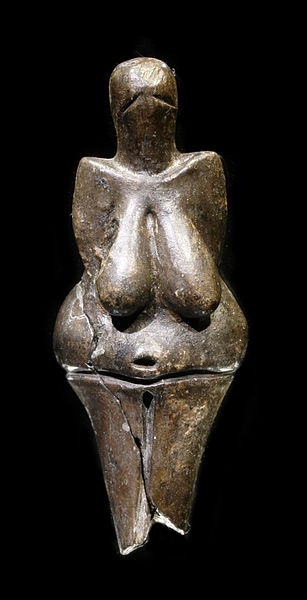
Gagorino Venus, ~22,000 years old. 2.2" Photo J. Jelinek, The Evolution of Man
Venus of Dolni-Vestonice, 27-31,000 years ago, Moravia, Czech Republic, clay. image Wikipedia
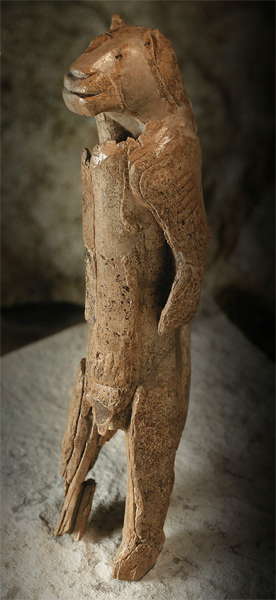
Lion-figure of Hohlenstein-
Stadel, 32,000 years old, ivory, 11inches
How do you read an image? What do you read in the wide flung images of female figurines in the Paleolithic period? What purpose do you think they served? What would you call them?
Lion Human from Hohlenstein Stadel, (1-2), 35-40,000 YA
Woman from Brassempouy (1-3),25,000 YA
Woman and Man from Cernavoda (1-11)5500 bce
Theories in play about the purpose of paleolithic figurines
1.Fertility goddess/amulet (1864-today)
2. Venus- ideal of male desire in a heterosexual society (1864-today)
3. Create and continue social alliances
4. .Self-representation/ pregnancy (1996- today) LeRoy McDermott on comparing Modern Bodies to prehistoric artifacts. here. Self-Representation:James Elkin's rebuttal here.
5. Ritual objects involving destruction of representations
5. Ritual objects involving destruction of representations
6. Representation of overweight/ wealth (never thought widely likely)
7. representation of gynocentric society
8.Representation of celebration of psychoactive Mushroom– ethnomycology 1999 best article on Mushroom-Females I've found here.
7. representation of gynocentric society
8.Representation of celebration of psychoactive Mushroom– ethnomycology 1999 best article on Mushroom-Females I've found here.
|
| Identify: artist, title, date, period Significance: many objects from history never achieve the status of this figure-- she exists in practically every history and art history book-- what has she come to stand for in history or art history 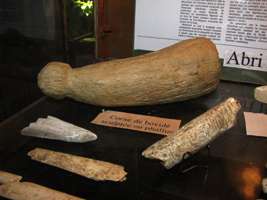 Phallus figures were also widespread in the Upper Paleolithic. And why are these not in Art History, only in urology? ? |
 |
| Blanchard Phallus, France, 36,000 YA, bison horn, about 10" |




No comments:
Post a Comment