A
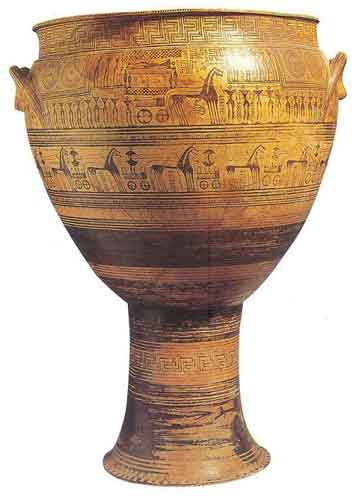 |
| Key Work: Dipylon Burial Vase/Krater, (Terracotta krater) ca. 750–735 BCE, 42 5/8 in. x 28 1/2 in. , Style= Archaic Greek, Metropolitan Museum |
 |
Dipylon Burial Vase/Krater, (Terracotta krater) ca. 750–735 BCE, 42 5/8 in. x 28 1/2 in. , Style= Archaic Greek, Metropolitan Museum  |
|

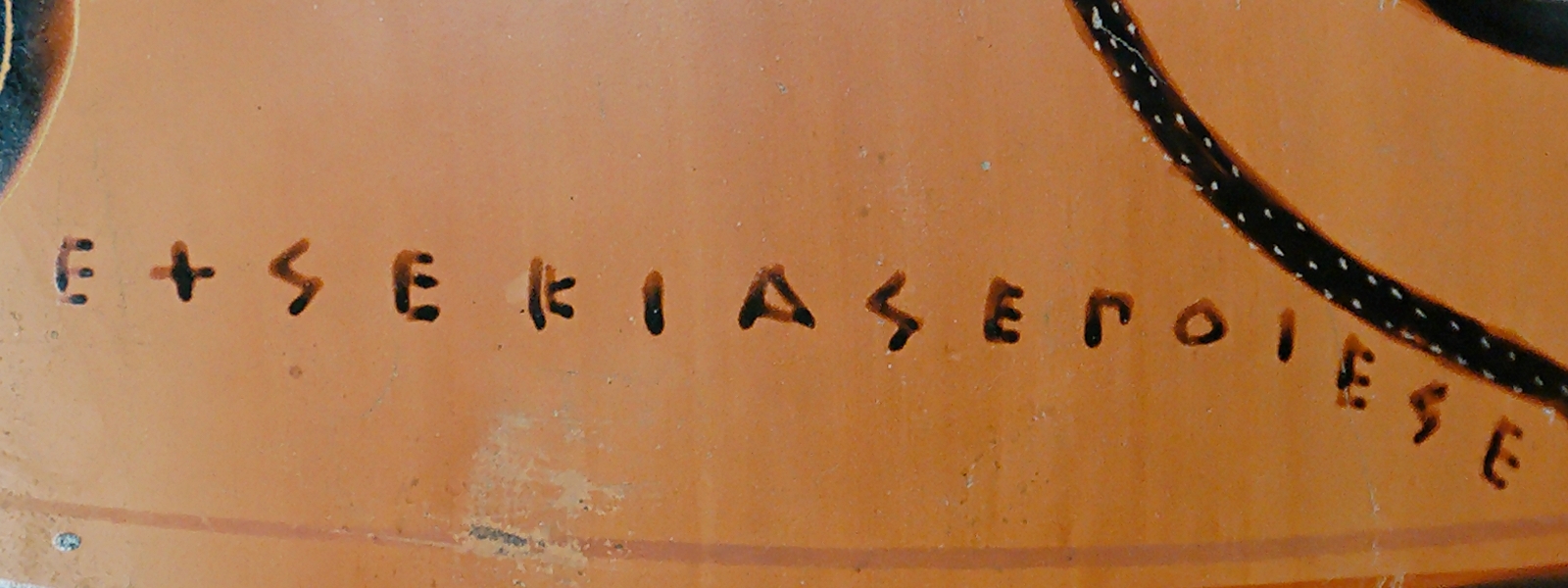 |
| Exekias' signature as potter: (“Exekias made [me]”), ca. 545–540 BCE (some pieces are inscribed "Exekias made and painted me" |
|
 |
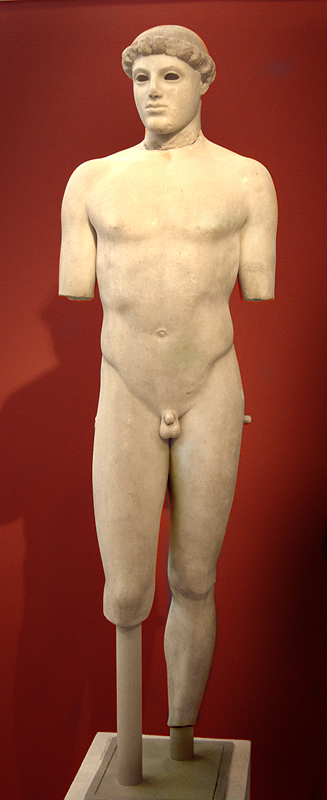
| So-Called Peplos Kore |
 | |
|
extreme naturalism in sculpture, relaxed, freestanding males
in contrapposto the ideal,
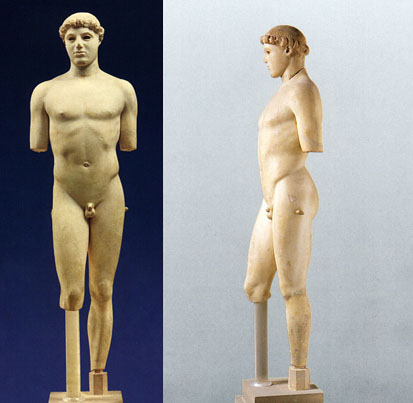
and the development of the Classical orders in architecture,
with the Parthenon providing the most recognizable/ideal example of classical architecture.
with the Parthenon providing the most recognizable/ideal example of classical architecture.
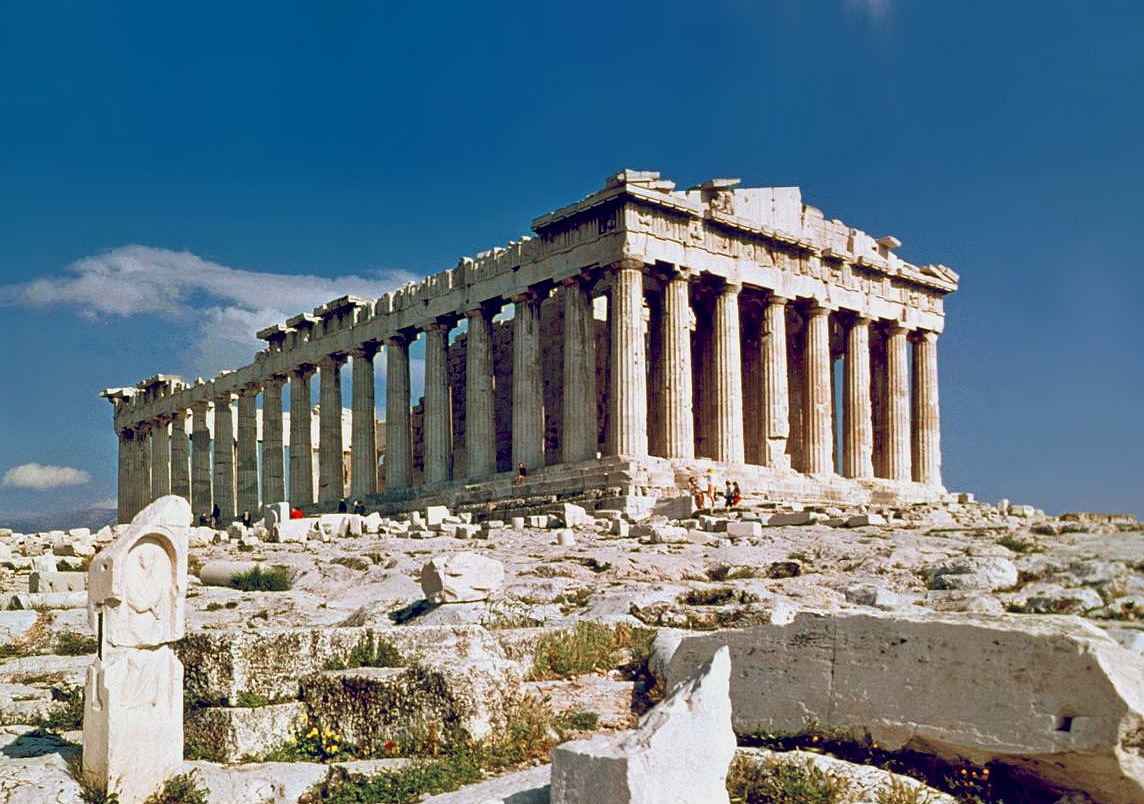 | |||
|
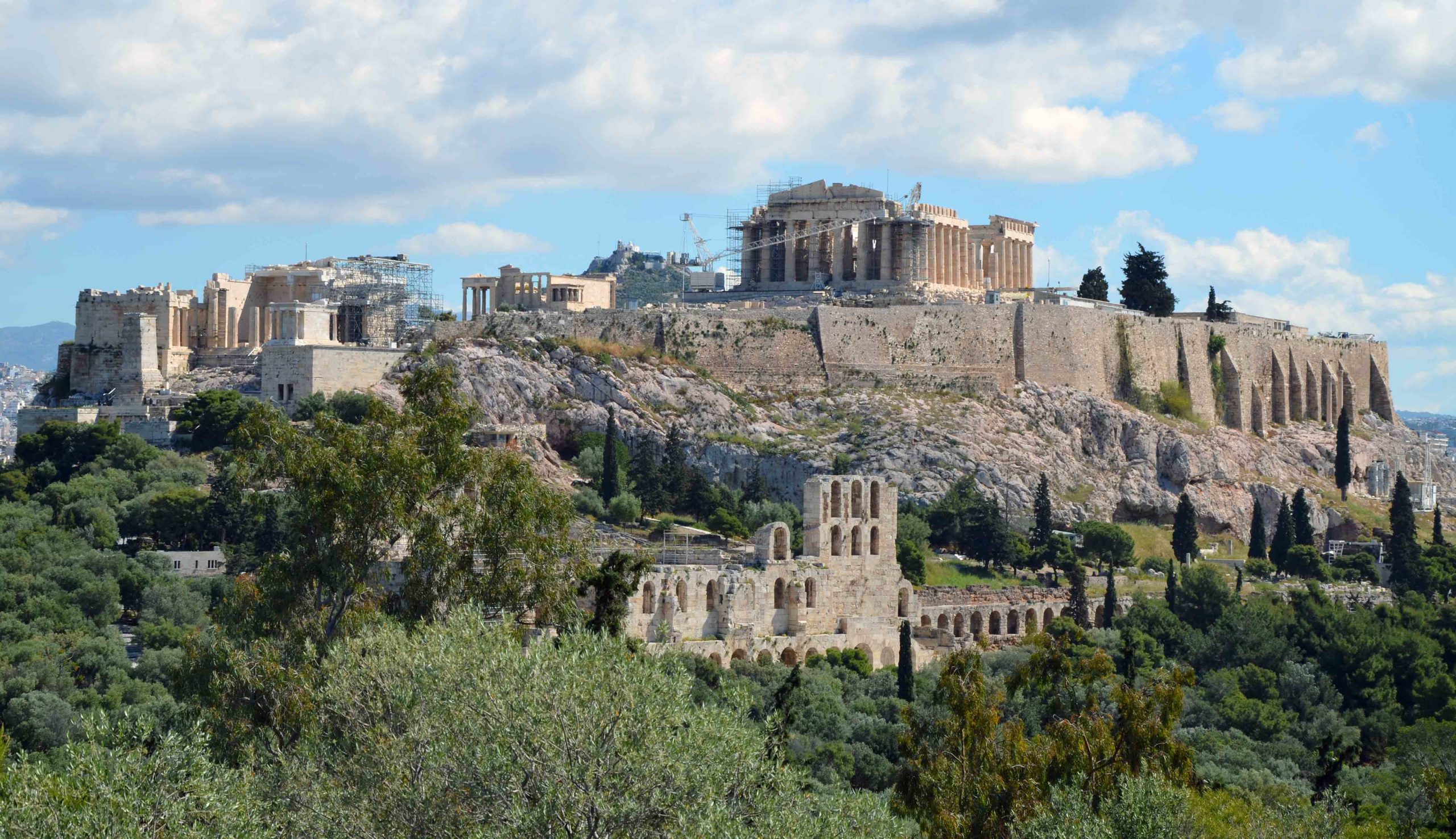 |
| Parthenon atop the Acropolis, Athens |

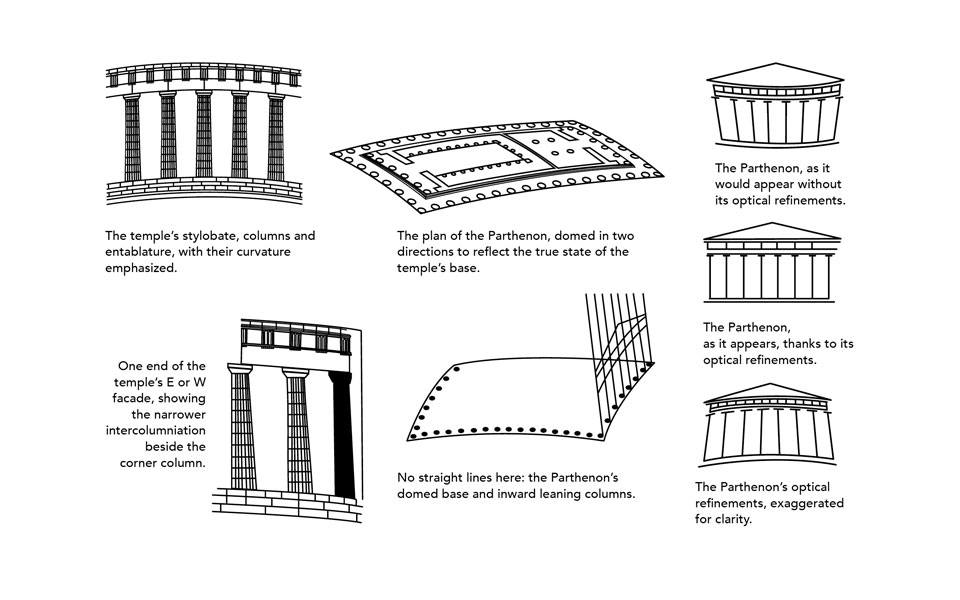 |
| Architectural Refinements |
 |
| West Metopes- Amazonomachy |
 |
| Lawrence Alma-Tadema, Phidias Showing the Frieze of the Parthenon to his Friends, 1868 |
The Greek Style, particularly the classical Greek style, has
had extraordinary influence … on the entire Mediterranean, broadly speaking

| Greek Temple at Priene, Turkey, ~300 bce source |
(Turkey,
Egypt, Syria, Phoenecia, Italy and more) and then all of the many neoclassical
periods around the world:
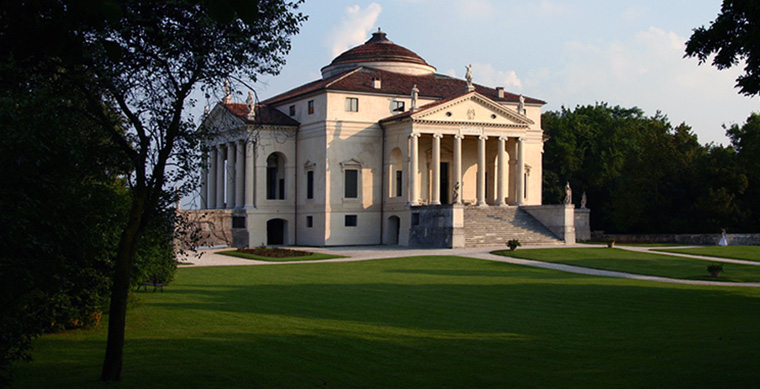 |
| Andrea Palladio, Villa la Rotonda, 1566 |
the Renaissance, of course, is the rebirth of
classicism, and periods of Neoclassicism have significantly colored the history
of art in
 |
| Thomas Jefferson, Monticello, Charlottesville, VA, 1772 |
France, Italy, England, (and to lesser extent all of Europe), USA and
more.
 |
| Key Work Temple of Hera, Paestum, 550 bce, Greek, Doric Style (4-15) |
The case of the White Temple
Classical architecture and in particular Greek temple
design influenced political buildings and the look of democracy around the world. We based our aesthetic on that
look… but what, actually, did it look like?
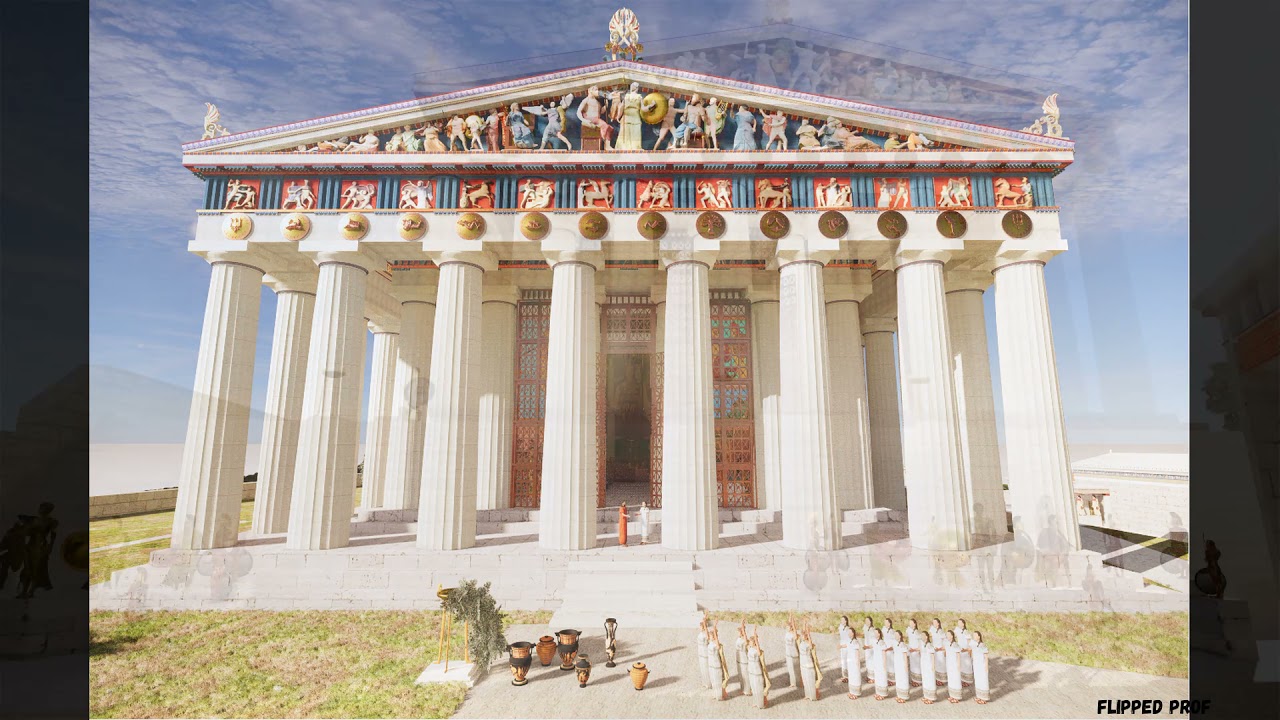 |
| Parthenon reconstruction |
In every Greek city, people dedicated vast resources to
create temples to honor particular gods. The typical temple included an open
porch with columns, and a closed portion, or cella, where a statue honoring the
god or goddess would prevail.
 |
| Temple of Athena Nike, Acropolis, Athens. Many spare bits of the temple have recently been reattached. The temple would have included a statue of Athena victorious... in the case of this temple she was represented without wings. 427-424 bce These statues, as well as innumerable other sculptures of gods and humans executed in marble and stone formed an ideal which western art history has never let go of. Greece fell to Rome in 146 bce, at which time the Romans, having imperial ideas already evident in Greece after Alexander the Great, emerged powerfully. |
The Romans admired the work of the greeks enormously; but
they needed materials for construction and warfare even more. They burned great
marble pillars and monumental statues to obtain lime for concrete, often making
small copies in marble to document the original. They melted bronze sculptures, after documenting them
with marble copies, usually mere shadows of the original. Only a very rare few Greek
bronzes remain.
 | |||
|

 | |
|
 | |||
|
 |
| . |
 |
| . |
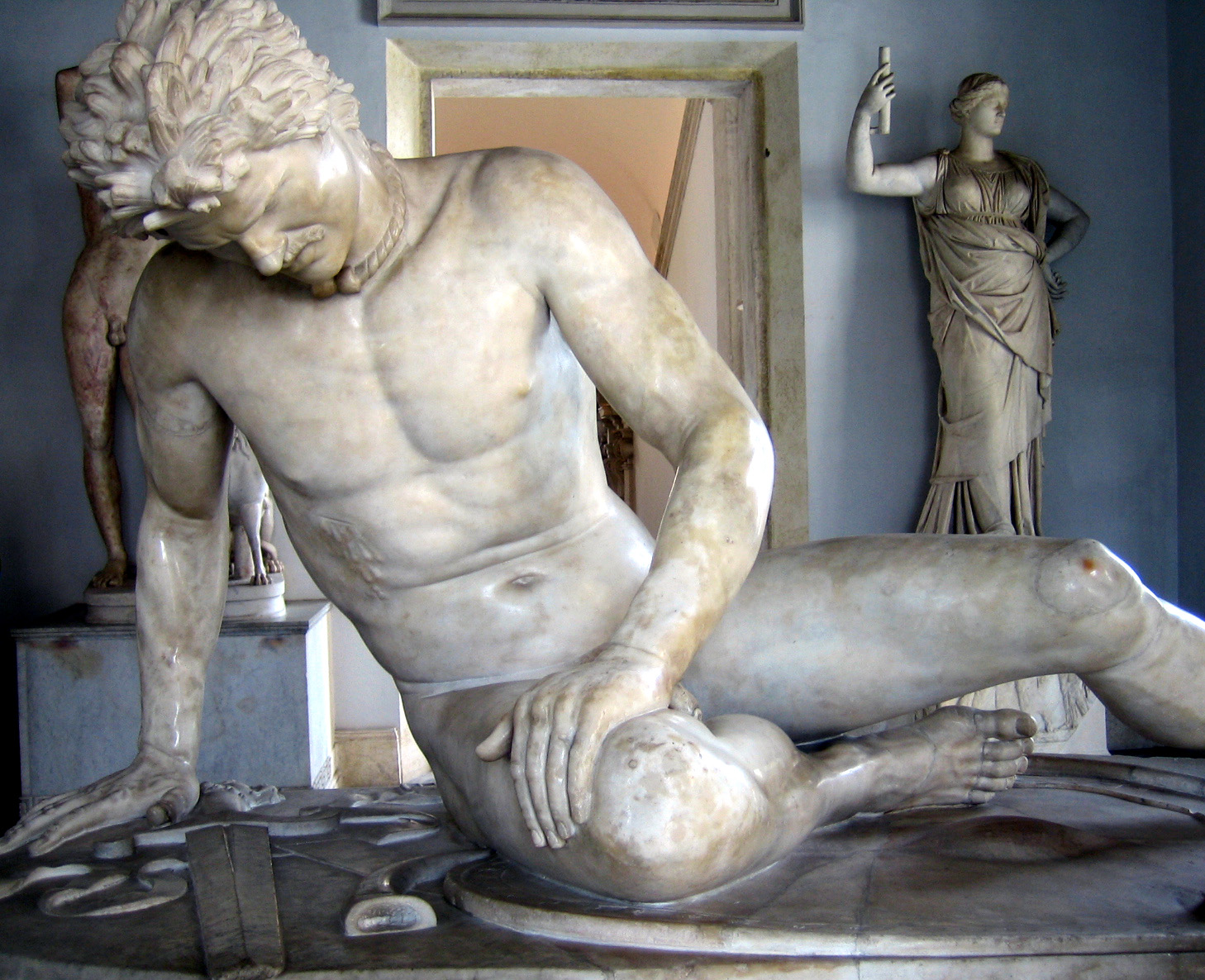 | |||
|


 |
| Kehinde Wiley, Dying Gaul (Roman 1st Century), 2022, bronze, 21 1/8 × 18 7/8 × 47 inches |

 |
| As lit in Wiley's exhibition, An Archeology of Silence, Venice Biennale, 2022 |
Romans allowed Greek architecture to fall to ruin, and,
eventually, the Roman empire ran its well-known course, decline, transition to
Christianity, takeover by Byzantine rule from the 400’s to 1450’s, then
Ottonian Turkish Rule until the early 1800’s. A combined British, French, and Russian force overthru the
Ottonian leaders… and that gives our story another beginning.
Greatly abbreviated, the story goes like this.
 |
| Anton Graff, Thomas Bruce, Lord Elgin, ~1788 |
At the time of these battles, Thomas Bruce, 7th Earl of Elgin, came upon hard times at home. His finances were a wreck. He acquired two salves for his suffering: he married an heiress and achieved an important military appointment, which took him to Greece. These dual solutions also allowed him to pursue his true love: classical antiquities. He dispatched his secretary to collect casts and make drawings around the acropolis in Athens.
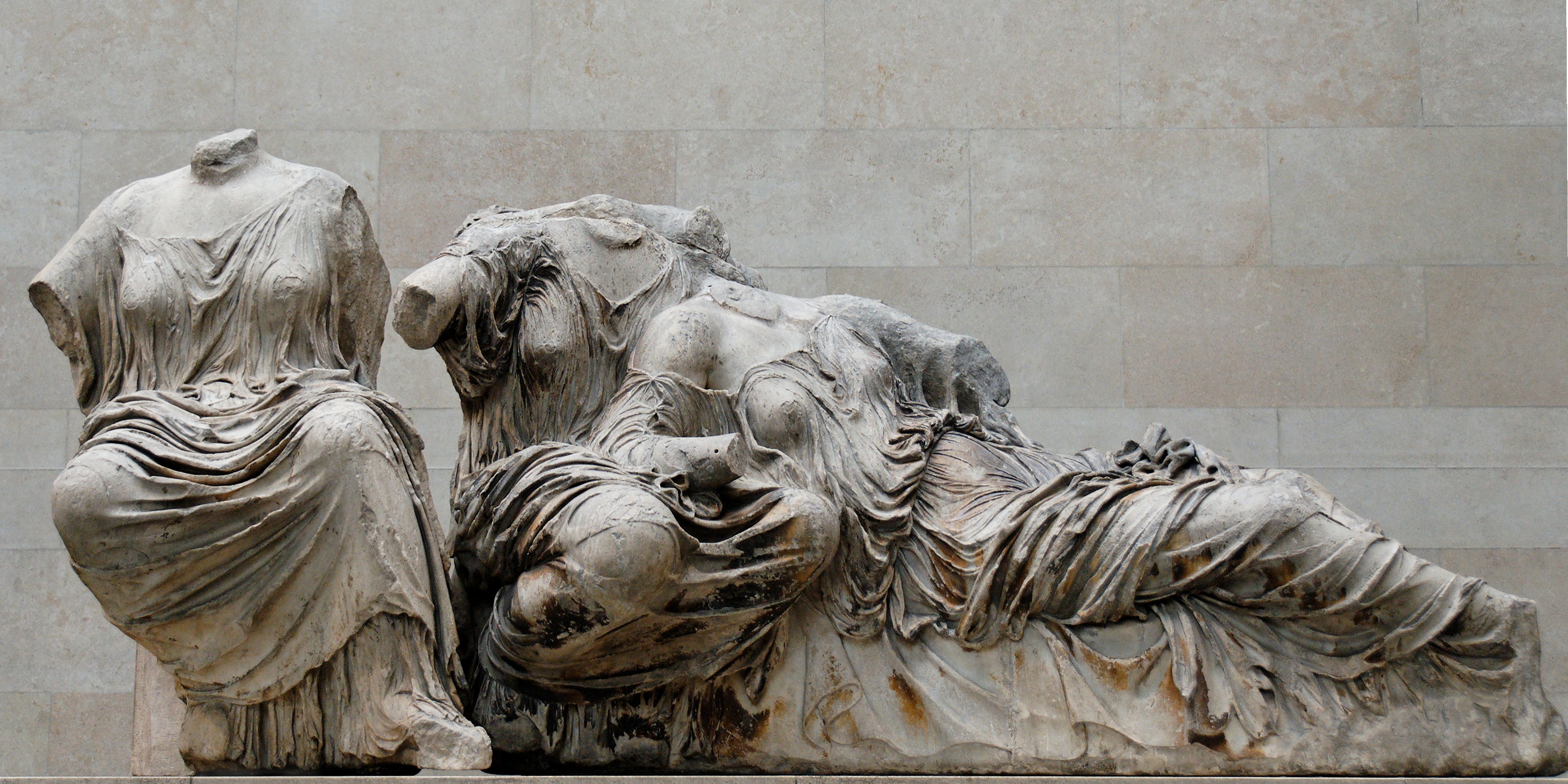
Because the Parthenon was serving at this time as a
munitions store for the Turks, he had to receive permission for his secretary
to be in that area. The secretary
makes some now highly controversial deals with the Turks. Before long, the
proposed casts of objects turn into crates, packed with the original objects
 | |
|
Elgin ships the sculptures home, at huge personal cost, to
decorate his country villa.
Eventually, he divorces his philandering wife, runs again
into financial difficulties, in large part because of the expense of collecting
the sculptures from the Parthenon, and sells the fragments of this
building to the British Museum at
a fraction of the cost. Had they remained in Athens, they would not likely
exist, as a shot at the Parthenon (remember, it’s a munitions store) led to an
explosion that destroyed large portions of the building. Yet, the Greeks wonder
if sculpture and artifacts acquired through shady dealings with a different
invading party is reason for them to remain in England.
 | |
|
Even at the time, many described Lord Elgin's work as a travesty, or even a rape. The poet Byron visited the site, and rebuked his fellow Lord scathingly in verse:
 | |
|
Dull is the eye that will not weep to see
Thy walls defaced, thy mouldering shrines removed
By British hands, which it had best behov'd
To guard those relics ne'er to be restored
-Byron, "Childe Harolde's Pilgrimage"
So, what does an experience of ‘the Parthenon’ today look
like… and what should it look like?
Scholars working on the Parthenon spend time at the Athens
Museum,
where many remnants of the Parthenon are housed, go to the

British Museum to see the so-called Elgin Marbles,
travel to Denmark, to see a set of
marble sculptures which a Danish sea captain bought from a street vendor in
Athens, 
spend time at the actual Parthenon ruins on the Acropolis in Athens,
 |
| Bernard Tschumi, Acropolis Museum, 2008 |
British Museum to see the so-called Elgin Marbles,
 |
| Parthenon Marbles in Copenhagen, Denmark |
spend time at the actual Parthenon ruins on the Acropolis in Athens,
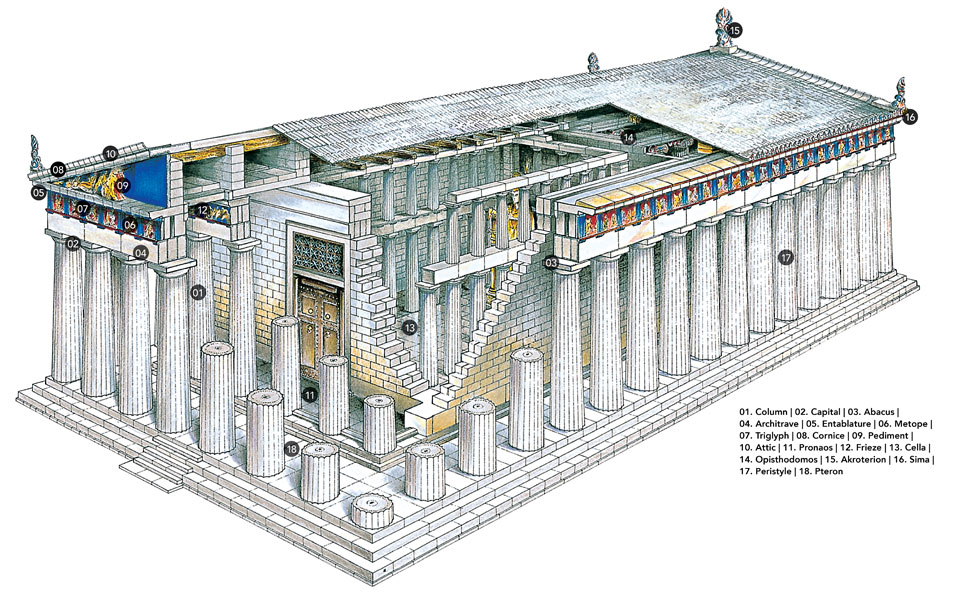

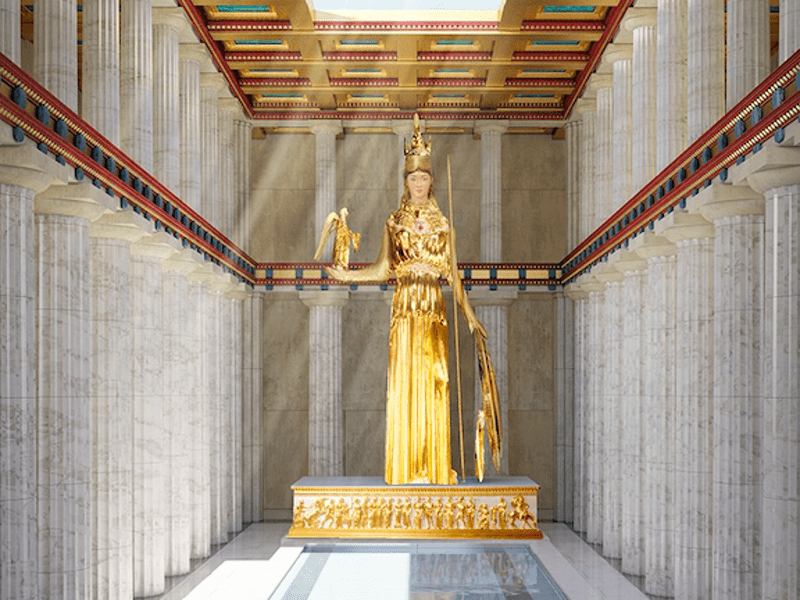
and study reconstructions of the building. None of these, of course, gives a complete experience of what the Parthenon and other temples that informed our architectural and sculptural aesthetic may have looked like in their own time.
 | |
|
During the time of its stewardship over the sculptures, the
British Museum spent vast resources of elbow grease and chemical
experimentation to scrub and scour and clean the marbles of all traces of age
and paint that they believed unoriginal

This scrubbing informed scholar Martin Bernal who leapt into
hot water with the publication of his book, Black
Athena, which proposed that
the influence of African and Asiatic peoples and cultures on Ancient Greece had
been suppressed by European
Scholars throughout the 19th century.

Sculptural ideals in Europe and the United States from the
1400’s to the mid 1900’s were based on a particular idea of Greek Art, which
looks pretty much like this, and, presumably, you recognize almost as readily for the simple marble surfaces as for the elegant lines and focus on ideal anatomy.
 |
| . |
However, in 2008, and exhibit travelled the world called
“The Gods in Color” which showed how the marbles on which we've based our ideal of art may have looked in their own time.
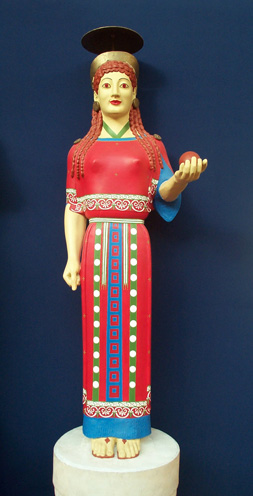

Here's another example of a painted classical object reported by the University of Cinncinatti.
On
Seeing the Elgin Marbles
BY JOHN KEATS
My
spirit is too weak—mortality
Weighs
heavily on me like unwilling sleep,
And
each imagined pinnacle and steep
Of
godlike hardship tells me I must die
Like a
sick eagle looking at the sky.
Yet
’tis a gentle luxury to weep
That
I have not the cloudy winds to keep
Fresh
for the opening of the morning’s eye.
Such
dim-conceived glories of the brain
Bring
round the heart an undescribable feud;
So do
these wonders a most dizzy pain,
That
mingles Grecian grandeur with the rude
Wasting
of old time—with a billowy main—
A
sun—a shadow of a magnitude.
323-146 bce Hellenistic Period
marked by Greek political expansion begun under Alexander the Great. Artwork demonstrates exaggerated grace and spiraling, twisting movement as well as emotional intensity not seen in Classical Artwork.
Greece after Greek Rule
Roman Conquest

No comments:
Post a Comment