Early Civ/Ancient Greek Timeline
Minoan Greece ~3000 bce-1500 bce
Mycenean Greece 1600-1100 bce (Helladic Greece)
Greek Dark Ages .... very little work remains from 1100-900 bce:
Early Greek Geometric Style 900 bce-700 bce
Orientalizing Period: ~750-600 bce
Archaic Period 600-480 bce
Classical Greek Period 480-323 bce
The Hellenistic Period (323 B.C.E.–31 B.C.E.)


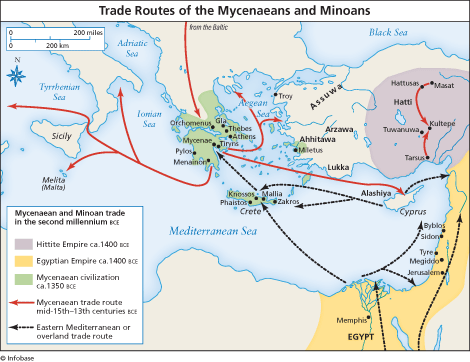 |
| Mediterranean connections |
 |
| Minoan 'Palace' Architecture |
 |
| Mycenean 'Fortress' Architecture |
We've covered differences in Minoan, Mycenean, and Archaic Greek Style through studies of figures.
Classical Greek Period 480-323 bce
The Hellenistic Period (323 B.C.E.–31 B.C.E.)
Writing (Defined as a method for representing the sounds of language) Emerged:
Mesopotamia c. 3400 – c. 3100 BC,
in Egypt c. 3250 BC,
in China before c. 1250 BC, and
in Mesoamerica before c. 1 AD.
Egypt loose ends:
Egyptian stance does not have a name-- just "extreme frontality." Here a useful, if very simple, description of the emergence of Contrapposto as a valued stance in the history of art.
 |
| View of pyramids from tourist site |
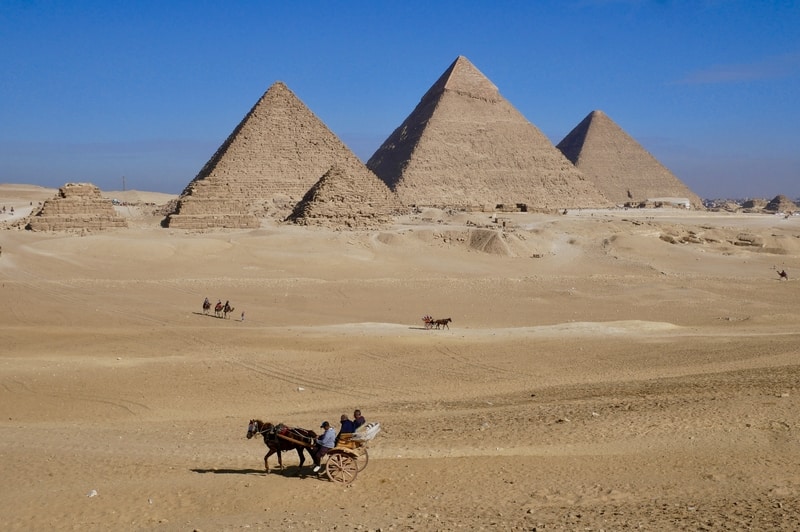 |
| Another tourist site photo |
 |
The population of Egypt during the Old Kingdom, so about 2500 BCE, was 1.6 million; in 1800, it was about 2.5 million; today it is 116 million. |
 |
| Cairo and Giza (home to the pyramids) are essentially cocntiguous, as Lior said last week. It's just over 3 miles from the center of one to the other. |
 |
| From Giza/Cairo metropolis |


No comments:
Post a Comment