Today's goals:
- Timelining
- Emergence of Empire in China
- Qin's Tomb/Terracotta Army
- Themes in Art History
- Planning the next Make
- Etruscan Sarcophagi of the Couple
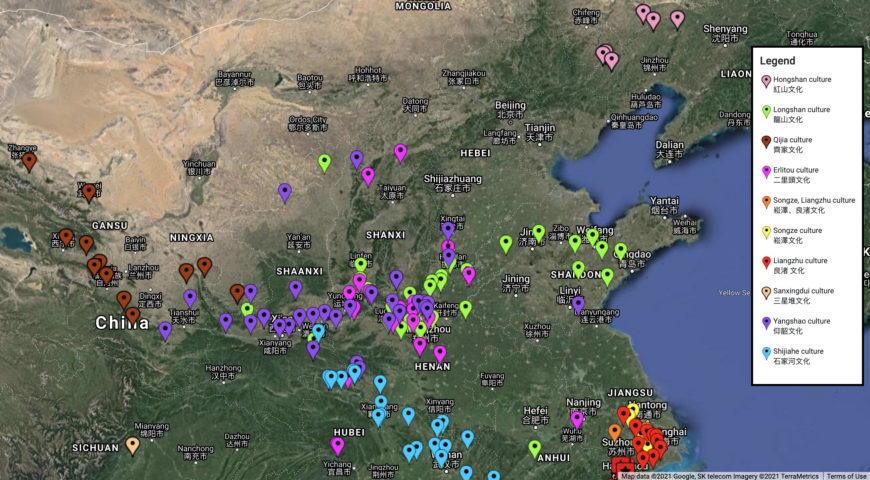
As we move into China, we can follow a similar transition from Neolithic /Early Civilization to Imperial China just as we've looked at this transition in Egypt (Predynastic to Old and New Kingdom periods) and Greece (from Cycladic, Minoan, and Mycenean island civilizations to massive democracy/city state rule on Mainland Greece in Classical Antiquity to near-empire under Alexander the Great).
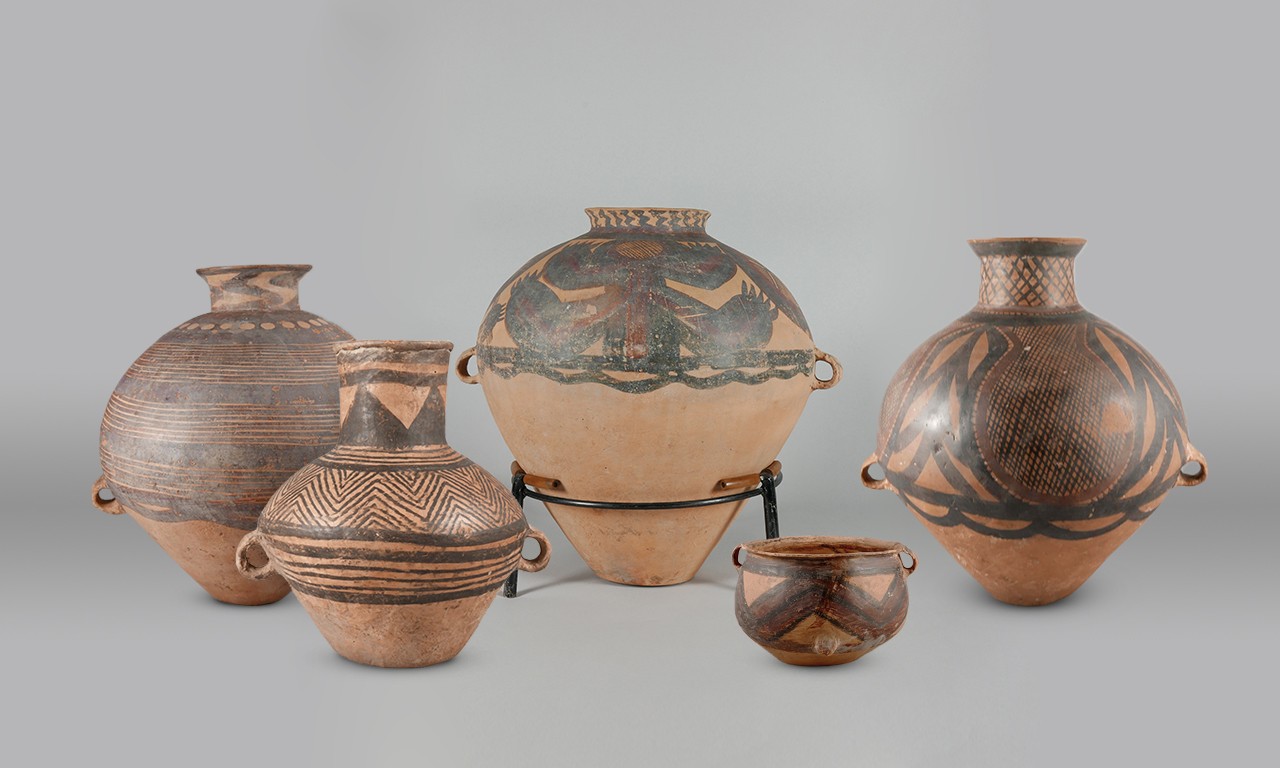 |
| Vessels, mid to late Neolithic period (5000-2050 BCE) Yangshao and Majiayao cultures; China Painted ceramic |
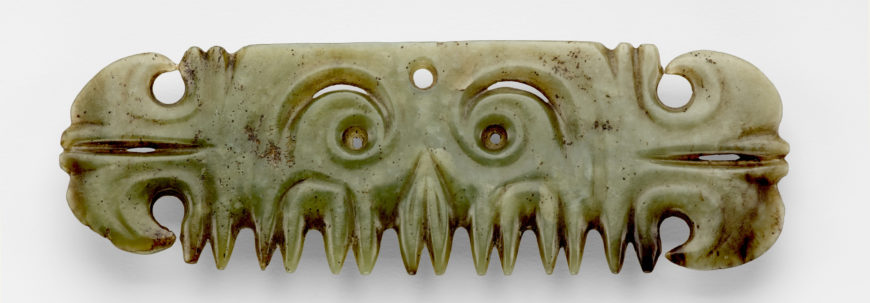 |
Hongshan culture, pendant in form of a mask, c. 3500–3000 B.C.E. (late Neolithic period), jade (nephrite), 5.7 x 17.2 x .4 cm (Freer Gallery of Art, Smithsonian Institution, Washington, DC: Gift of Therese and Erwin Harris, F1991.52) (From smarthistory link, provided) |
Only with Qin Shi Huang (also Qin Shihuangdi), born 256 BCE, in the 3rd century bce, as Ying Zeng. Through a series of complex family negotiations and manipulations, he became King Zheng after his father, and, upon uniting the independent states that had been at war for centuries, he became Qin Shi Huang, emperor, and thus were born the roots of the nation of China. Exactly who Qin Shi Huang, first emperor of China, was continues to baffle historians. He was a fierce ruler, can you see it in images of him?


Representations of Emperor Qin centuries after his death. Qin Shi Huang, 256 bce-210 bce (Qin is pronounced chin)
He lead: fiercely, violently, and authoritatively; he made many enemies and created an empire that put an end to 250 years of war. After his death, simmering enemies acted quickly to rewrite the history of his life after his death (or maybe they wrote the truth!), suggesting he was illegitimate child of a wealthy merchant and a dancing concubine, but he may also have been the son of the King of the Qin province. Regardless, Qin took rule, first as King Zheng of Qin province, at the age of 13, at a time when Chinese States were warring with each other.

Qin proved an adept leader, which also drew the wrath of many. He survived three assisination attempts.

He also unified China, and made extraordinary achievements in architecture, most notably huge stretches of the Great Wall, requiring organization of hundreds of thousands of men, and unifying earlier walls from the Ducal States that preceded the Empire. Those stretches of the wall no longer exist, it seems. Below is a more recent section.
 |
| from wikipedia. |
Perhaps because of the multiple assassination attempts, and according, remember, to biased historians, Qin became rather paranoid, as well as obsessed with immortality. He spent enormous energy searching for an elixer of life that would extend his life forever.
Great Wall Walk of Marina Abramovic & Ulay
Qin Shi Huang also made a pile of enemies.
 |
| Wu Daozi, Portrait of Confucius/Kongzi/Kong Qui, born 551 BCE, died 479 BCE, portrait date 8th c. CE, or about 1200 years after Confucius' death. Confucianism, or Ruism blends philosophy, ethics, spirituality and social governance, and emphasizes individual and political morality, kindness, sincerity, and a ruler's responsibilities to lead by virtue. While many have argued that Qin Shi Huang's political policies, of conquering to end the centuries of war, standardization of writing, weights & measures, money/trade policies, political administration, and more. His ruthless maneuvers led to a period of peace that made the practice of Confucian principles possible, but Confucius couldn't have believed his ends justified his means. Confucius promoted beliefs in: filial piety/loyalty, ancestor veneration, and respect for elders. He say the strong family as the building block for strong governance. Confucianism advocates for cultivation of key personal and civic virtues: benevolence, righteousness, propriety, wisdom, and sincerity. |
 |
| ""The great ships full of boys and girls sent in search of the immortal medicine (Hôraizan) by the Chinese Emperor Shih Huang Ti (Shikôtei), c. 219 BCE". A 19th century ukiyo-e by Kuniyoshi depicting the ships of the great sea expedition sent around 219 BC by the first Chinese Emperor, Qin Shi Huang, to find the legendary home of the immortals, the Mount Penglai, and retrieve the elixir of immortality." Image and caption from wikipedia |
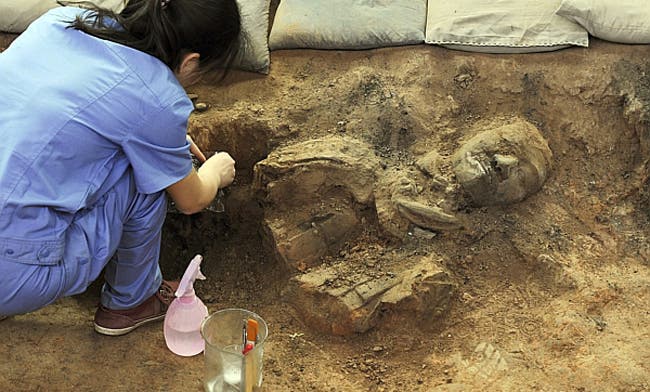
He also built one of the most extraordinary tombs in all of history, for which he again needed hundreds of thousands of men for his other major architecture project, the project which he hoped would help him live forever, but only after he died (ie live forever in the afterlife.).
It's a project which very nearly did not give him immortality to modern eyes, having disappeared underground for 2200 years, until, like so many archeological excavations, an accident caused its rediscovery.
 | |||||
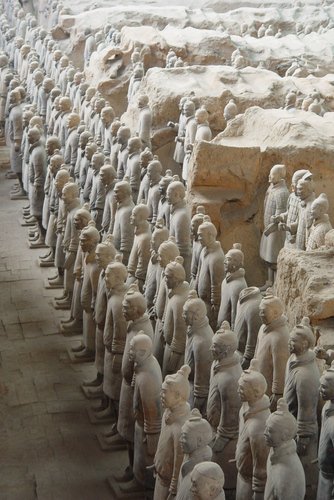
Rows of Highly realistic soldiers guard the Emperor in the afterlife. A fantastic color reconstruction here.
|

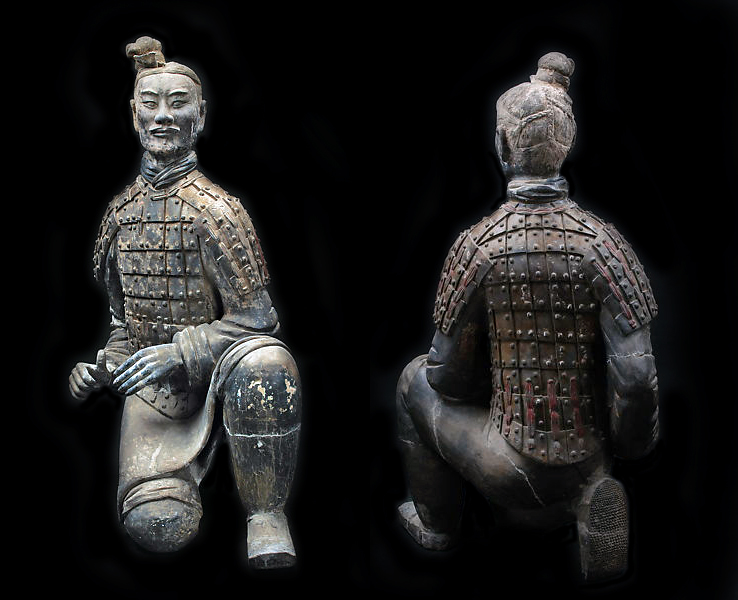
| kneeling archer |
Lothar Ledderose describes the discovery thus:


Archeologists continue to develop better techniques for removing the soldiers, that took several hundred thousand men to cast, assemble, paint, and then bury in their fighting ranks. What workers now excavate tediously is, in a way, more visible than it has ever been, for the forced laborers and prisoners of war who built the soldiers buried them as they went, so no one ever saw the army assembled in all its glory.
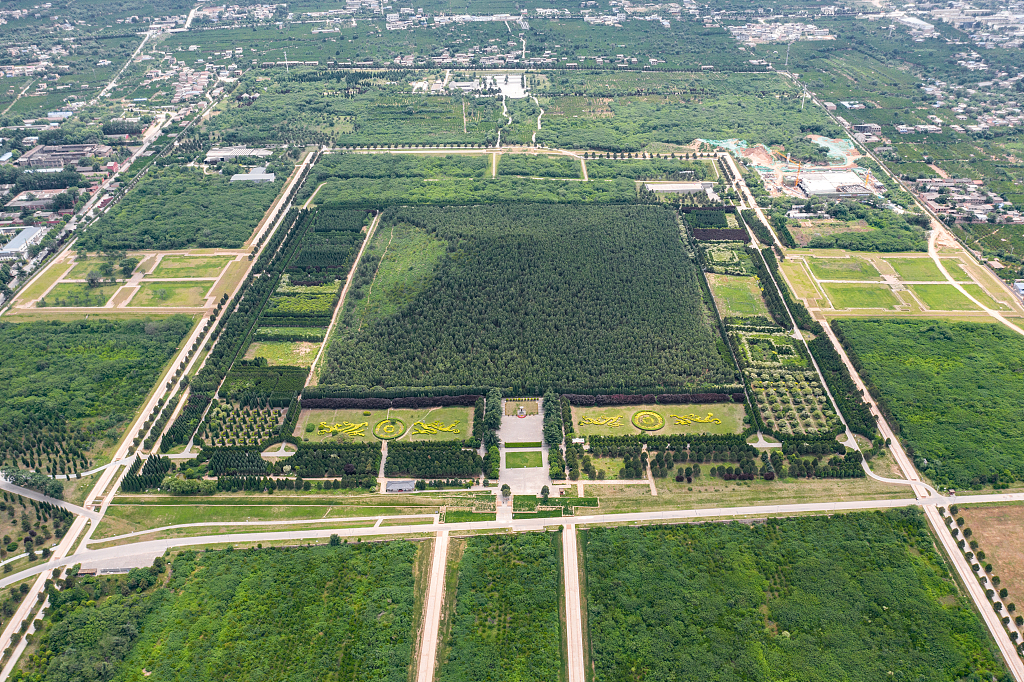
Even today, no one has seen the actual mausoleum of the emperor. Except that anyone can see it, for if it exists at all, it is under this mound of dirt at the center of the military ranks. Legend tells that the 700,000 workers on site when the Emperor died were tasked with burying the mausoleum, the wonders of which are only known through writing. The same legends say that the mound originally rose to some 350 feet, but it has eroded to a mere 225 or so. The chinese government has decided not to excavate the tomb, because they do not believe the knowledge exists to sufficiently protect a tomb buried for millennia from the ravages of modern life. Until they do, they will continue to carefully excavate soldiers, and learn, and wait.


Of course, one of my favorite elements of the tomb is the 'zoological gardens,' There, archeologists have found skeletons of rare animals buried in clay coffins, complete with feeding dishes. Ceramic zookeepers watch over them.


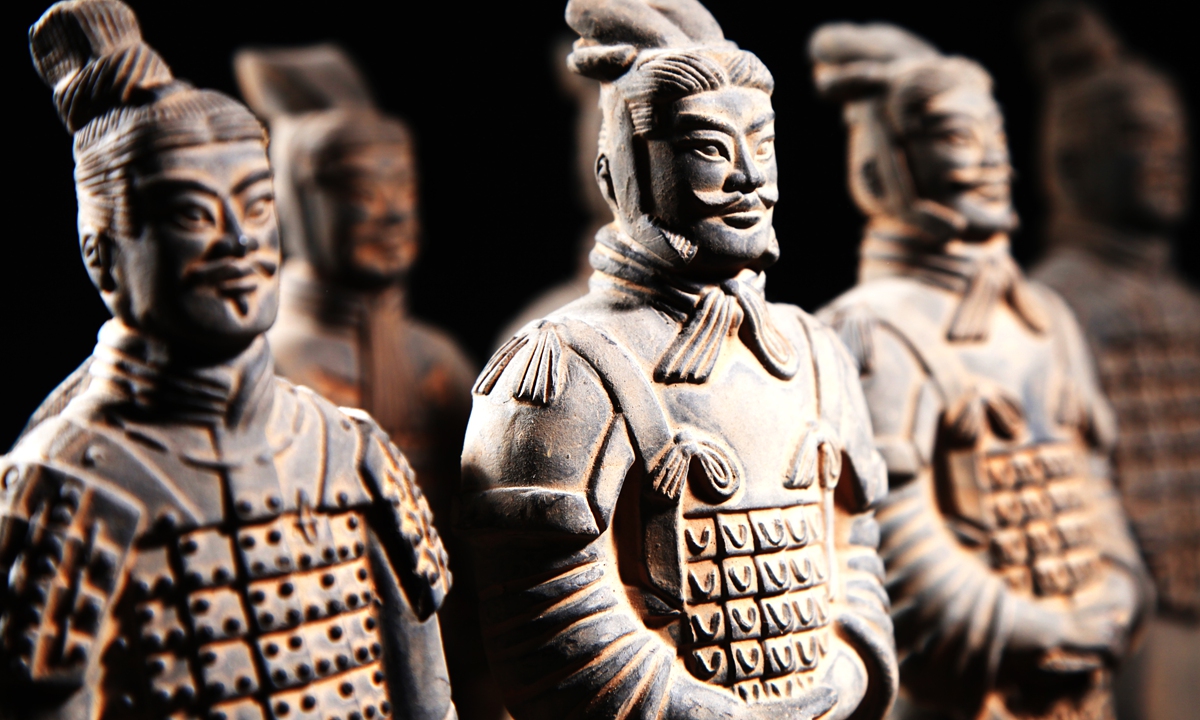


Of the many sensational archaeological excavations made since the founding of the People's Republic of China in 1949, the most sensational of all was the discovery of the terra-cotta army near the tomb of China's First Emperor. The First Emperor was one of the most powerful men in Chinese history and, indeed, in world history. Originally the king of the state of Qin, he ruthlessly obliterated the other states of his day and unified the realm in 221 B.C., thereupon calling himself Qin Shi Huangdi, the First August Emperor of Qin. The pattern of empire he established lasted for more than two millennia into the present century, and the name of his dynasty, Qin, is said to have given its name to China." (
In 1974, Farmers digging a well east of Xi-an found the head of a clay soldier. Since, authorities have excavated thousands of figures in what might be the world's largest jigsaw puzzle, and they now stand repaired and in battle ranks on display for thousands of visitors a day. This flood of admirers has not caused the harm we saw in our study of Lascaux cave, in part because those parts of the excavation beyond our current technical understanding have remained buried, hopefully safe, and beyond our gaze.
 |
| The Jigsaw |
Travelling exhibits regularly display the soldiers around the world: I've seen them in New York and Denver, others of you may have seen them closer to home in Washington, DC or Atlanta. What movies have they appeared in?
The sheer scale of the monument boggles the mind. Estimates indicate that between 8,000 and 12,000 clay soldiers may exist; remarkably, each of them has an individual face, hair, and other details. Just over life sized, the soldiers are slightly smaller than their commanders, and they are divided into infantry, cavalry-- with their steeds, charioteers, archers, as well as dancers and musicians to entertain the leaders. Each clay soldier once held a weapon or weapons; legend suggests that these weapons were stolen before the emperor's body was cold, and the clay army's weapons turned against Emperor Qin's suppressive men.
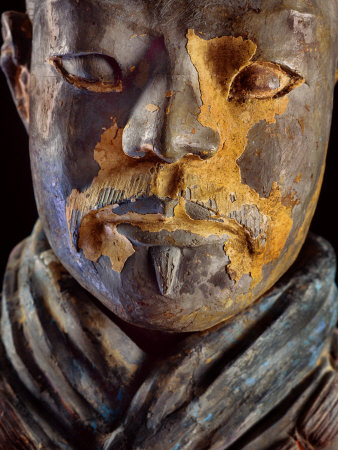
Once the men, in their leather armor and detailed uniforms, had bright paint on every surface. The pigment still appears as the excavation takes place, but archeologists have not yet discovered a way to remove the soldiers with the pigment attached, it most often stays in the surrounding soil, or peels off within seconds of exposure to the dry air of Xi'an.
Archeologists continue to develop better techniques for removing the soldiers, that took several hundred thousand men to cast, assemble, paint, and then bury in their fighting ranks. What workers now excavate tediously is, in a way, more visible than it has ever been, for the forced laborers and prisoners of war who built the soldiers buried them as they went, so no one ever saw the army assembled in all its glory.
 |
| fun comparison of global pyramidal building scales |
Even today, no one has seen the actual mausoleum of the emperor. Except that anyone can see it, for if it exists at all, it is under this mound of dirt at the center of the military ranks. Legend tells that the 700,000 workers on site when the Emperor died were tasked with burying the mausoleum, the wonders of which are only known through writing. The same legends say that the mound originally rose to some 350 feet, but it has eroded to a mere 225 or so. The chinese government has decided not to excavate the tomb, because they do not believe the knowledge exists to sufficiently protect a tomb buried for millennia from the ravages of modern life. Until they do, they will continue to carefully excavate soldiers, and learn, and wait.
The Chinese Historian Sima Qian recorded a history of the construction of the tomb more than a century after Qin's death, writing: In the ninth month, the First Emperor was interred at Mount Li. Digging and preparation work at Mount Li began when the First Emperor first came to the throne. Later, after he had unified his empire, 700,000 men were sent there from all over his empire. They dug through three layers of groundwater, and poured in bronze for the outer coffin. Palaces and scenic towers for a hundred officials were constructed, and the tomb was filled with rare artifacts and wonderful treasure. Craftsmen were ordered to make crossbows and arrows primed to shoot at anyone entering the tomb. Mercury was used to simulate the hundred rivers, the Yangtze, Yellow River, and the great sea, and set to flow mechanically. Above were representation of the heavenly constellations, below, the features of the land. Candles were made from fat of "man-fish", which is calculated to burn and not extinguish for a long time. The Second Emperor said: "It would be inappropriate for the concubines of the late emperor who have no sons to be out free", ordered that they should accompany the dead, and a great many died. After the burial, it was suggested that it would be a serious breach if the craftsmen who constructed the mechanical devices and knew of its treasures were to divulge those secrets. Therefore after the funeral ceremonies had completed and the treasures hidden away, the inner passageway was blocked, and the outer gate lowered, immediately trapping all the workers and craftsmen inside. None could escape. Trees and vegetations were then planted on the tomb mound such that it resembled a hill."
Sima Qian wrote from the perpective of the Han Dynasty, which took over after Qin's dynasty fell apart, and Confucianism again reigned as the dominant philosophy. This marked a return to historical record-keeping rather than legendary exaggeration/propaganda, but there is certainly an aspect of bias toward the Han Dynasty (est. 206 BCE) in his correctioon of earlier records.
In a famous passage, the ancient historian Sima Qian tells us of the tomb's content:
"As soon as the First Emperor became King of Qin, excavations and building had been started at Mount Li, while after he won the empire more than seven hundred thousand conscripts from all parts of the country worked there. They dug through three subterranean streams and poured molten copper for the outer coffin, and the tomb was filled with models of palaces, pavilions and offices, as well as fine vessels, precious stones and rarities. Artisans were ordered to fix up crossbows so that any thief breaking in would be shot. All the country's streams, the Yellow River and the Yangzi were reproduced in quicksilver and by some mechanical means made to flow into a miniature ocean. The heavenly constellations were shown above and the regions of the earth below. The candles were made of whale oil to ensure their burning for the longest possible time.
The Second Emperor decreed, 'It is not right to send away those of my father's ladies who had no sons.' Accordingly all these were ordered to follow the First Emperor to the grave. After the interment someone pointed out that the artisans who had made the mechanical contrivances might disclose all the treasure that was in the tomb; therefore after the burial and sealing up of the treasures, the middle gate was shut and the outer gate closed to imprison all the artisans and laborers, so that not one came out. Trees and grass were planted over the mausoleum to make it seem like a hill. "(Ledderose 12)
Of course, one of my favorite elements of the tomb is the 'zoological gardens,' There, archeologists have found skeletons of rare animals buried in clay coffins, complete with feeding dishes. Ceramic zookeepers watch over them.
Beyond and slightly to the south of the western gate of the inner wall, burials of thirty-one rare birds and animals in
The zoo animals are not the only living things buried in the pits. 300 horse skeletons with ceramic grooms, 17 graves of high status citizens with their jewels and possessions, and at least 100 skeletons of what archeologists believe were workers sentenced to death also inhabit the vast necropolis, or city for the dead.
The zoo animals are not the only living things buried in the pits. 300 horse skeletons with ceramic grooms, 17 graves of high status citizens with their jewels and possessions, and at least 100 skeletons of what archeologists believe were workers sentenced to death also inhabit the vast necropolis, or city for the dead.
The Army in its pits
 |
| Prune Nourry, Terracotta Daughters, with Wen Xianfeng, 2014 source |
  |
| goodnight. Source |
If you'd like more info on the terra cotta army of Emperor Qin, here's one great source: "A Magic Army for the Emperor"
Lothar Ledderose, Ten Thousand Things. Module and Mass Production in Chinese Art, Princeton, Princeton University Press, 1998, pp. 51 - 73.


No comments:
Post a Comment