Geographical Matters


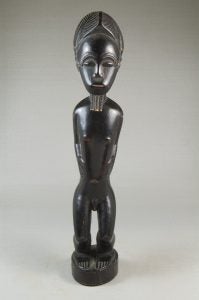 |
| Figure of an elder, Baule, wood, early 20th century |
While the Art of Sub-Saharan Africa varies greatly in style, scale, meaning, use, and more, we can see some shared traits across cultures, nations, and geographies. For example:
- most work is human-centric,
- literally (most often depicts humans and animals) and
- typically conveys content or purpose that has to do with humans
- useful objects that are made decoratively typically function very close to human bodies-- textiles that are worn, pots that we cook in and plates that we serve on are made beautiful, and function in daily life. Across centuries, landscape and still life are very rare
- spirits and deities typically take human form as well
- animals typically represent human traits
- Liminality-- much art deals with transitional states, as from child to adult
- Liminality is also important in animal representations: birds, mudfish, crocodiles, tortoises, for example, live between sky and earth or land and water
- Frontality: distinct from art of the mediterranean, human figures typically very stand straight and symmetrical, suggesting formality, permanence, and dignity
- Non-frontality suggests a lesser status- childhood, animals, members of a leader's entourage. Dont be deceived by photographs shot from an angle: typically, works would be positioned to appear from the front, symmetrical view.
:max_bytes(150000):strip_icc():format(webp)/Nok_sculpture_small-5895bb0a3df78caebca4730a.jpg) |
Nok terra cotta, 5th to 1st c. bce
|
More shared traits
- Stillness: also focuses on dignity and permanence. Movement is fleeting and implies work. Stillness implies elevated status.
- Self-Composure (Expressionlessness) traditional African art does not display emotions, rather, it reflects the quality of self-composure and restraint present in ideal leaders.
- Ephebism: typical African sculpture represents humans at an ideal age-- adult, and endowed with wisdom, but physically vigorous and not wrinkled
- Abstraction: most African art avoids naturalism, though there are some exceptions. Exaggerations or distortions tend to be connected to meaning.
- Distortion: like abstraction, distorted body scales typically carry meaning. Pay attention to head to body scale
- Like in Mesopotamia and Egypt, African art often uses hieratic scale, where size indicates importance.
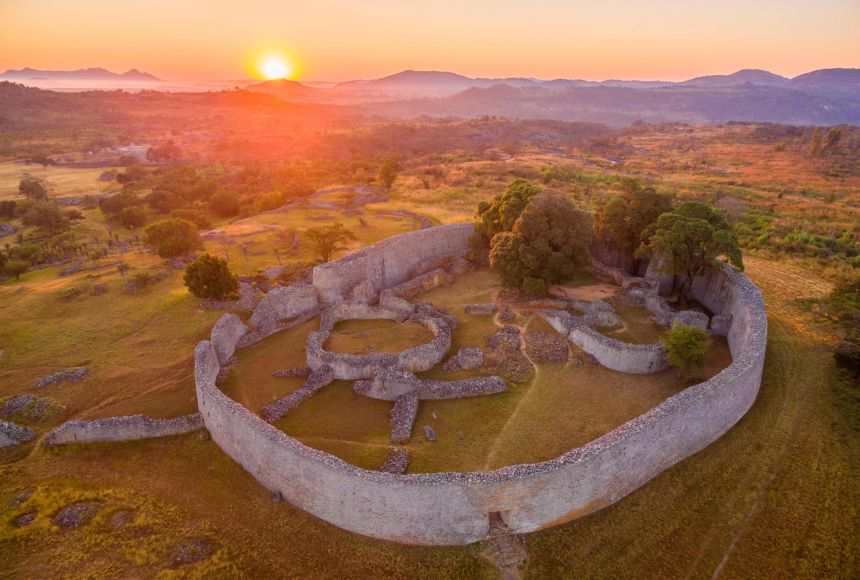 |
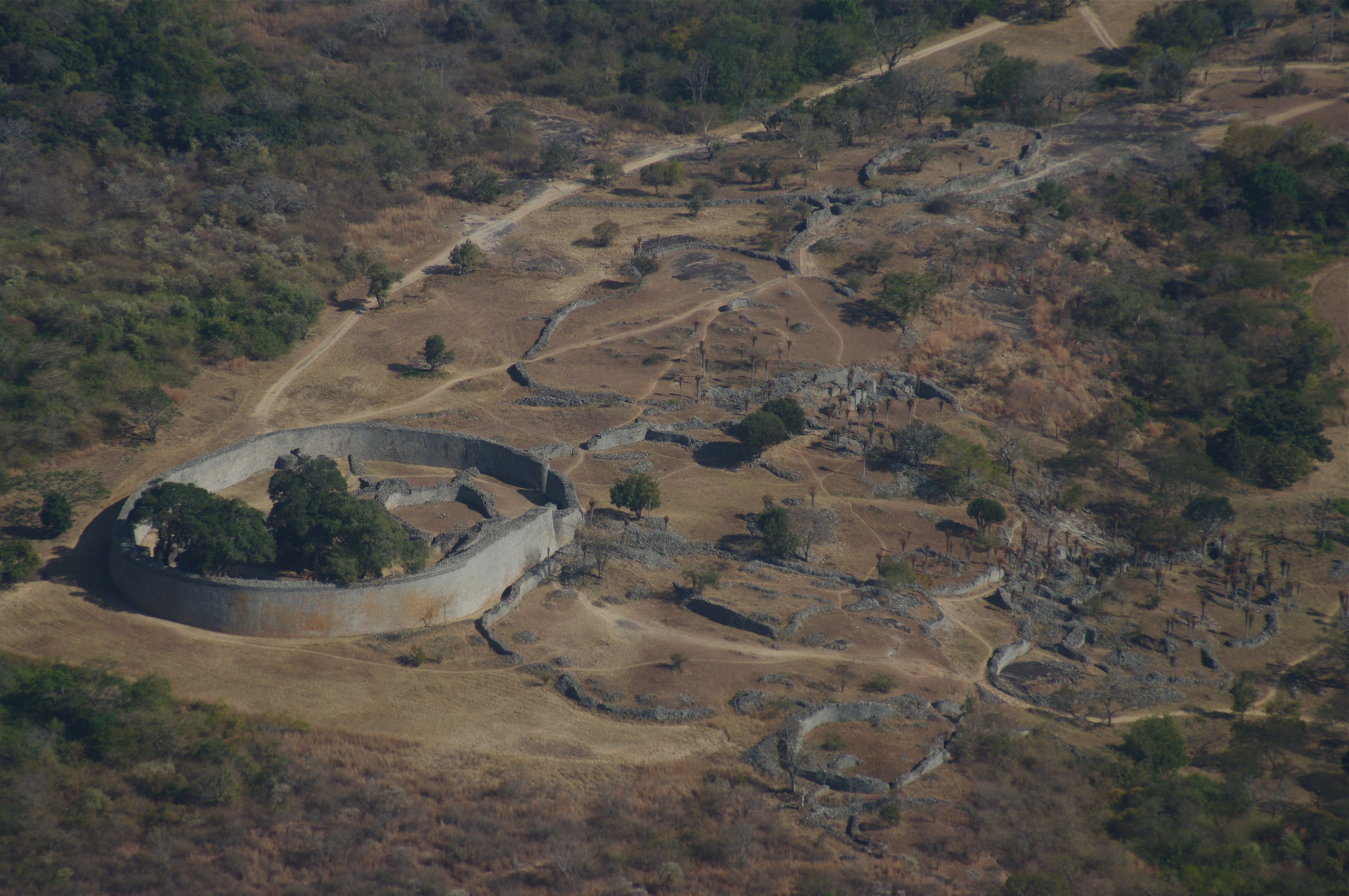
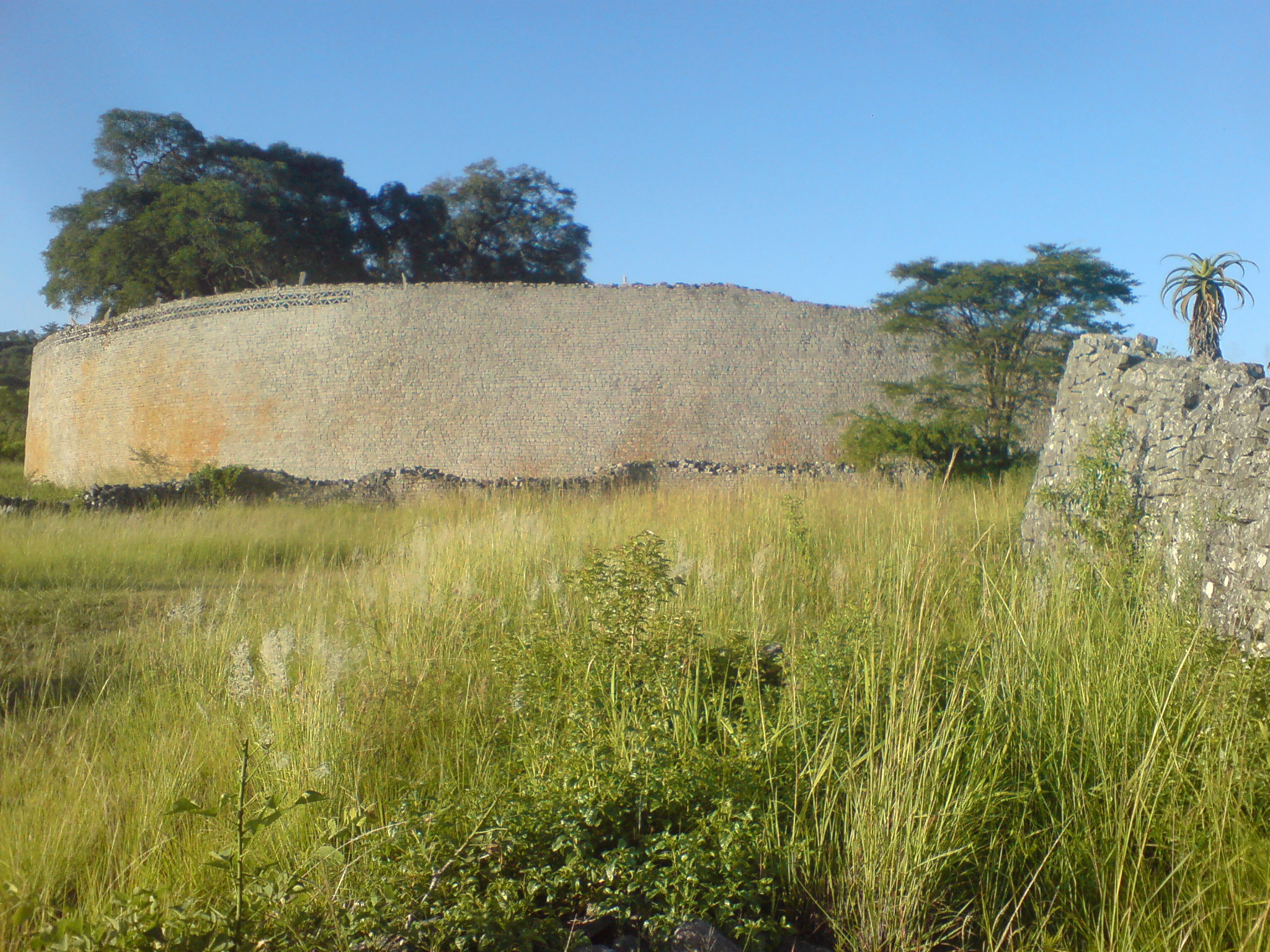
| Great Enclosure at Great Zimbabwe, construction began 11th c.,CE remained populated thru 15th c CE |
 |
| Great Mosque in Djenne, Mali. First mosque built on this site sometime between 1200-1330 ce. Current mosque dates to 1907, restored annually. |
 |
| Main entrance |
 |
| 1893 photo by Albert Rousseau |
 |
| Modern photo with city market in foreground |
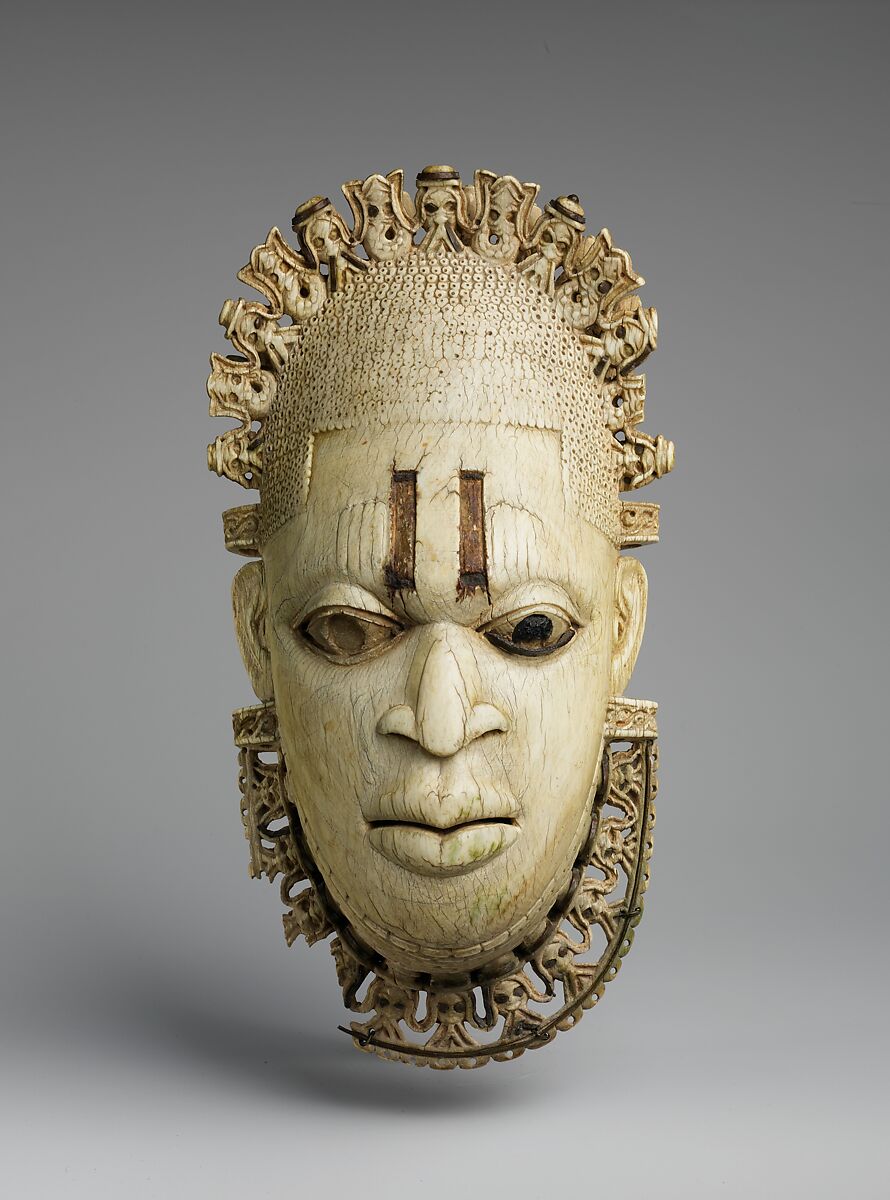 |
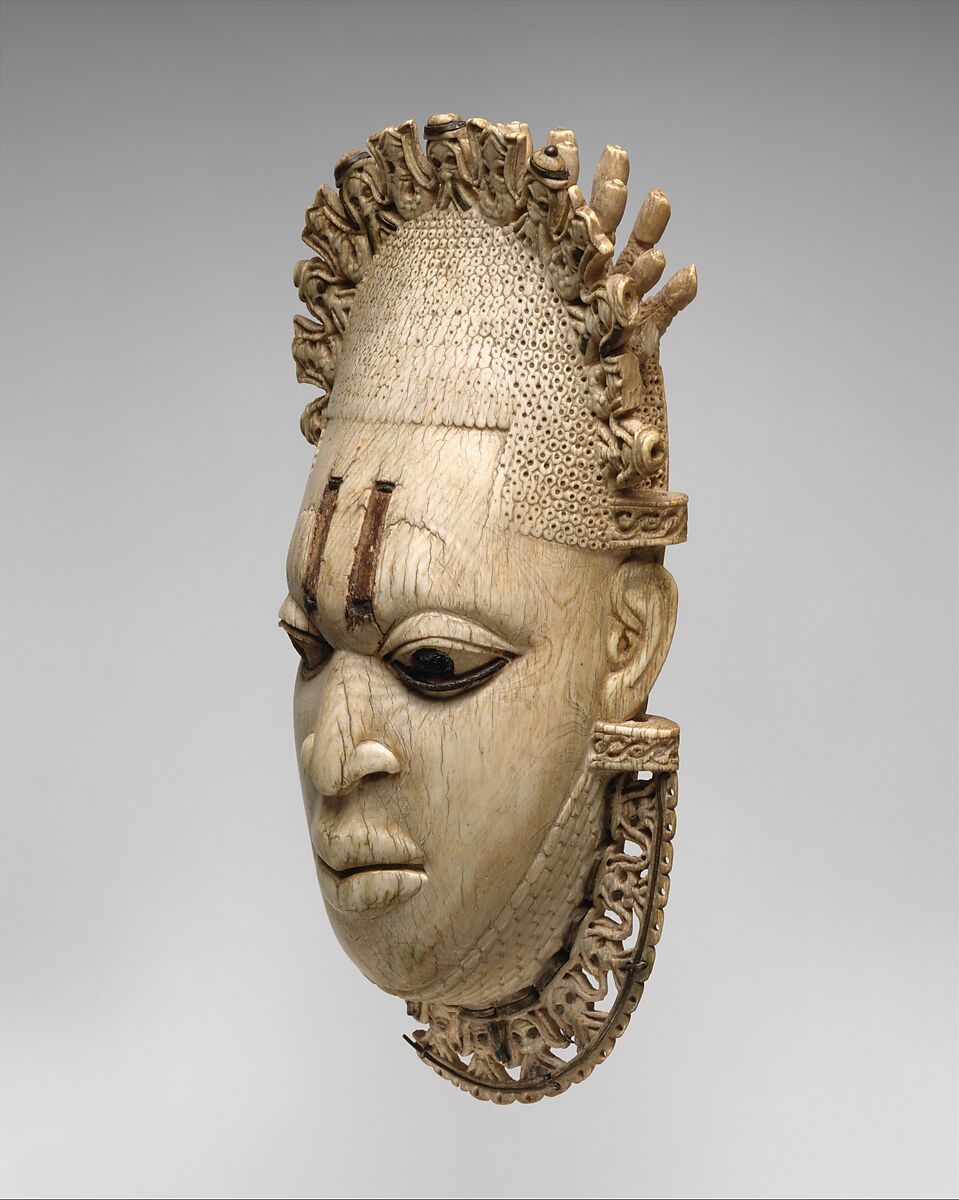
Pendant Mask of Ìyọ́bà Idià, 16th c. CE ivory pendant mask of an Iyoba (queen), Benin ( Edo Peoples), 9 3/8 x W. 5 x D. 2 1/2 in.details!
|
This mask is one of a pair; one is in the Metropolitan Museum in NY, the other in the British Museum in London. Masks representing women are less common in Edo tradition; these are pendant masks (not worn over the face, but as body decoration), and were worn in ceremonial rites of purification to honor the King of Benin and Olukun, God of the sea associated with purification. Ivory is not only symbolic of Olukun, associated with the color white, but was also the principal commodity that brought wealth to Benin over the sea via Portuguese traders, represented by the mudfish neckpiece and tiara the Iyoba wears. The mudfish also represents the king's special position between divine and human.
From Smarthistory: "Queen Idia is honored as a powerful and politically astute woman who provided critical assistance to her son during the kingdom’s battles to expand...The hollow back, holes around the perimeter, and stopper composed of several tendrils of hair at the summit suggest that the mask functioned as an amulet, filled with special and powerful materials that protected the wearer. Today, such pendants are worn at annual ceremonies of spiritual renewal and purification."
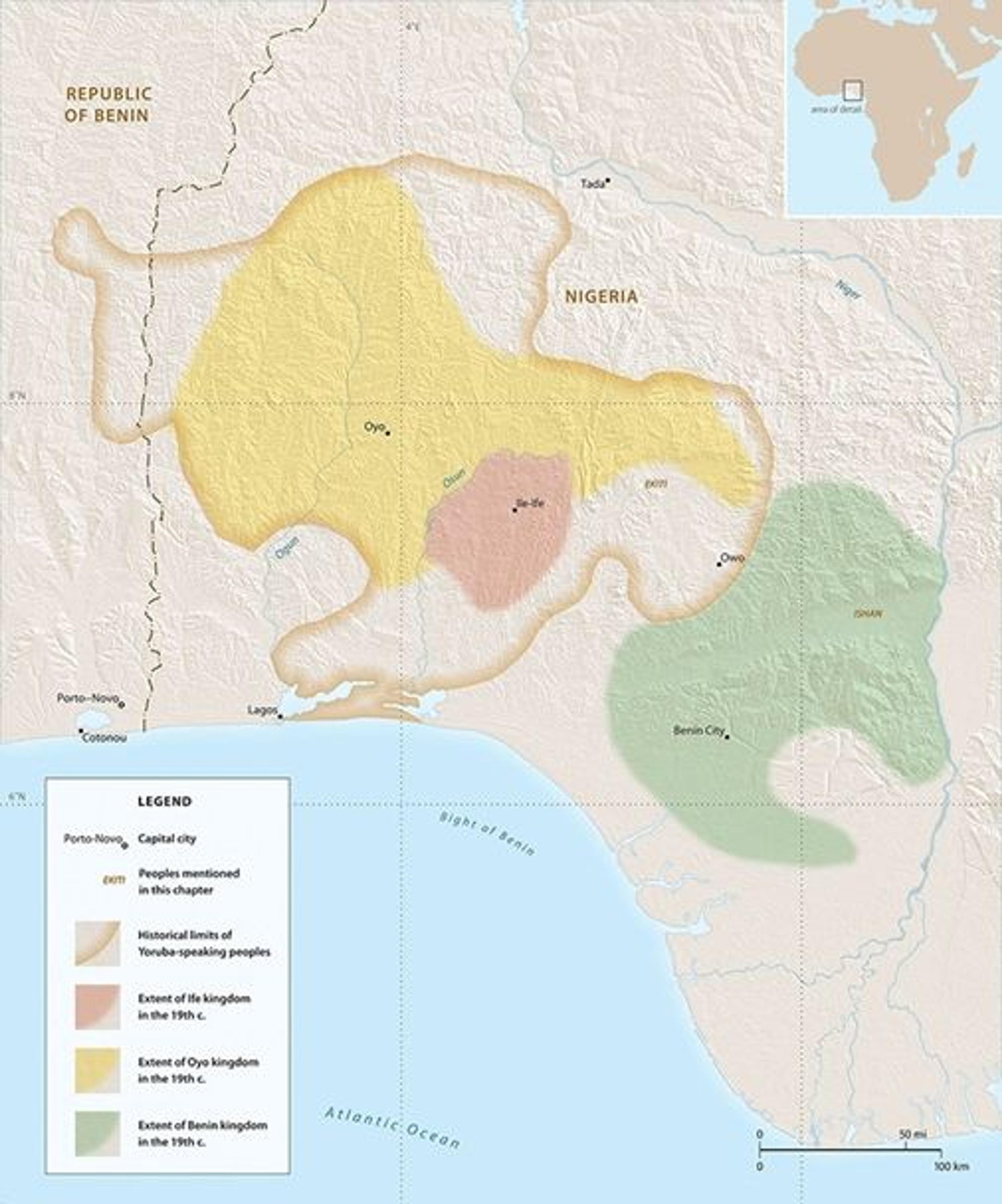
From the Met, "During the fifteenth century reign of Oba Ewuare, Benin’s armies were formed and the fortification of its capital with a massive wall undertaken. In parallel, delegations of Portuguese traders assiduously sought to secure exclusive commercial treaties with this leader of the region’s most powerful polity. At its height in 1500, Benin’s authority extended to the Niger delta in the east and to the coastal lagoon of Lagos in the west. Its major exports of pepper, textiles, and ivory were exchanged for copious quantities of imported metals. This access to an influx of brass led to an explosion of creativity by court artists who transformed it into works for the palace ranging from ancestral portraits, positioned on royal altars, to decorative plaques depicting the oba, his courtiers, and foreign interlocutors. From the earliest such exchanges, those Europeans commissioned exquisite ivory artifacts from Edo carvers for princely collections back home." See more about the complexities and violences of commerce between Europe, the US, and Benin at
the Met page and
Smarthistory.
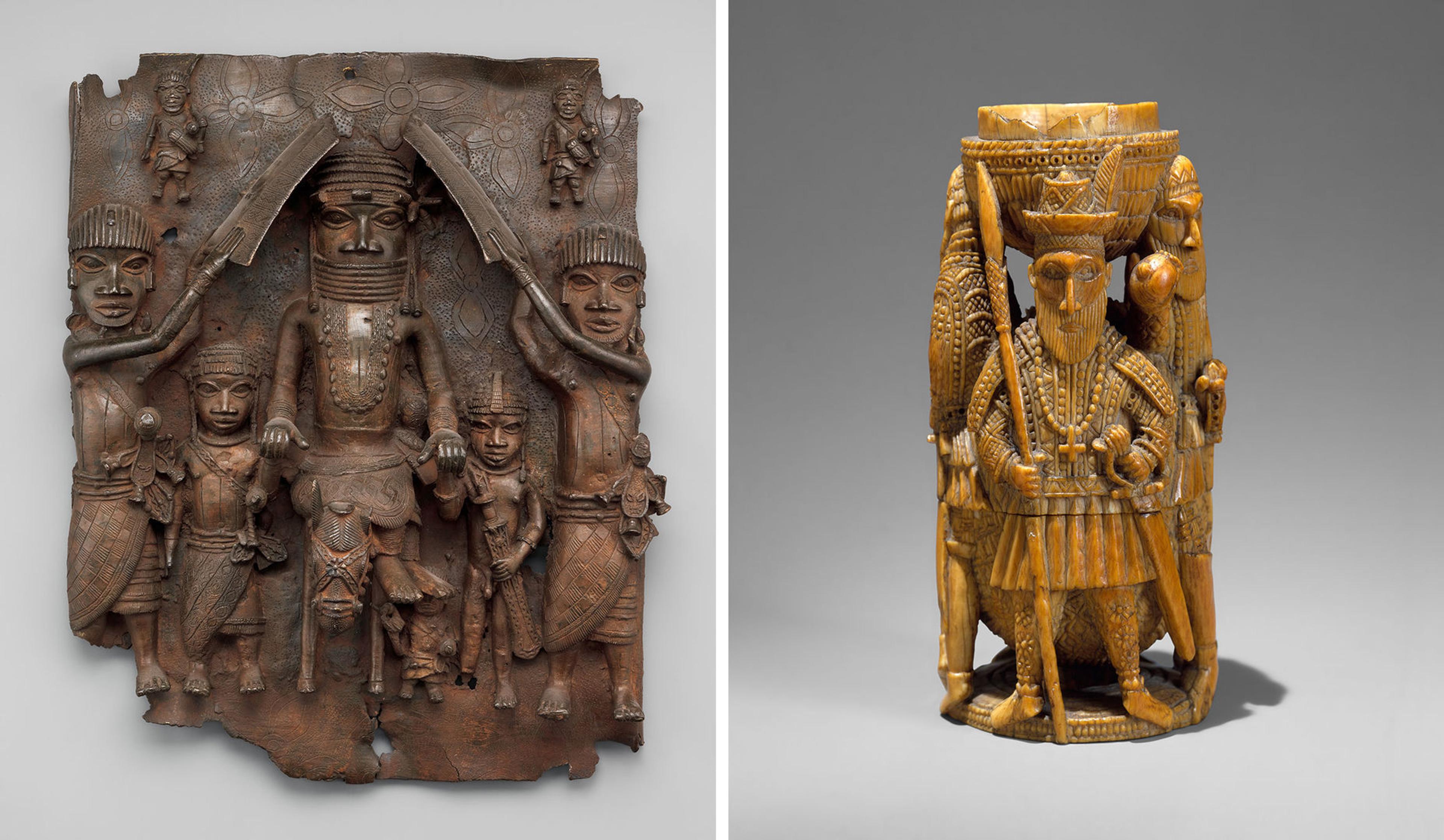 |
| Court of Benin, Plaque: Equestrian Oba and Attendants. Brass, H. 19 7/16 × W. 16 1/2 × D. 4 1/2 in. (49.5 x 41.9 x 11.4 cm). The Metropolitan Museum of Art, New York. The Michael C. Rockefeller Memorial Collection, Gift of Nelson A. Rockefeller, 1965 (1978.412.309). Right: Edo peoples (Bini-Portuguese), Saltcellar: Portuguese Figures, ca. 1525–1600. Ivory, H. 7 1/2 × W. 3 × D. 3 1/4 in. (19.1 × 7.6 × 8.3 cm) more details here. |
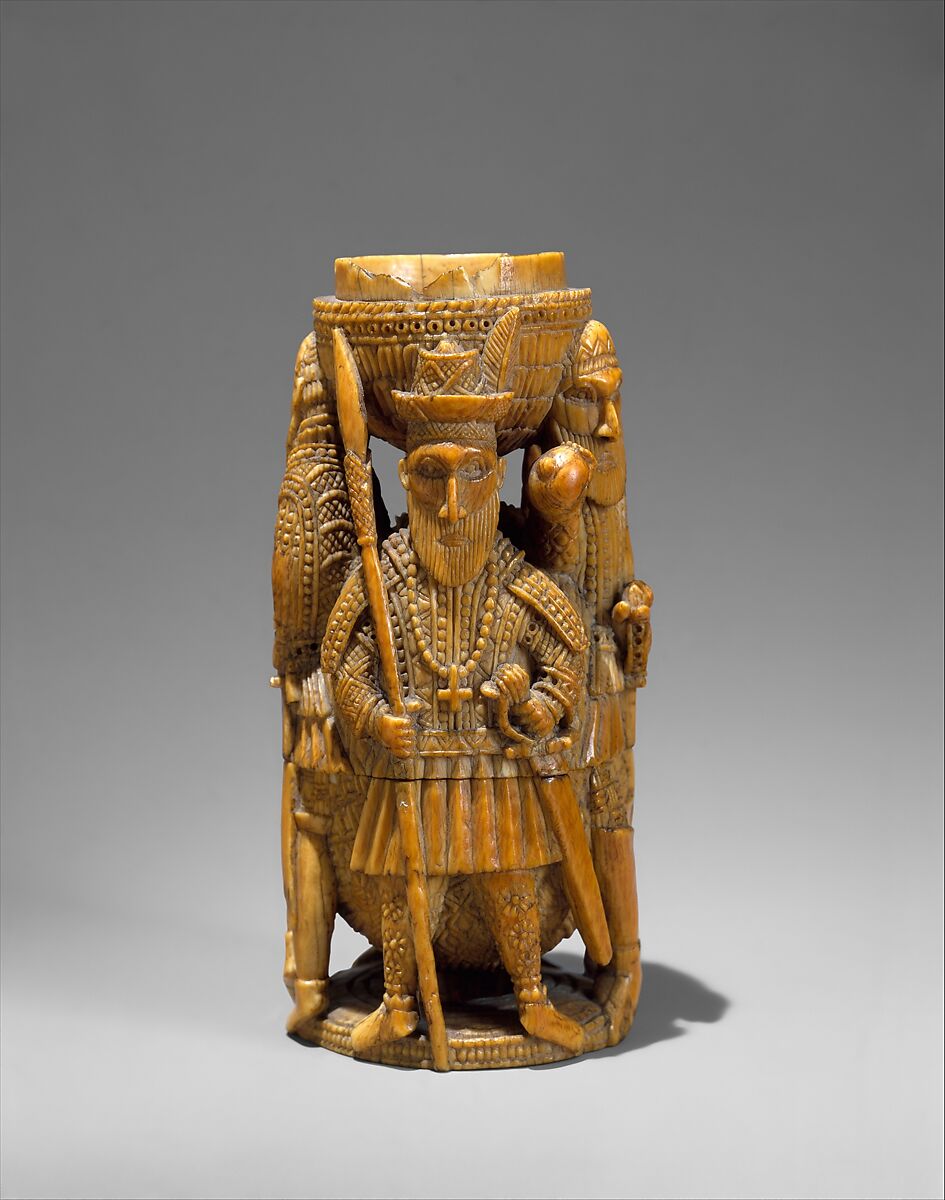
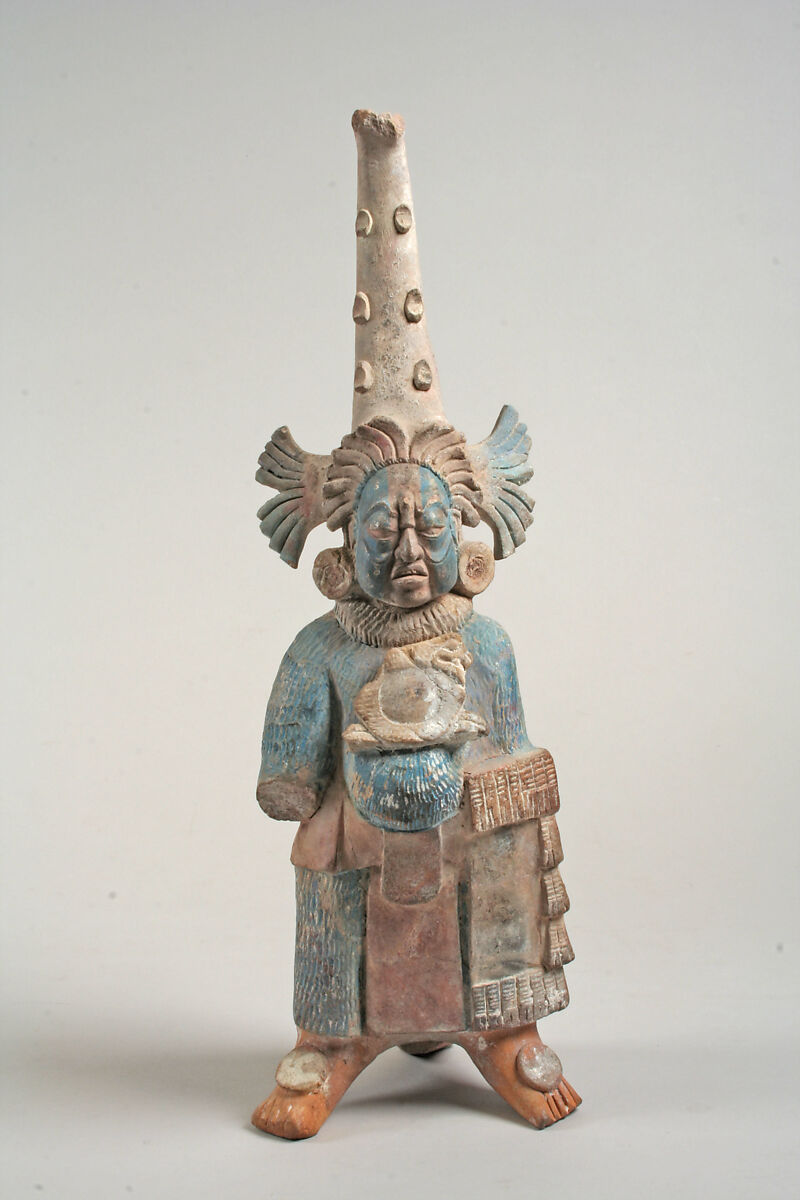
Saltcellar: Portuguese Figures, ca. 1525–1600. Ivory, H. 7 1/2 × W. 3 × D. 3 1/4 in. (19.1 × 7.6 × 8.3 cm) more details here. Figure with conical headdress and shield Maya artist(s) 600–800 CE, Jaina style, present-day mexico.
Benin
 |
Benin Bronzes, Oba sacrificing leopards, before 1897
|
, british museum |
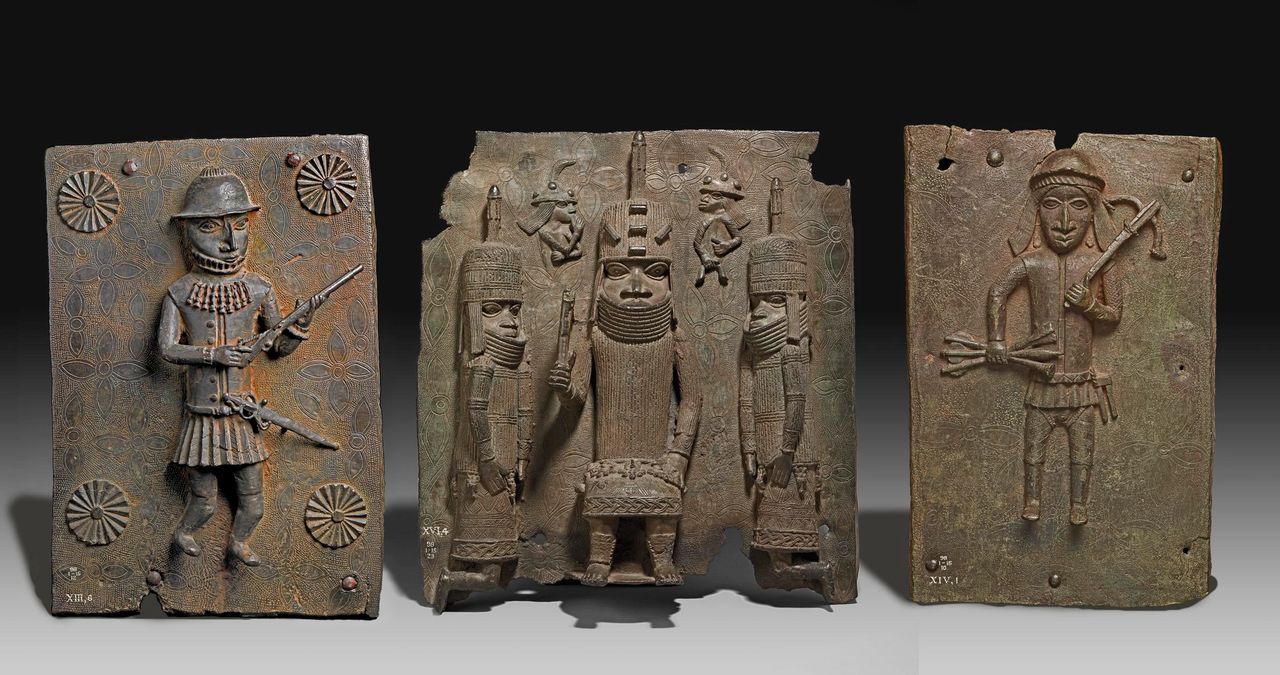 |
| Benin Bronzes, 16th c., Edo Nigeria |


No comments:
Post a Comment