In the centuries before Qing Rule, the Ming Dynasty controlled China for three centuries from 1368-1644, having taken over after the a series of natural disasters unsettled the particularly brutal Yuan Dynasty of Mongolian decent. That destabilization made it possible for Zhu Yuanzhang to lead an overthrow of the Yuan. Zhu was the only emperor of China with peasant roots. The dynasty he established, remained in power for 276 years. 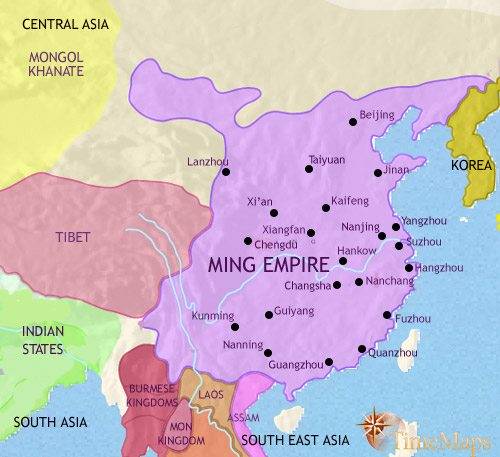
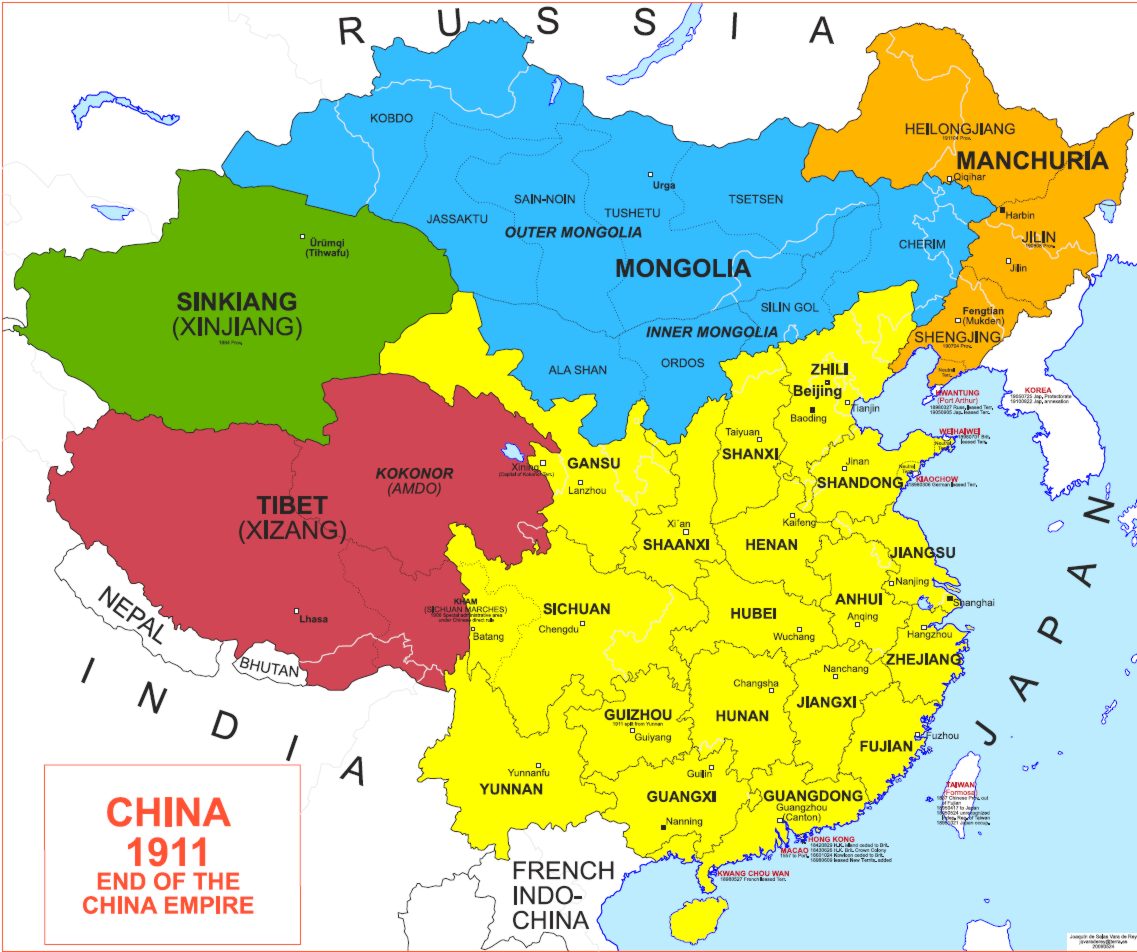
In the 1620's and 30's, a China wracked by peasant uprisings set off a new period of instability which allowed Manchu invaders from the northeast to raid China and take power following a violent transition. The Manchus established the Qing Dynasty which remained in power for almost 300 stable, prosperous years marked by robust artistic productivity which ended with the foundation of the Chinese Republic in 1912.
From Reframing Art History:
Key questions to guide your reading
How did the Manchu court use art to convey power in a multiethnic empire?
How did the arts of Qing China respond to the arts in other world areas, such as Europe?
Which aesthetic traditions did artists engage with in the Jiangnan region?
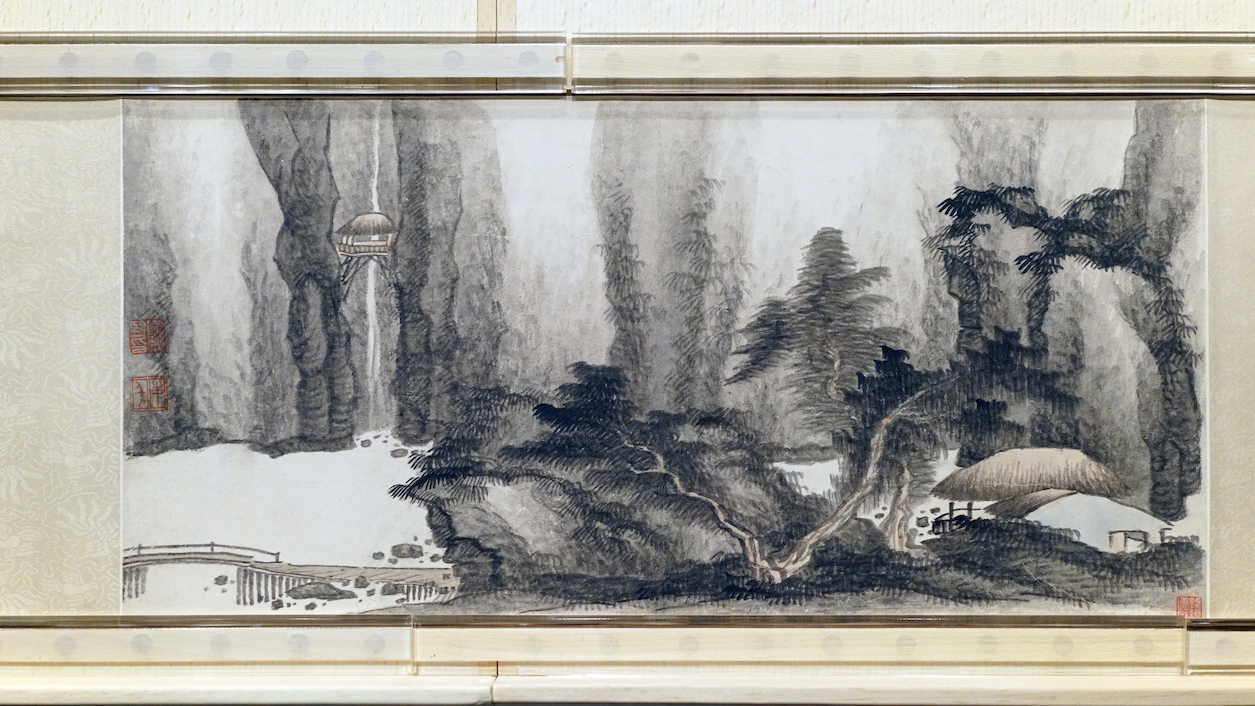 |
| Gong Xian, one album leaf from Eight Views of Landscape, 1684, Qing Dynasty, handscroll, ink on paper (Shanghai Museum) |
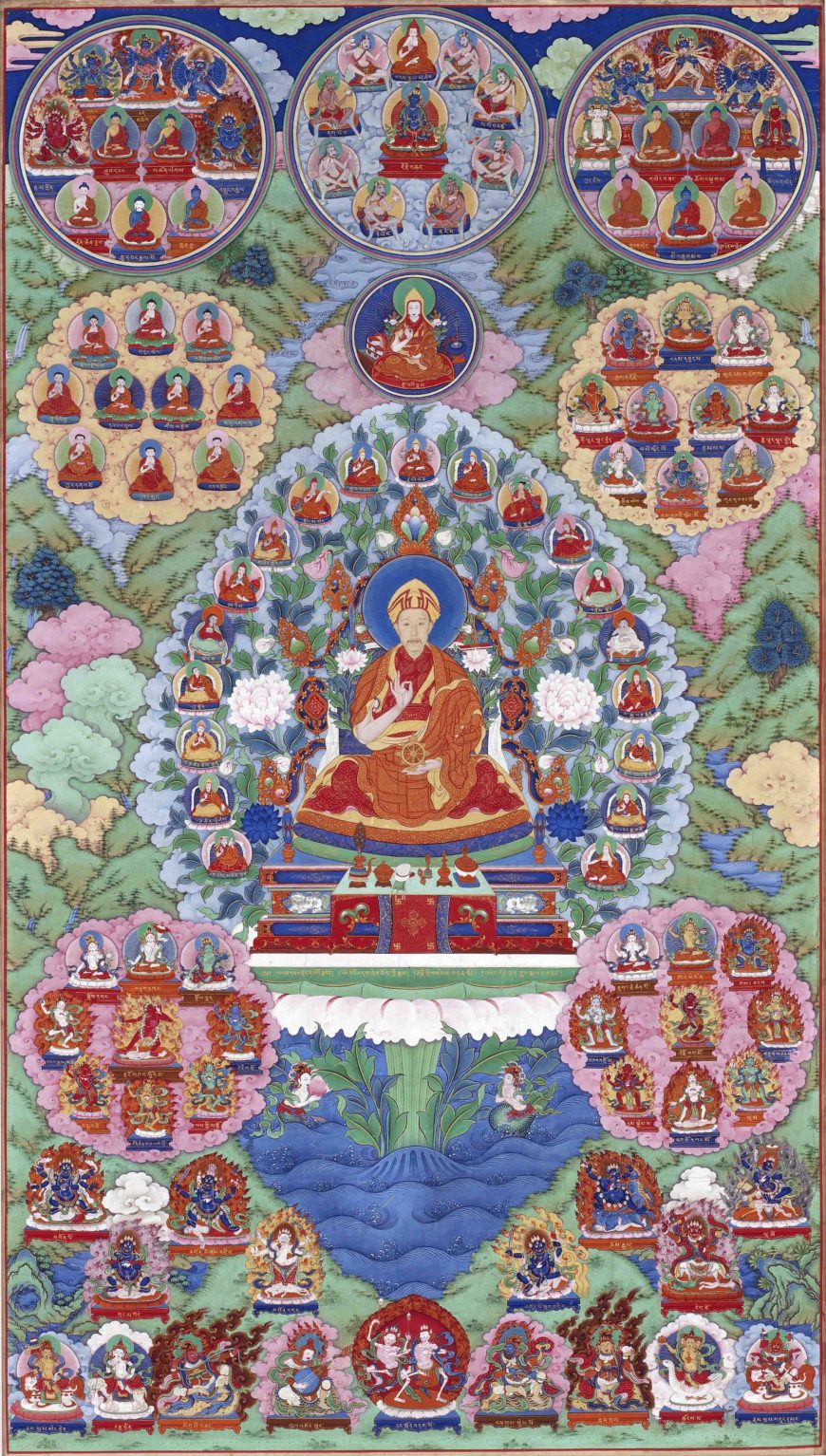 |
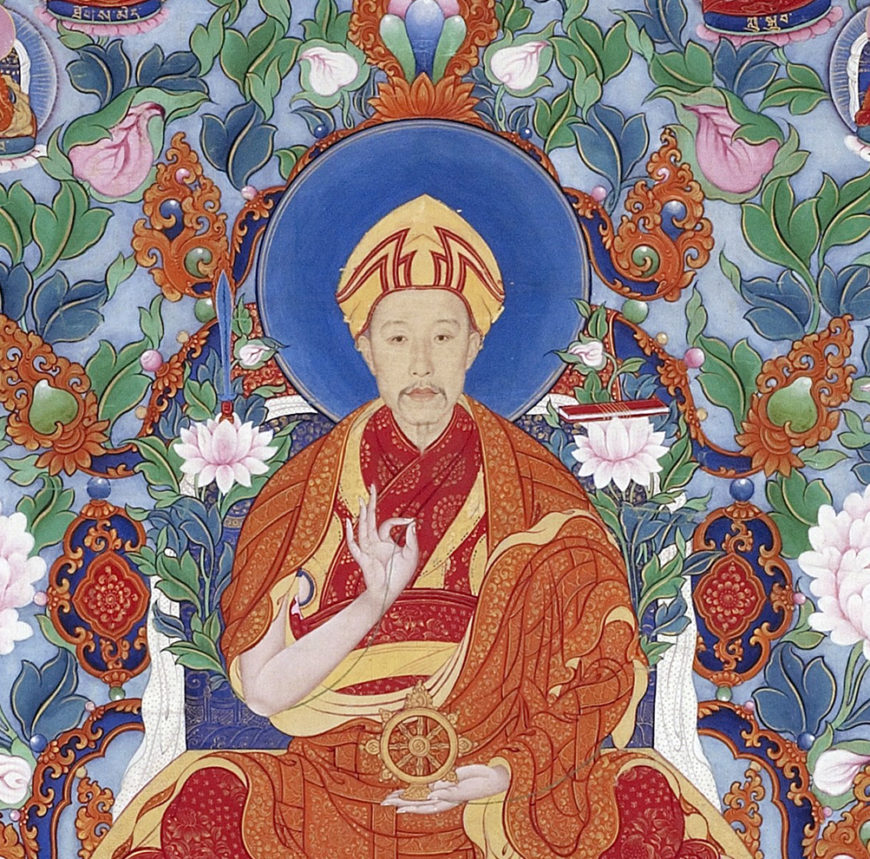
| Imperial workshop, with emperor’s face by Giuseppe Castiglione, The Qianlong Emperor as Manjushri, the Bodhisattva of Wisdom, mid-18th century (Qing dynasty, Qianlong reign, China), ink, color, and gold on silk, 113.6 x 64.3 cm (Freer Gallery of Art, Smithsonian Institution, Washington, D.C.: Purchase—Charles Lang Freer Endowment and funds provided by an anonymous donor, F2000.4) |

Mosaic of Christ Pantocrator in the Hagia Sophia, Istanbul. 1261
Emperor’s face painted by Giuseppe Castiglione (1688–1766) Imperial workshop, The Qianlong Emperor as Manjushri, the Bodhisattva of Wisdom, Qing dynasty, Qianlong reign, mid-18th century, ink, color, and gold on silk, China, 113.6 x 64.3 cm (see description of this painting on smarthistory)
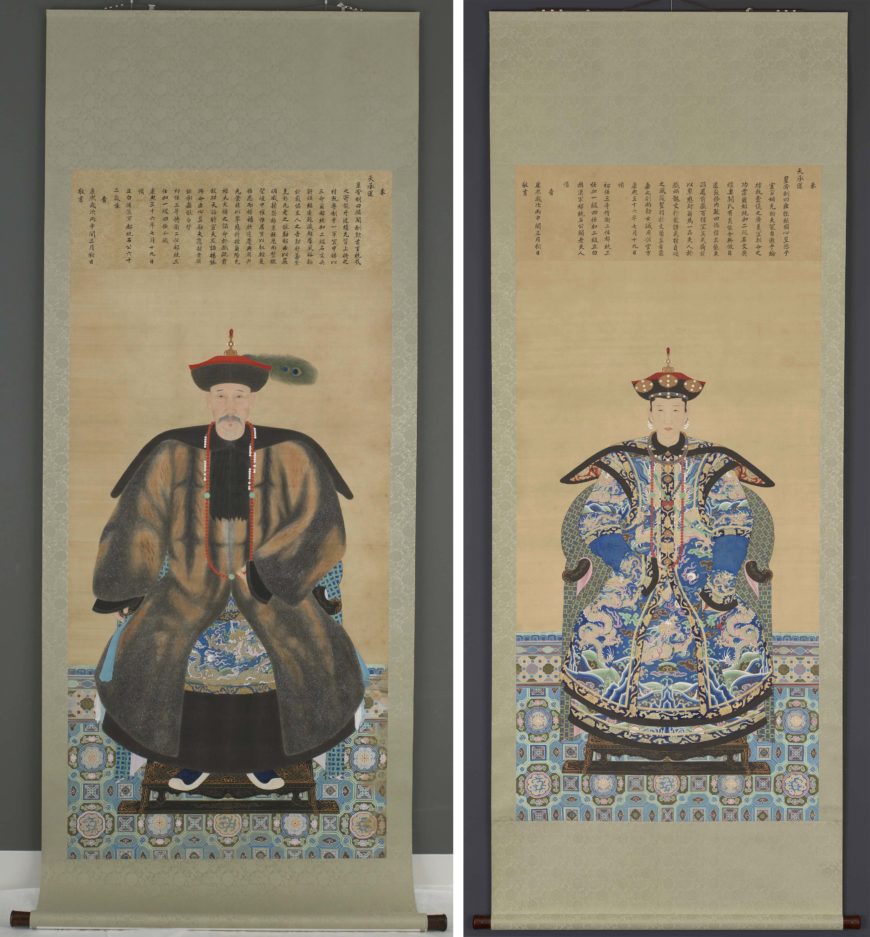 |
| Left: Portrait of Shi Wenying, Qing dynasty, 1644–1911, ink and colors on silk, China, 210.9 x 113.7 cm (Arthur M. Sackler Gallery, Smithsonian Institution, Washington, DC: Purchase — Smithsonian Collections Acquisition Program and partial gift of Richard G. Pritzlaff, S1991.120); right: Portrait of Lady Guan, Qing dynasty, Kangxi reign or later, mid 17th-early 18th century, ink and color on silk, China, 343 x 145 cm |
 |
| St Mark, Ebbo Gospels, 815 |
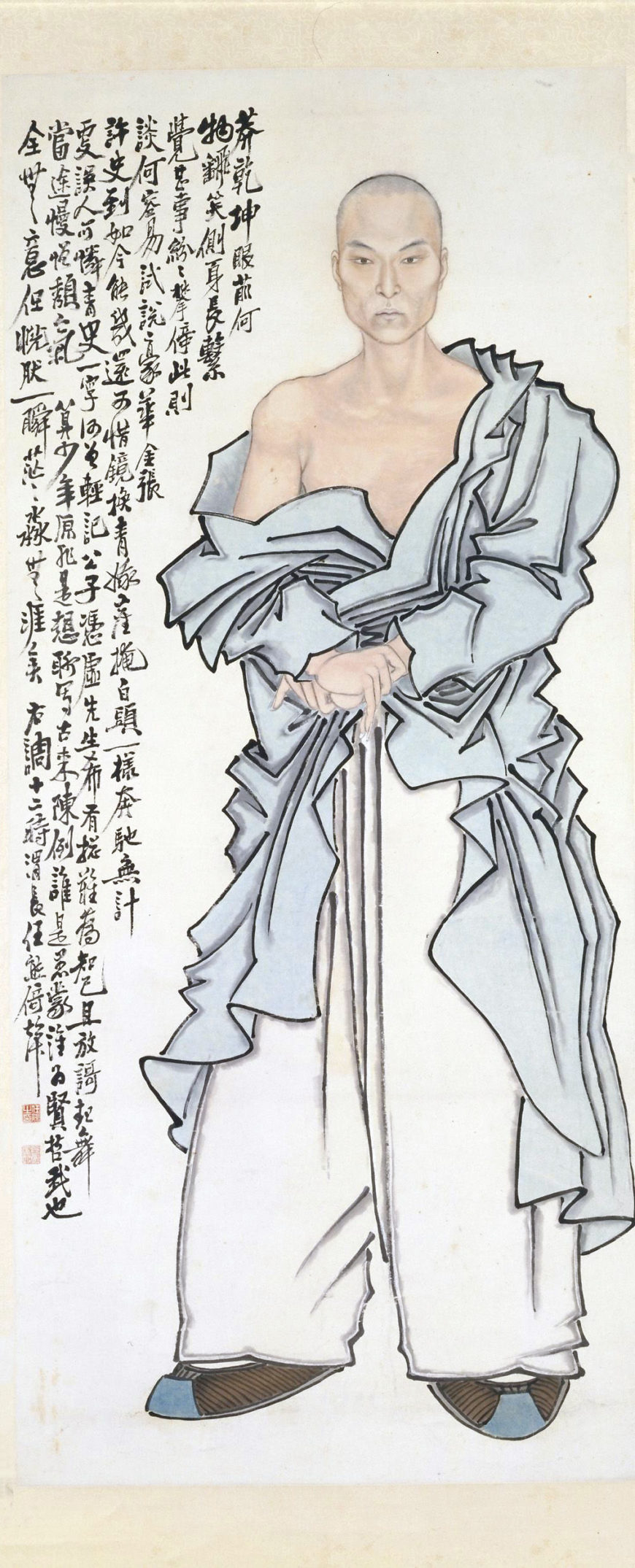 |
| Ren Xiong (1823–57), Self-Portrait, c. 1850, Qing Dynasty, |
"His painting also offers a way for us to think about modernity in a global sense. Ren’s dramatic self-portrait indicates that he is not merely an artist concerned with his craft, but rather a man concerned with self-expression—of communicating his trauma amid a rapidly changing world. Ren painted his portrait before the fall of China’s last imperial dynasty (the Qing dynasty). His self-portrait is breathtaking and bold; it suggests that the artist saw himself as living in the eye of the storm—and taking a modern and self-aware stance. His confrontational manner can also be read as tormented, a representation that fits with what we know about his life and the tragic period in which he lived—civil war amid the rise of Shanghai as a cosmopolitan, international port city. "
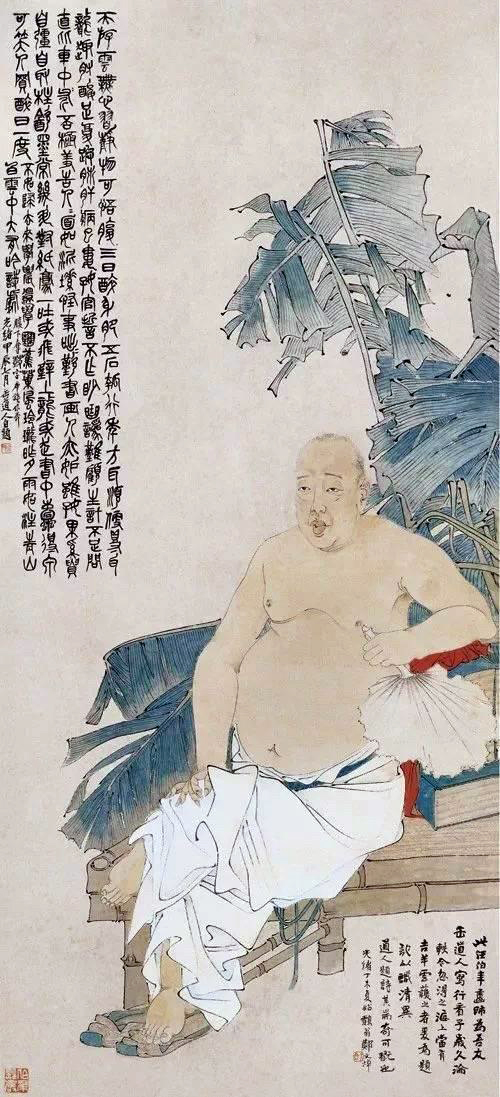 |
| Ren Yi, Portrait of Wu Changshuo Enjoying the Cool Shade of Banana Palms, 1888, hanging scroll: ink and color on paper, 129.5 x 58.9 cms. |
"Buddhist Sage is a reminder that the most “Chinese” of Buddhist sects (Chan) was not only a meaningful part of the modern world, but was in its origins something brought to China from “the Western regions,” by a foreigner, the sage Bodhidharma. It shows how Wang Zhen’s art challenges simplistic categories, of “Eastern” and “Western”, and undermines any too-neat division of Republican China’s art into “traditional” and “modern.”"
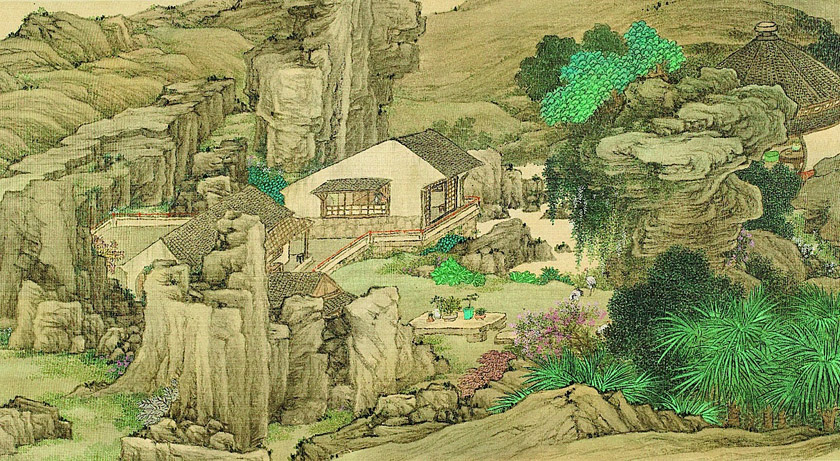 |
| Ren Xiong (1823-1857) The Fan Lake Cottage 7 meters |
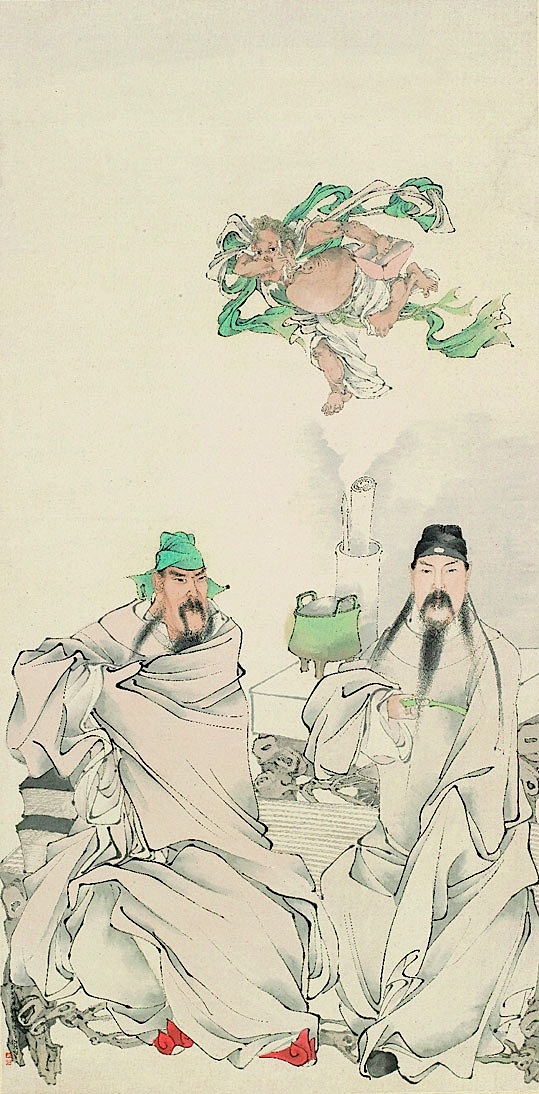 |
| Ren Bonian (1840-1895). Wen Chang and Guan Yu |

No comments:
Post a Comment